Choosing between binchotan vs lump vs briquettes is one of the most consequential sourcing decisions a charcoal buyer makes. Each family behaves differently on the grill and on your margin. This guide compares heat output, burn time, ash, smoke and real cost, so retailers, restaurants and importers can match the right charcoal to genuine demand rather than guesswork.
Key takeaways
- Binchotan delivers the longest, cleanest and most consistent heat, but it costs more per kilogram and lights slowly.
- Hardwood lump lights fast and sears hot with natural aroma, though piece size and burn time vary by lot.
- Briquettes offer uniform size and steady, predictable heat that suits high-volume service and catering.
- The lowest price per kilogram rarely wins - judge each type on cost per service and waste.
- Retailers, restaurants and importers each need a different mix, not a single best charcoal.
Binchotan vs lump vs briquettes: the three families explained
Before comparing numbers, it helps to define the three families clearly, because the single word charcoal hides very different products with very different economics.
Binchotan (white charcoal)
Binchotan is a dense hardwood charcoal carbonized at high temperature and then quenched, producing an exceptionally hard piece that rings like metal. It is valued for long, steady, near-smokeless radiant heat. Learn more in our guide to what binchotan white charcoal is.
Hardwood lump charcoal
Lump charcoal is natural hardwood carbonized into irregular chunks. It lights quickly, burns hot and carries a pleasant wood aroma, which makes it a favorite for searing and open-flame cooking.
Briquettes
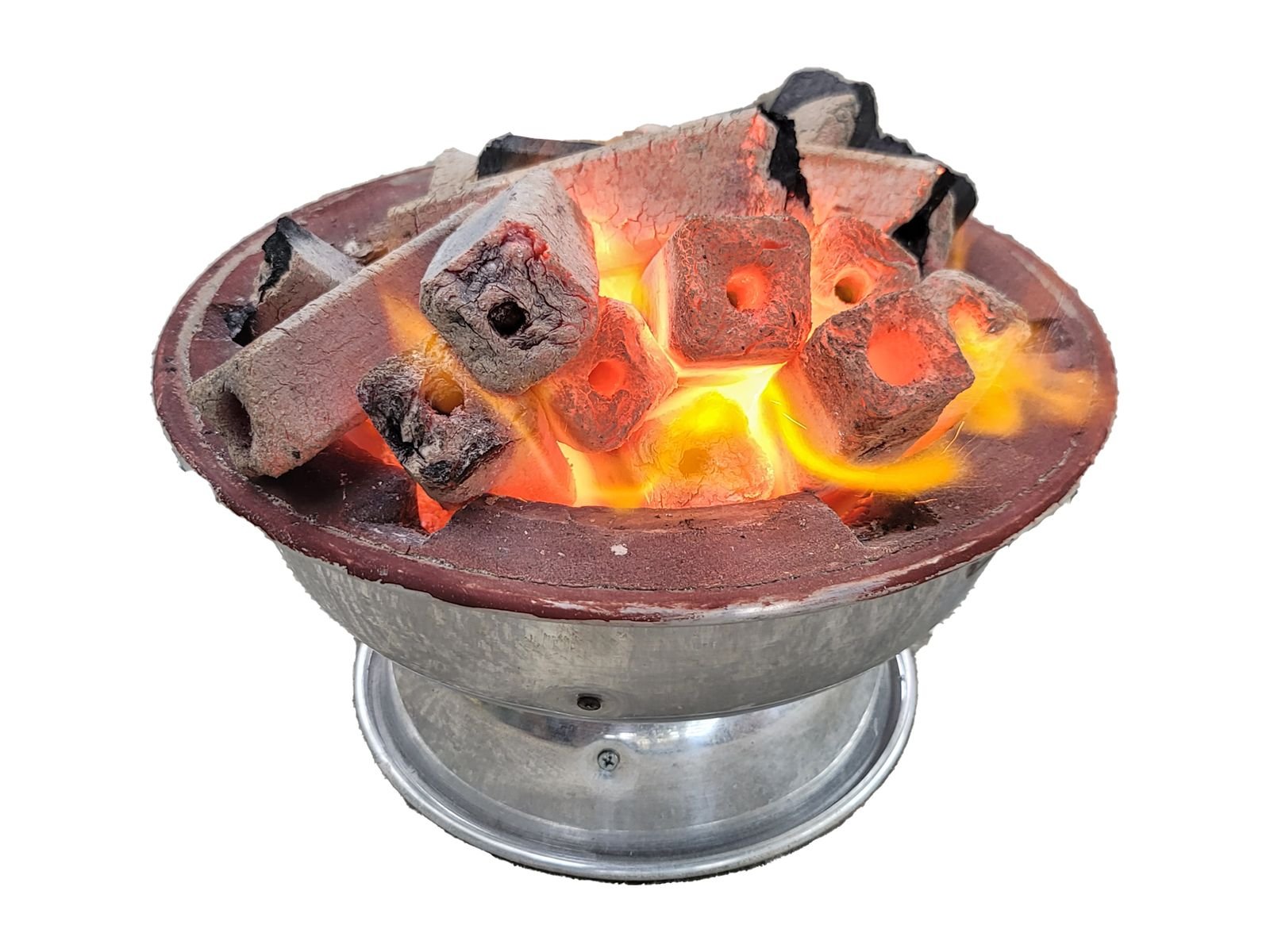
Briquettes are compressed into a uniform shape for predictable behavior. Natural briquettes, such as coconut shell briquettes, use carbonized biomass with a natural binder, while industrial versions may include binders, fillers or ignition accelerants.
The table below shows typical, real-world ranges. Exact figures vary by wood species, kiln and production lot, which is why an independent COA per lot matters more than any single headline number.
| Attribute | Binchotan | Hardwood lump | Briquettes |
|---|---|---|---|
| Fixed carbon | Very high (often 85-95%+) | High (about 70-85%) | Variable (about 60-80%, lower with fillers) |
| Heat output | High, radiant, very steady | High, strong initial sear | Moderate to high, even plateau |
| Burn time | Longest (roughly 3-5+ hours) | Shorter (roughly 1-2 hours) | Long and stable (roughly 2-4 hours) |
| Ash | Very low | Low to moderate | Moderate to high (especially industrial) |
| Smoke and odor | Minimal, clean | Noticeable wood aroma | Low if natural; possible odor if additives |
| Consistency | High (graded by size) | Variable by nature | Very high (uniform) |
| Lighting | Slow (chimney recommended) | Fast | Moderate |
| Relative cost per kg | Highest | Mid | Lowest |
| Best use | Yakitori, robata, premium retail | Steakhouse, searing, BBQ | High-volume service, catering |
Heat output, burn time and ash
These three properties decide how a fuel performs during real service, and they separate binchotan vs lump vs briquettes more clearly than any marketing label.
Heat and burn time
Binchotan produces intense, radiant infrared heat that stays remarkably stable for hours, which is why chefs cook skewers close to the coals without scorching. Hardwood lump delivers a fast, aggressive sear but tapers sooner, so cooks top up more often during a long service. Briquettes settle into a moderate, even plateau that holds a predictable temperature, useful when many covers must come off the line at the same doneness.
In energy terms, cooking charcoal typically falls in a broad band of roughly 29-33 MJ/kg (about 7,000-7,900 kcal/kg), with dense binchotan sitting at the higher, steadier end of that range. Density is what converts that energy into usable cooking time, so a heavier piece of the same size generally works longer and holds temperature better than a light, porous one.
Ash and grill management
Ash is not a cosmetic detail; it chokes airflow and forces mid-service cleaning. Binchotan leaves very little ash and holds its shape as it burns down, natural lump sits in the low-to-moderate range, and industrial briquettes with mineral fillers can leave the most ash of the three. Lower ash means less downtime and steadier heat through a shift.
Need this grade by the container?
Tell us your market, volume and target spec — we reply within one business day with a quote and a sample offer.
Smoke, odor and consistency
Flavor and repeatability decide whether a fuel fits a given kitchen or shelf.
Smoke and odor
Binchotan is prized precisely because it is almost odorless, letting the natural taste of delicate proteins come through, which is essential for yakitori and premium sushi counters. Hardwood lump adds a gentle wood aroma that many steak and barbecue concepts actively want. Briquettes vary: quality natural briquettes are clean-burning, while some industrial products can carry a faint chemical note from binders or accelerants.
Consistency
Consistency is where procurement lives or dies. Binchotan is graded by length and diameter for uniform behavior, lump is irregular by nature so piece size and density swing from bag to bag, and briquettes are the most uniform of all, which is their main selling point. Whatever you stock, insist on a sample before any order and an independent-lab COA per lot so what arrives matches what you approved.
Cost, margin and cost per service
Price per kilogram is the number buyers quote first and the number that misleads most when comparing binchotan vs lump vs briquettes. The fuel that looks cheapest can cost the most once burn time, waste and refuels are counted.
- Binchotan carries the highest price per kilogram, but its long burn, low ash and clean heat mean fewer refuels, less waste and a genuine premium story that supports higher menu or shelf pricing.
- Hardwood lump sits in the middle; its fast burn simply means you consume more of it during a busy shift.
- Briquettes win on raw price and predictability, which is why high-volume and catering operations lean on them.
A simple way to see it: if a premium fuel lasts roughly twice as long per fill and needs half the mid-service tending, a higher price per kilogram can still land at a lower cost per cooked cover once labor and waste are counted. Run that math on your own volumes before deciding on headline price alone.
Retailers should think in margin per SKU and a good-better-best range, while importers should think in cost per container landed and sold. Either way, the right metric is cost per service, not cost per kilogram. Tell us your target grade and volume and request a quote to compare landed pricing across all three types.
Who should stock what
Retailers and distributors
Carry a tiered range rather than one product. A premium binchotan line anchors quality and margin, a hardwood lump covers everyday grilling, and a briquette line captures price-sensitive and bulk buyers. Clear labeling of each type prevents the confusion that drives returns.
Restaurants and grills
Match fuel to concept. Yakitori and robata belong on binchotan, steakhouses favor hardwood lump for the sear, and high-volume lines and events often run briquettes for consistency. Many kitchens keep two grades, a premium and a workhorse. Our guide to the best charcoal for restaurants maps grades to cuisines in detail.
Importers and wholesalers
Think in containers and in compliance. Blend SKUs to serve several customer types from one shipment, confirm EUDR and phytosanitary documentation up front, and standardize on lab-verified specs so repeat lots stay identical. If you are weighing purity and additives across products, read natural vs industrial charcoal next.
Frequently asked questions
Is binchotan worth the higher price?
For concepts that sell on grilled flavor and presentation, usually yes. Binchotan burns longer and cleaner with very low ash, so fewer refuels and less waste offset much of the higher price per kilogram, and its near-smokeless heat protects the taste of premium proteins. For low-margin, high-volume cooking, a hardwood lump or briquette often makes more commercial sense.
What is the real difference between lump charcoal and briquettes?
Lump charcoal is natural hardwood in irregular pieces that lights fast and burns hot but unevenly. Briquettes are compressed to a uniform size for steady, predictable heat and longer, more stable burns. Lump favors flavor and searing, while briquettes favor consistency and volume.
Do charcoal briquettes always contain chemicals?
No. Briquettes range from fully natural, such as coconut shell briquettes bound with natural starch, to industrial products that may include mineral fillers or ignition accelerants. Always ask for a composition disclosure and an independent-lab COA so you know exactly what you are buying.
Which charcoal is best for a restaurant grill?
It depends on the cuisine. Yakitori and robata counters rely on binchotan for clean, long, radiant heat, steakhouses prefer hardwood lump for a fast, hot sear, and high-volume lines often use briquettes for uniform results. Many kitchens stock two grades to cover both premium and everyday service.
Can I order samples before committing to a container?
Yes. VUTRUX supplies samples before any order and issues an independent-lab COA per lot, so you can verify heat, ash and consistency before you commit. We ship FOB Hai Phong with FOB, CIF or DDP terms and T/T or L/C payment. Request a quote to start with a sample.