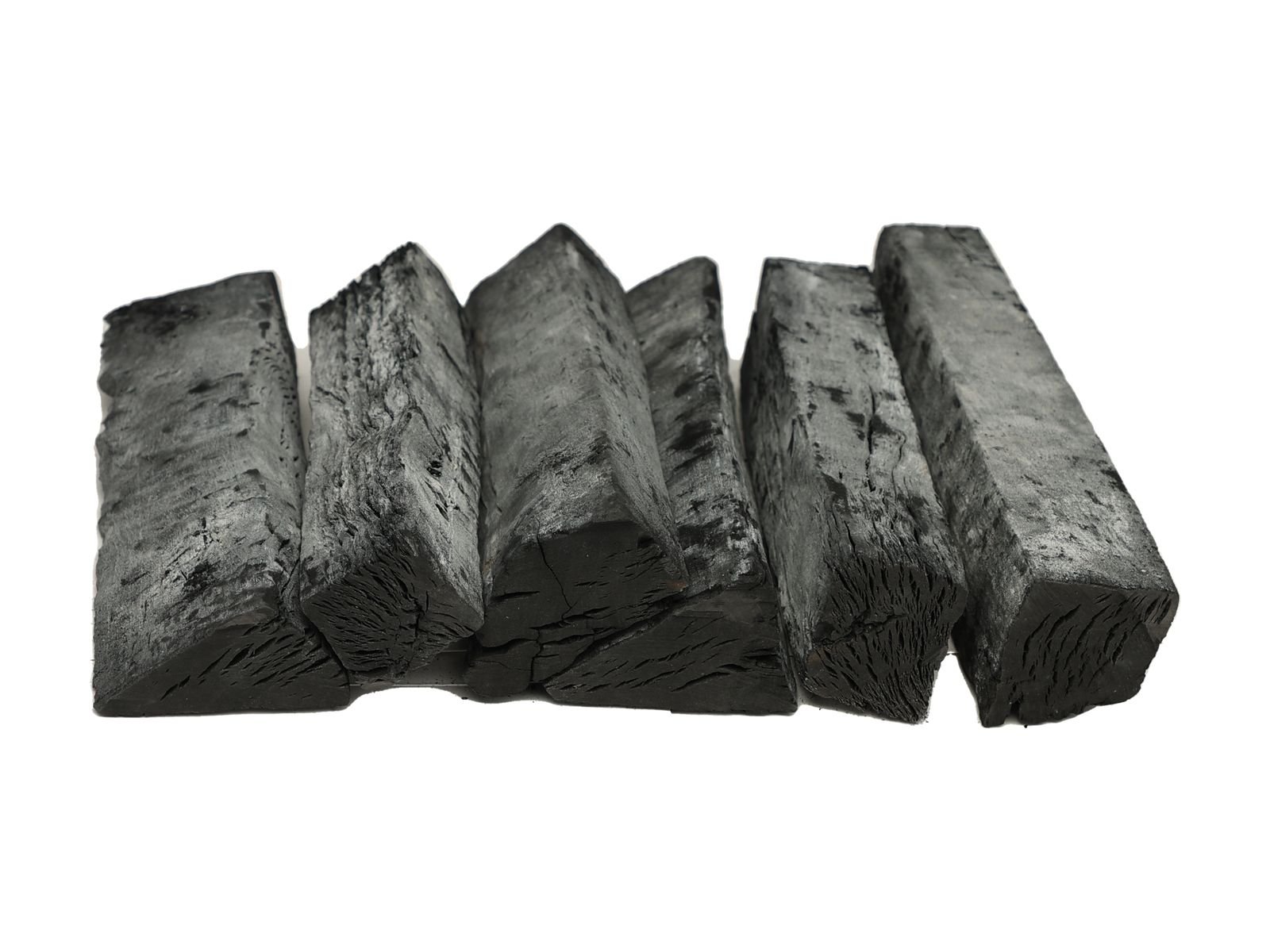
Binchotan white charcoal is a premium Japanese-style hardwood charcoal, prized in top kitchens for a hot, steady, almost smokeless fire. Made by carbonizing dense wood at very high temperatures and then smothering it, it earns its pale ash coating, its metallic ring and its reputation as the cleanest-burning fuel for yakitori and robata grilling.
Key takeaways
- Binchotan white charcoal (shiro-zumi) is carbonized at high heat, then rapidly cooled and smothered, which leaves its signature pale ash coating.
- It burns long, hot and almost smoke-free with very little odor, giving chefs precise, consistent control for yakitori and robata.
- Premium grades carry high fixed carbon (commonly 85 to 93 percent or more) and low ash, which is why binchotan costs more than lump or briquettes.
- Grade, wood species and piece size drive both performance and price, so match the grade to the dish and grill.
- Ask for a per-lot COA and a sample before committing to a wholesale order.
What Is Binchotan White Charcoal?
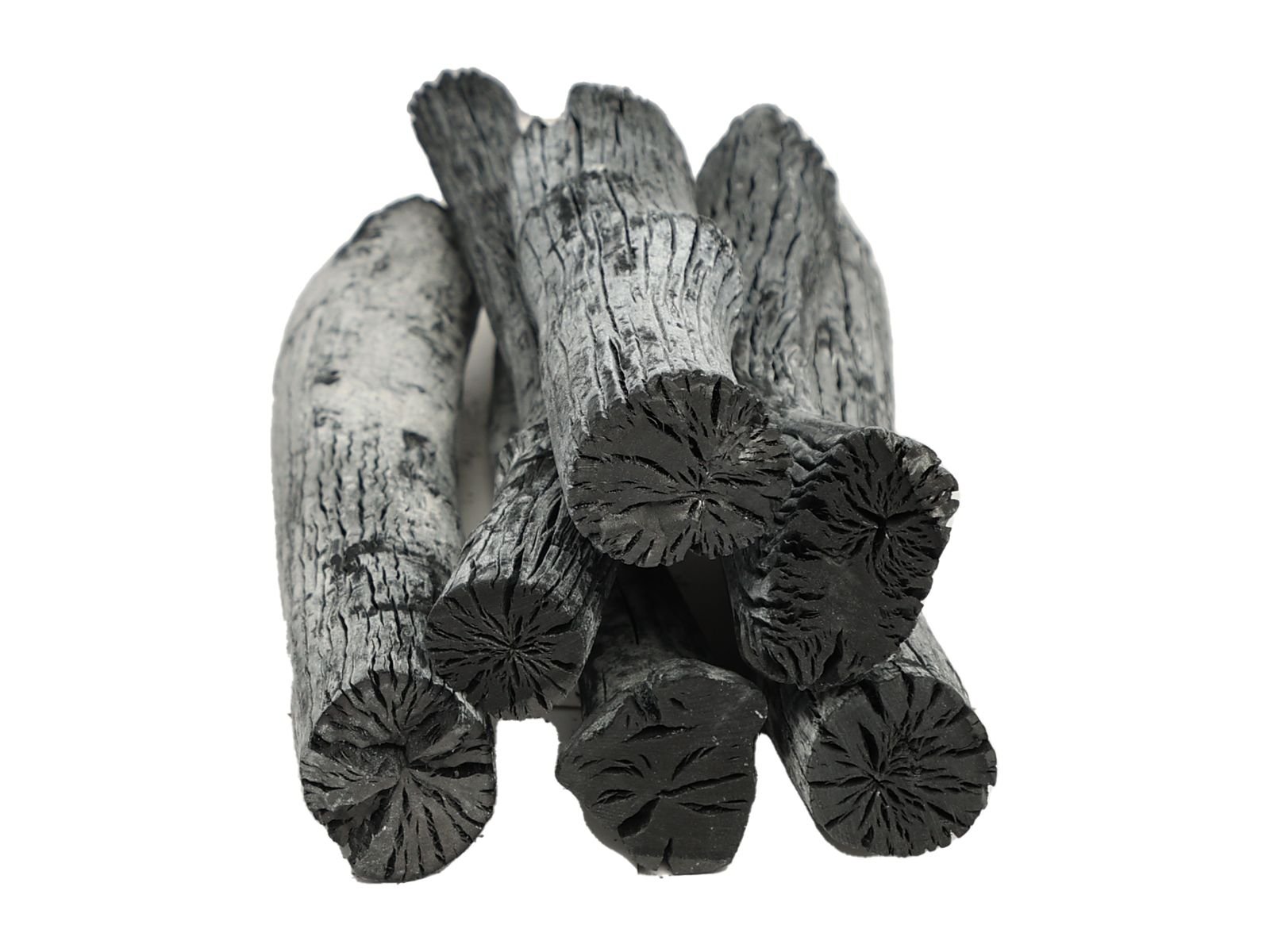
Binchotan white charcoal, known in Japanese as shiro-zumi, is a premium hardwood charcoal refined at very high temperatures to leave almost pure carbon. The name comes from the pale, ash-grey film that coats each piece after production, distinguishing it from ordinary black charcoal (kuro-zumi).
The style originates in Japan, where the most famous example is Kishu binchotan, made from ubame oak. Today the same two-stage method is used across Asia with other dense hardwoods to produce charcoal with the same defining traits: exceptional hardness, a clean metallic ring when two pieces are tapped together, and a long, steady, low-smoke burn.
When chefs talk about white charcoal, this is what they mean: a fuel engineered for control rather than convenience. It does not flare, it does not billow smoke, and it holds heat far longer than a comparable load of lump charcoal.
How White Charcoal Is Made
White charcoal is made in two stages, and the second stage is what sets it apart from everyday charcoal.
- Carbonization. Split hardwood is stacked in a masonry kiln and heated slowly to drive off moisture and volatile compounds. This gentle phase can run for several days.
- High-temperature refining (the white-out). Near the end of the cycle, the kiln is opened and air is introduced, pushing surface temperatures to roughly 1,000°C. The wood glows and any remaining tars and gases burn off.
- Rapid cooling and smothering. The red-hot charcoal is raked out and immediately smothered with a damp mixture of earth, sand and ash. This snuffs the fire and deposits the signature pale coating on the surface.
Because that final refining step removes almost all volatile matter, the finished charcoal is extremely dense and hard, so hard it rings like metal when struck. That density and purity are the foundation of how binchotan burns.
Need this grade by the container?
Tell us your market, volume and target spec — we reply within one business day with a quote and a sample offer.
Why Binchotan White Charcoal Burns Long, Hot and Clean
Binchotan white charcoal performs the way it does because of its chemistry and structure. Very high fixed carbon and very low volatile matter mean there is little to burn off as smoke or flame. Instead the charcoal glows and radiates steady infrared heat. The dense cell structure burns slowly from the surface inward, so a well-managed grill can hold cooking temperature for hours on a single load.
For chefs, three qualities matter most:
- Clean burn: minimal smoke and almost no odor, so delicate ingredients taste of themselves, not of fuel.
- High, radiant heat: ideal for searing skin and rendering fat without a licking flame.
- Longevity: fewer refuels during a busy service.
The table below shows where white charcoal sits against other common options. For a deeper breakdown, see our guide to how binchotan compares with lump charcoal and briquettes.
| Type | Fixed carbon (typical) | Ash | Smoke / flame | Burn time | Best use |
|---|---|---|---|---|---|
| Binchotan white charcoal | 85 to 93%+ | Low (~1 to 3%) | Very low | Long (several hours) | Yakitori, robata, fine grilling |
| Hardwood lump charcoal | ~70 to 80% | Low to moderate | Moderate, some flare | Medium | General grilling, searing |
| Hardwood briquettes | ~60 to 75% | Moderate to high | Low once lit | Medium to long, steady | Long cooks, even heat |
Wood Sources, Grades and Sizes
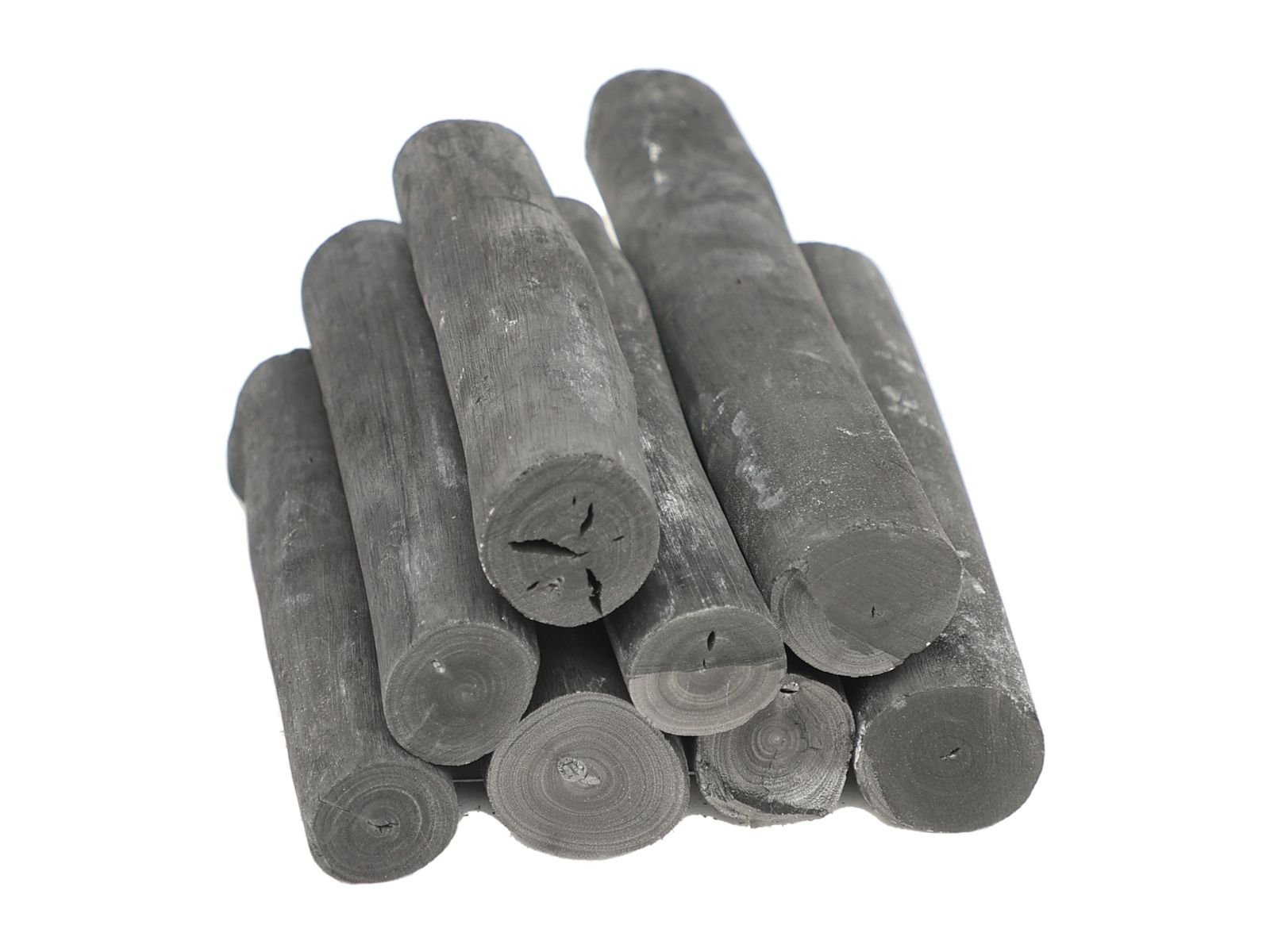
Traditional Japanese binchotan is made from ubame oak, but the defining factor is wood density, not a single species. Any slow-grown, tight-grained hardwood can yield excellent white charcoal. Common sources include:
- Ubame oak — the classic Kishu binchotan wood.
- Lychee and longan — dense fruitwoods that produce intense, long-lasting heat; see our detailed look at lychee-wood binchotan.
- Other tropical hardwoods — selected for hardness and low mineral content.
Grades are defined by species, density, moisture and piece geometry. Sizes typically include:
- Logs and rounds: long, thick pieces for extended burns and large konro grills.
- Splits: halved or quartered lengths that light faster and pack efficiently.
- Shorts and tiny: small pieces for compact grills and quick service.
Because grade drives both performance and price, always confirm the specification on paper. Learn what to check when you read a charcoal COA so the grade you approve is the grade you receive.
Culinary Uses: Yakitori, Robata and Beyond
Binchotan white charcoal is the benchmark fuel for Japanese live-fire cooking. Its clean, radiant heat is why it dominates:
- Yakitori: chicken skewers cooked close to the coals, where any smoke or flare would ruin the finish.
- Robata and kushiyaki: slow grilling over a bed of steady heat.
- Premium proteins and seafood: steak, wagyu, unagi and shellfish that benefit from precise searing.
Its long burn and low ash also make it a favorite for konro and hibachi grills in restaurants that reuse coals across a shift. The absence of flavor-tainting smoke is decisive here: unlike some briquettes that can carry binders or additives, quality binchotan adds heat, not taste, so the ingredient stays the star. Beyond the kitchen, binchotan's porous structure is used for water filtration, deodorizing and dehumidifying, though export demand is overwhelmingly culinary.
If you are equipping a grill program, learning the best charcoal for restaurants and the fundamentals of how to light and use binchotan are useful next steps.
Why It Costs More, and How to Buy It Right
Binchotan commands a premium for concrete reasons. The wood is dense and slow-growing, kiln cycles run long, and the high-temperature white-out sacrifices yield to achieve purity. Skilled kiln operators are essential, and a meaningful share of each batch is lost as fines. You are paying for consistency, burn time and a clean flavor profile, not just a bag of carbon.
Measured per hour of usable cooking heat, quality binchotan is often more economical than it first appears, because it burns longer and needs fewer refuels.
When buying at wholesale, protect yourself with documentation and testing:
- Request a per-lot COA from an independent lab covering fixed carbon, ash and moisture.
- Insist on sample-before-order so your chefs can test the burn.
- Confirm Incoterms (FOB Hai Phong, CIF or DDP) and export paperwork, including EUDR and phytosanitary documents where required.
One practical caution: because binchotan is a natural product, some lot-to-lot variation in size and moisture is normal. A dependable supplier manages this with tight grading and honest COAs rather than pretending it does not exist, so ask how they grade and what tolerances they hold.
VUTRUX exports premium binchotan and hardwood charcoal to 40+ markets. Start with our binchotan wholesale guide, browse our product range, or request a quote and a sample.
Frequently asked questions
Is binchotan white or black charcoal?
Binchotan is a type of white charcoal (shiro-zumi). The word white refers to the pale ash-and-earth coating left on the surface after the hot charcoal is smothered during cooling, not to the color of the carbon itself, which is dark. Ordinary charcoal cooled without this step is called black charcoal (kuro-zumi).
How long does binchotan white charcoal burn?
Burn time depends on piece size, airflow and grill design, but a full load of quality binchotan commonly holds cooking heat for several hours. Its high fixed carbon and dense structure let it burn slowly and steadily, which is why restaurants can run it across a service with minimal refueling.
Is binchotan the same as ubame oak charcoal?
Not exactly. Authentic Kishu binchotan is made from ubame oak in Japan, but binchotan now describes a production style, high-temperature carbonization followed by smothering, applied to various dense hardwoods such as lychee and longan. The method, wood density and grade determine quality more than the species name alone.
Why is binchotan white charcoal so expensive?
The wood is dense and slow to grow, kiln cycles are long, the high-temperature refining step reduces yield, and skilled labor is required throughout. The result is a purer, longer-burning, cleaner fuel. Per hour of cooking heat, the premium is smaller than the sticker price suggests.
Can you reuse binchotan?
Yes. Because it burns cleanly and slowly, binchotan can often be extinguished by cutting off oxygen, for example in a sealed metal container, and relit for a later service. Reusing coals is common practice in yakitori and robata kitchens and improves overall value.