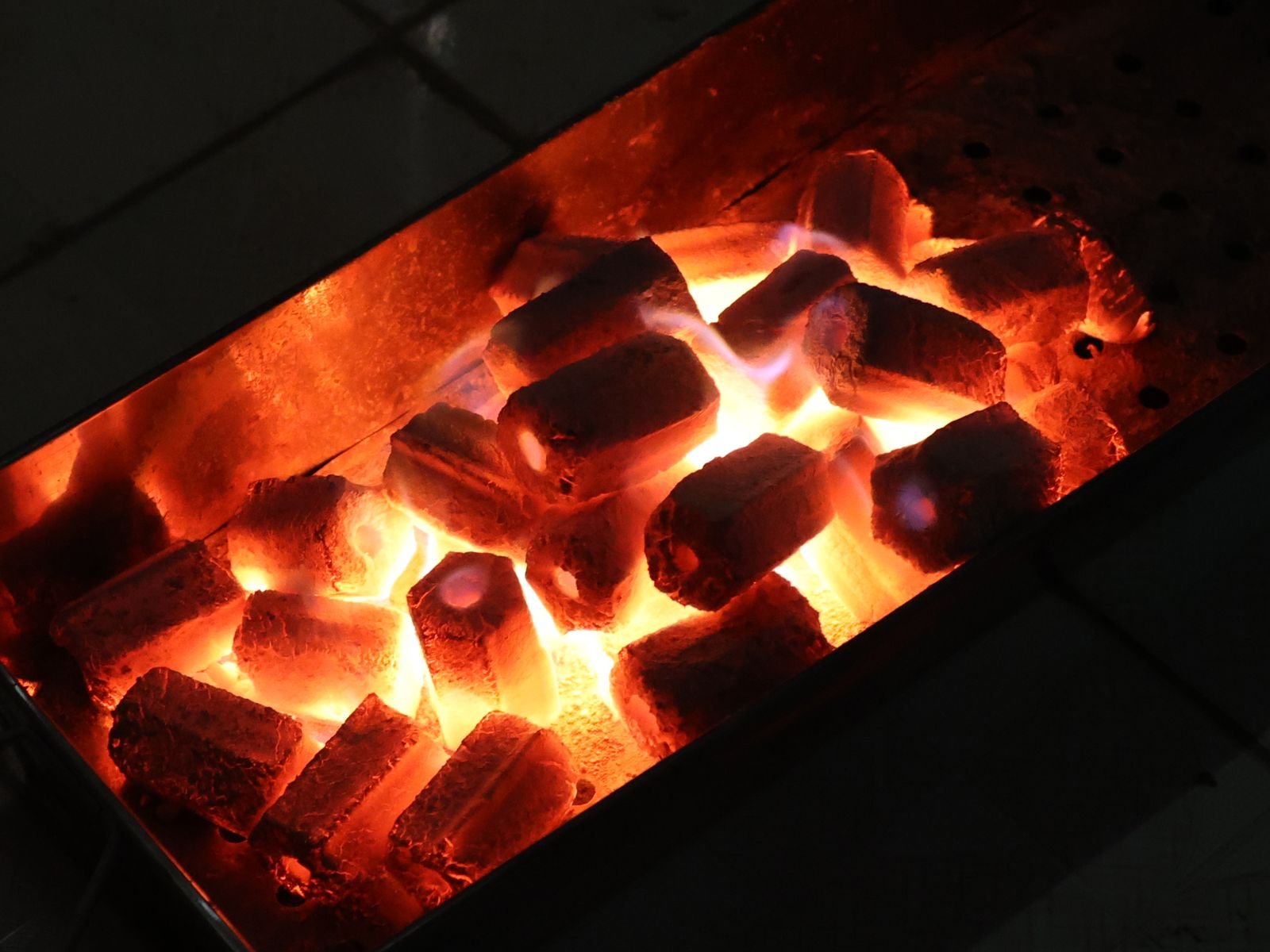
Pressed charcoal and natural charcoal sit at opposite ends of most buyers' assumptions: one is dismissed as a cheap briquette, the other prized as the real thing. The truth is more useful than the stereotype. This pressed vs natural charcoal comparison looks past the labels at binders, purity, heat and burn time, so restaurants, retailers and importers can match the fuel to the job instead of the marketing.
Key takeaways
- The real divide is not pressed vs natural charcoal but binder versus binder-free.
- Cheap filler briquettes lower fixed carbon and add ash; avoid them regardless of shape.
- Ogatan is pressed yet binder-free, with fixed carbon around 94% and a clean, uniform burn.
- Always choose by Certificate of Analysis, not by the pressed-or-natural label.
Defining Pressed and Natural Charcoal
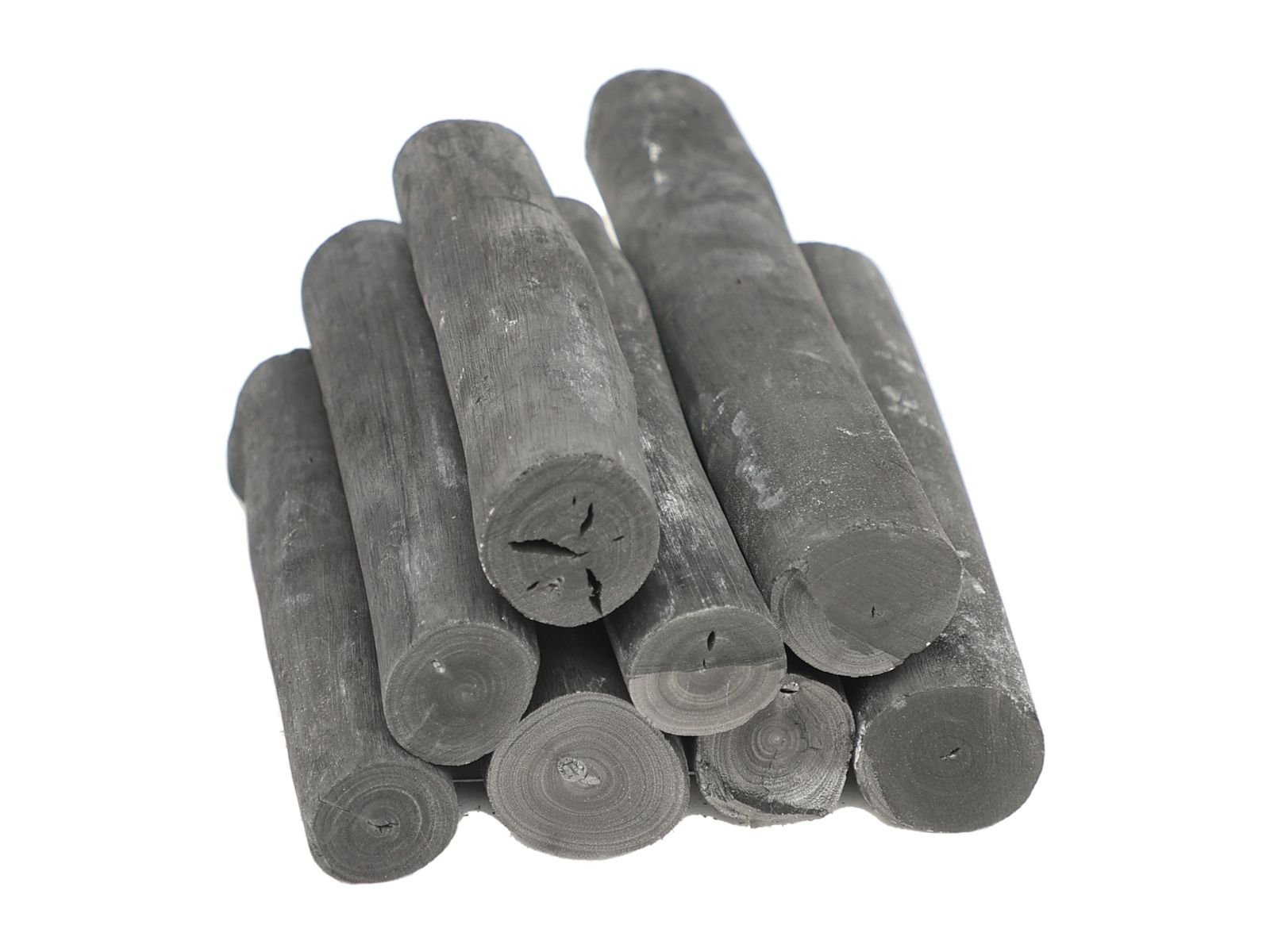
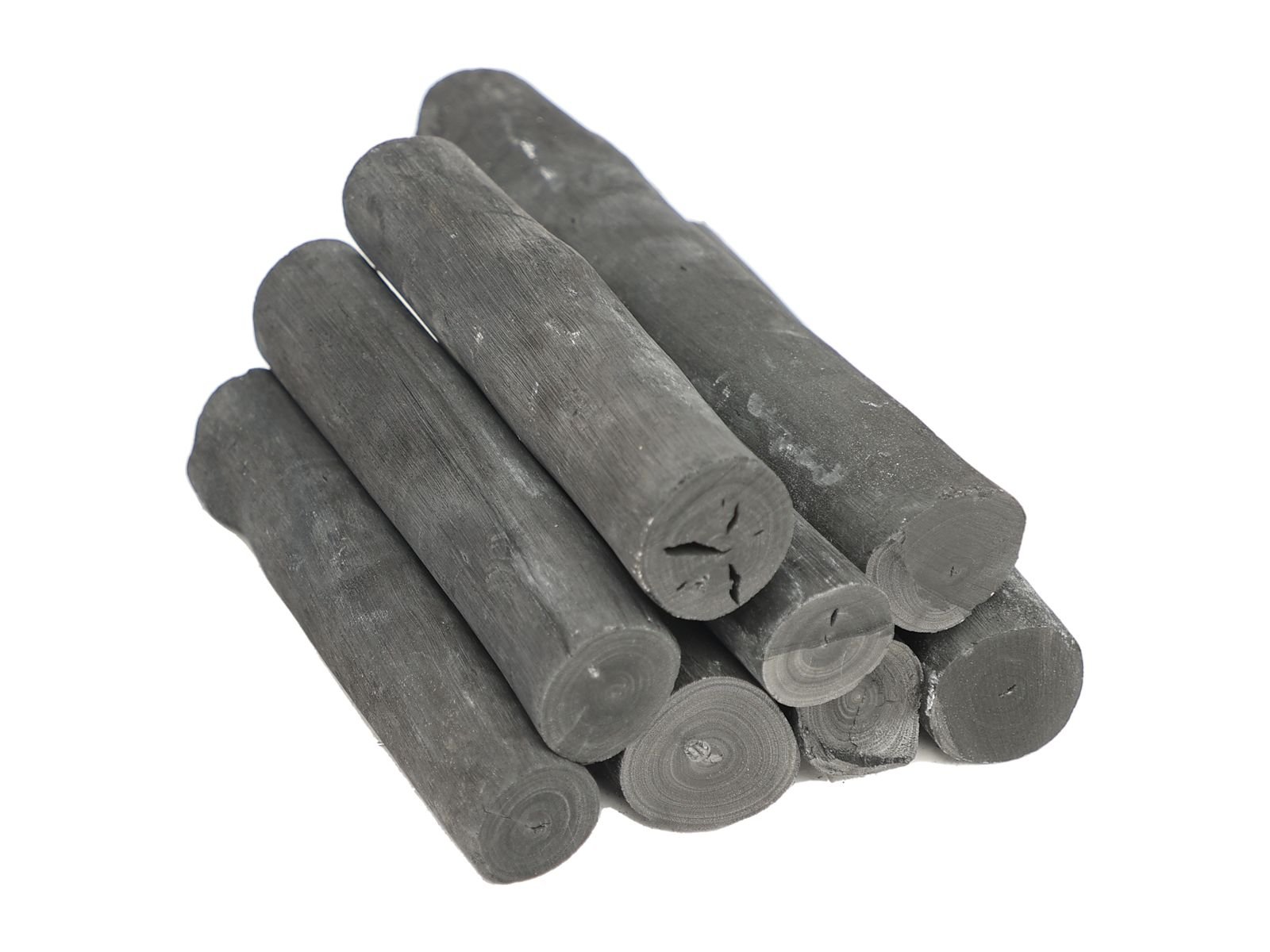
Natural charcoal is made by carbonizing solid pieces of wood. Lump charcoal keeps the irregular shape of the branch or offcut it came from, while binchotan, or white charcoal, is carbonized at very high temperature and then smothered to leave an extremely hard, dense stick. In both cases the finished fuel is simply carbonized wood with nothing added.
Pressed charcoal is reconstituted. Raw material is ground, compacted under pressure into a uniform shape, then carbonized or bound together. This category is broad, and that is exactly where the confusion begins. At one end sit low-grade barbecue briquettes made from coal dust, sawdust and mineral fillers, held together with starch or other binders and sometimes dosed with accelerants. At the other end sits ogatan, a pressed hardwood-sawdust charcoal that uses no chemical binders at all. Lumping these two together is the single biggest mistake buyers make. For a closer look at the honest end of the market, see our guide to natural versus industrial charcoal. This is also why the word briquette became loaded: decades of cheap, additive-heavy barbecue briquettes shaped the reputation of an entire category, even though the manufacturing method itself is neutral. What matters is the input and the process, not the fact that a fuel is shaped under pressure.
Pressed vs Natural Charcoal: The Binder Question
The heart of the pressed vs natural charcoal debate is what, if anything, holds the fuel together. Cheap pressed briquettes rely on added binders and fillers. Those additives lower the fixed-carbon content, raise ash, and can introduce odors or off-flavors that matter enormously when charcoal cooks food directly over the coals. When people say pressed charcoal tastes like chemicals, this is usually what they encountered.
Natural charcoal has no binders by definition, which is why it is the default choice for direct-heat cooking. But the binder question is not really pressed vs natural charcoal at all, it is binder versus binder-free. Ogatan proves the point: it is pressed, yet it is made only from compressed hardwood sawdust carbonized under heat and pressure, with the wood's own lignin acting as the bond. Its fixed carbon runs around 94%, close to natural lump, and it burns clean. The right question to ask a supplier is therefore not whether the charcoal is pressed or natural, but what is in it and where the Certificate of Analysis is. In practice, a premium pressed product and a premium natural product have far more in common with each other than either has with a filler briquette; purity is a property of the recipe, not of the shape.
Need this grade by the container?
Tell us your market, volume and target spec — we reply within one business day with a quote and a sample offer.
Purity, Heat and Burn Time Compared
The table sets out how the three real-world categories usually compare. Note how binder-free pressed charcoal behaves far more like natural charcoal than like a filler briquette.
| Attribute | Filler briquette (pressed) | Ogatan (binder-free pressed) | Natural (lump / binchotan) |
|---|---|---|---|
| Raw material | Coal dust, sawdust, fillers | Hardwood sawdust only | Solid hardwood |
| Binders or additives | Yes, plus possible accelerants | None | None |
| Fixed carbon | Lower, often 60-75% | ~94% | ~90-95% |
| Shape consistency | Uniform | Uniform | Irregular |
| Smoke and odor | Higher | Low | Low |
| Burn time | Long but ashy | Long and clean | Varies; binchotan very long |
| Best use | Casual grilling | Restaurants, long service | Direct-heat, premium grilling |
The takeaway is that pressed is not a quality verdict. A binder-free pressed charcoal such as ogatan can outperform mediocre natural lump on consistency and cleanliness, while a filler briquette will disappoint next to either. Read the fixed-carbon line first, because it is the single best predictor of how hot, how long and how cleanly a charcoal will burn.
Where Ogatan Breaks the Stereotype
Ogatan matters in any pressed vs natural charcoal discussion because it collapses the usual trade-off. Buyers who choose natural charcoal for purity but wish it were more consistent, and buyers who choose pressed charcoal for uniformity but worry about additives, are both describing ogatan.
Because it is extruded to a fixed profile, every log lights the same way, stacks the same way and burns for a predictable length of time, a real advantage for kitchens that need repeatable results across shifts. Because it contains no binders, it delivers that consistency without the ash, smoke or taint of a filler briquette. VUTRUX offers ogatan in a hollow-core hexagon and a solid square, and you can compare those two formats within our overview of binchotan, lump and briquettes. For sizing and packing across a full container, our ogatan wholesale guide covers the details importers ask about most.
For a buyer costing a menu, that predictability has real value. When every log behaves the same, chefs waste less fuel chasing temperature, portion out coals more accurately, and get repeatable sear marks and cook times across shifts and sites. Natural charcoal can match the quality but rarely the piece-to-piece uniformity, which is why many multi-site operators pair premium natural charcoal for showcase dishes with binder-free ogatan for the everyday grind.
How to Choose and What to Ask Your Supplier
Start from the job, not the category. For premium direct-heat cooking and long, aroma-sensitive grilling, natural binchotan is hard to beat. For high-volume kitchens that value repeatability, binder-free ogatan is often the smarter buy. The only fuel to avoid outright is the filler briquette, and the way to avoid it is documentation. If you are switching away from a filler briquette, expect cleaner smoke, less ash to clear between services, and more usable heat from every kilogram you buy.
Ask every supplier for a current Certificate of Analysis and read it: look for fixed carbon in the low-to-mid 90s, ash near 3%, moisture near 3% and sulphur effectively zero. Confirm there are no binders or accelerants, and for regulated markets ask for EUDR due-diligence and phytosanitary paperwork. Keep whatever you buy dry in storage, since charcoal reabsorbs humidity and damp fuel is harder to light and burns cooler. VUTRUX provides an independent Vinacontrol COA and MSDS with every lot, ships FOB Hai Phong with CIF and DDP options, and accepts T/T or L/C. Order a sample first: request a quote or a sample and we will match natural or pressed charcoal to how you actually cook.
Frequently asked questions
Is pressed charcoal bad for cooking?
Not necessarily. Pressed charcoal made with coal dust, fillers and binders can add ash and off-flavors, but binder-free pressed charcoal such as ogatan is made only from carbonized hardwood sawdust and burns cleanly. The problem is additives, not pressing itself. Always check the Certificate of Analysis.
Does natural charcoal burn longer than pressed charcoal?
It depends on the type. Binchotan, a natural white charcoal, burns exceptionally long and hot. Ordinary natural lump can burn faster and less evenly than pressed ogatan, which is denser and uniform. Burn time is driven by density and carbon content more than by whether the fuel is pressed or natural.
How can I tell if charcoal contains binders?
Ask for the Certificate of Analysis and the product description. Binder-free charcoal will state that it is made only from wood or hardwood sawdust, with fixed carbon in the low-to-mid 90s and ash near 3%. High ash, low fixed carbon or vague ingredients are warning signs. VUTRUX ogatan is binder-free and ships with an independent COA.
Which is better for a restaurant, pressed or natural charcoal?
Many restaurants use both. Natural binchotan suits premium, aroma-sensitive direct grilling, while binder-free ogatan gives repeatable heat for high-volume service. The best choice depends on your menu and volume, so we recommend testing a sample of each before ordering a full container.