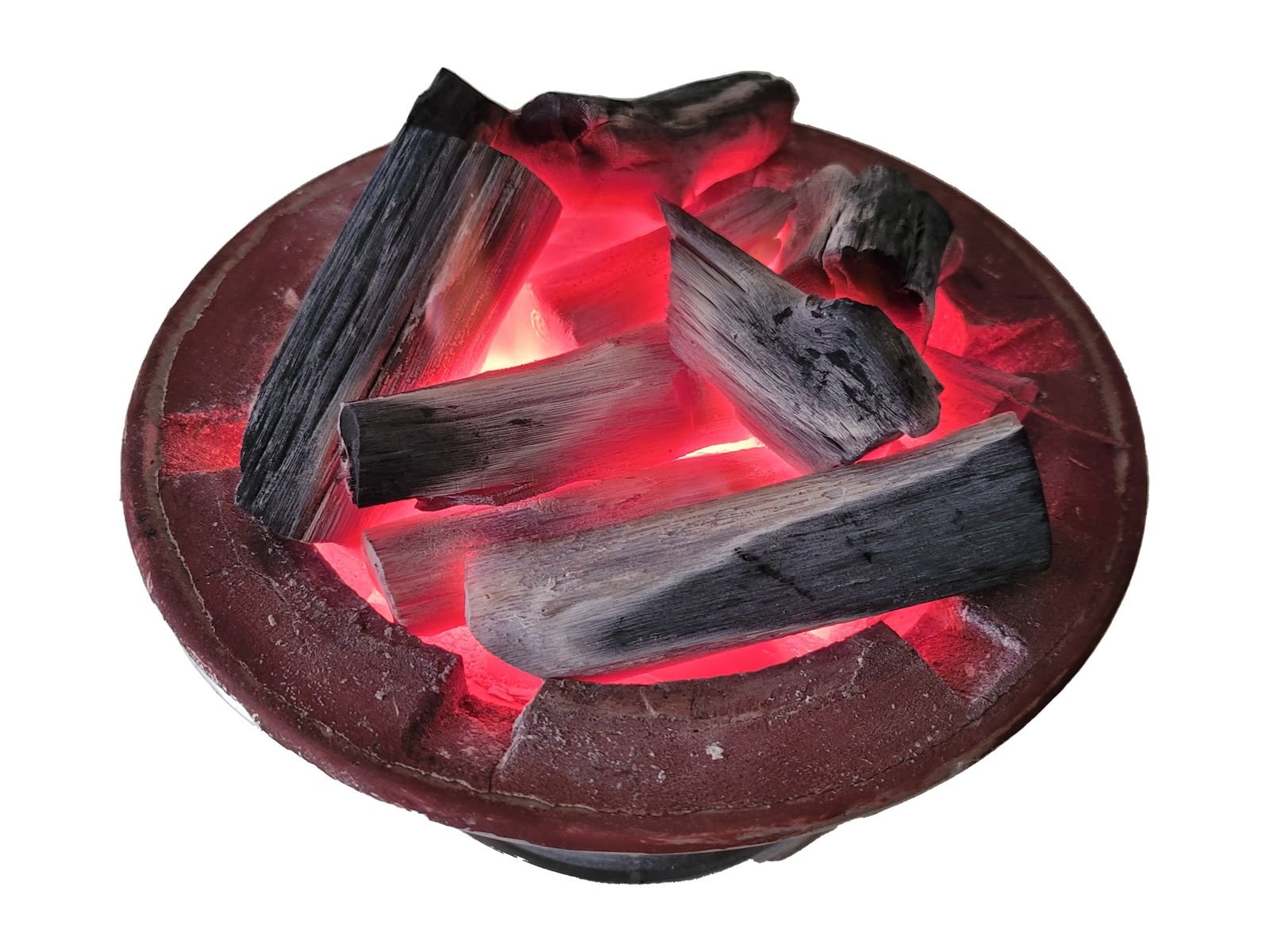
The gas vs charcoal restaurant debate is one of the oldest arguments in professional kitchens, and it is not settled by taste alone. Gas offers speed, control and low labour; charcoal offers flavour, guest theatre and a premium perception that can lift a menu's prices. Choosing between gas vs charcoal for a restaurant means weighing flavour, throughput, cost and compliance against the style of food you serve and the margins you need to protect.
Key takeaways
- Gas offers speed, precise control and low labour; charcoal offers superior flavour, searing heat and guest theatre.
- Charcoal supports premium menu pricing but needs more skill, storage and solid-fuel ventilation.
- Compare total cost, equipment plus fuel plus labour, not just the fuel price.
- Many kitchens run both, using gas for volume and charcoal for signature, flavour-led dishes.
Gas vs charcoal for a restaurant: the real decision
At its core, the gas vs charcoal restaurant choice is a trade between convenience and character. Gas grills ignite instantly, hold a set temperature with a dial, and need little attention, which keeps labour low and output predictable. Charcoal takes time to light, demands skill to manage, and rewards that effort with searing infrared heat and a smoky flavour that gas cannot replicate.
Most operators do not choose on principle; they choose on positioning. A high-volume casual kitchen may lean on gas for consistency, while a steakhouse, yakitori bar or wood-fired concept builds its whole identity on live fire. The rest of this comparison breaks the decision into the factors that actually move the numbers.
It also helps to name a false premise the debate often carries: that one fuel is simply better than the other. In practice, gas and charcoal are tools tuned to different jobs. A breakfast line turning out eggs and flat-top items gains nothing from live fire, while a steakhouse that sells the smell of the grill from the doorway cannot buy that appeal from a gas valve. The useful question is not which fuel wins in the abstract, but which one earns its keep on the food you actually sell and the margins you need to protect.
Flavour and guest perception
Flavour is charcoal's strongest argument. Real charcoal produces intense radiant heat and the char and subtle smoke that guests associate with quality grilling. Premium fuels like binchotan take this further, giving clean, high heat with almost no off-odours, which is why top grill restaurants specify it. Gas delivers heat but little flavour of its own.
Perception matters as much as taste. An open charcoal grill is theatre; guests see it, smell it, and will pay more for food that is visibly cooked over live fire. If your concept trades on authenticity, charcoal is not just a fuel, it is part of the product. Our guide to the best charcoal for restaurants covers which types deliver the cleanest flavour.
There is a menu-engineering angle too. Dishes described as charcoal-grilled or cooked over live fire carry higher perceived value, which lets a kitchen price them above an equivalent gas-cooked plate. That pricing power is part of charcoal's return on investment, not simply a matter of taste.
The flavour itself comes from two mechanisms worth understanding. The first is intense radiant heat that drives fast surface browning, the Maillard reactions and light char that read as grilled. The second is the aromatic smoke produced when juices and fat vaporise on the coals and wash back over the food. Clean fuels such as binchotan lean on the first mechanism, delivering searing heat with very little smoke, while lump and briquettes contribute more of the second. Gas provides heat but neither the same radiant intensity nor the smoke, which is why its results can taste cleaner but flatter.
Need this grade by the container?
Tell us your market, volume and target spec — we reply within one business day with a quote and a sample offer.
Throughput and consistency on the line
This is where gas fights back. During a rush, a gas grill is ready in minutes, holds an exact temperature and forgives a less experienced cook, so covers move fast and results stay uniform. Charcoal needs lighting ahead of service, careful bed management, and a skilled hand to keep temperatures even across the grate.
The right charcoal narrows the gap. Uniform, long-burning fuels give a stable bed that lasts a full service with fewer reloads, which keeps a live-fire line moving. Understanding formats helps here; our comparison of binchotan vs lump vs briquettes explains which burns steadiest for high throughput.
Staffing is the hidden variable. Gas is forgiving enough that a newer cook can hold a station, while a charcoal grill rewards an experienced grill cook who reads the bed by eye. If your labour pool is thin or turnover is high, that difference can weigh as heavily as flavour when you choose between the two.
Gas vs charcoal restaurant costs: fuel, kit and labour
A fair gas vs charcoal restaurant costing looks at three things, not just fuel. Gas usually carries higher installation cost but lower running labour; charcoal has cheaper equipment but higher fuel handling and skill requirements. The table below summarises the trade-offs.
| Factor | Gas | Charcoal |
|---|---|---|
| Startup time | Instant | 15-30 min |
| Temperature control | Precise, dial-set | Skill-based |
| Flavour | Minimal | Strong, smoky |
| Labour and skill | Low | Higher |
| Equipment cost | Higher | Lower |
| Fuel handling | Piped, hands-off | Storage and ash removal |
| Guest theatre | Low | High |
| Best fit | High-volume consistency | Premium, flavour-led |
Because fuel is only one line in that table, the cheapest option on paper is not always the cheapest in practice once labour, throughput and menu pricing are counted.
Two lines in that table tend to decide the outcome. Labour is the first: if you cannot reliably staff a skilled grill cook, charcoal's advantages are hard to realise night after night. Menu pricing is the second: if your concept and location let you charge a premium for live-fire dishes, charcoal's higher handling cost is repaid at the till. Run the numbers on your own covers and average check before you commit, because the same grill can be an easy profit centre in one venue and a daily struggle in another.
Compliance, safety and ventilation
Both fuels carry obligations. Gas requires certified installation, leak checks and interlocks. Charcoal requires good extraction, safe ash handling and correct fuel storage, and importers should confirm the charcoal's documentation. Reputable charcoal ships with an MSDS and a Certificate of Analysis; VUTRUX charcoal, for example, has Vinacontrol self-heating testing concluding it is not IMDG Class 4.2, although carriers may still book it as UN 1361.
Ventilation is the practical hurdle for charcoal. A live-fire grill needs a canopy and extraction rated for solid fuel, plus a safe routine for storing fuel away from heat and for disposing of cooled ash. Once that is in place, charcoal is straightforward to run safely through a full service.
Documentation is the part importers control. Insist that any charcoal you buy arrives with a per-lot Certificate of Analysis and an MSDS, and clarify with your forwarder how the goods will be booked: reputable Vietnamese charcoal, VUTRUX included, carries Vinacontrol self-heating testing concluding it is not IMDG Class 4.2, yet some carriers still book charcoal under UN 1361, and knowing that in advance keeps a booking from stalling. Storage on site is simple but non-negotiable: keep fuel dry and away from heat sources, and never store warm ash, which can smoulder for hours.
Choosing charcoal that performs at service
If you land on charcoal, the fuel you pick decides whether it feels effortless or exhausting on the line. Look for high fixed carbon (around 94 to 95%), low ash and moisture (near 3% each), low smoke and consistent sizing, so the bed lights predictably and lasts. Learning correct lighting and bed management also makes a live grill far easier to run, as our guide on how to light and use binchotan explains.
Ready to move to live fire, or upgrade the charcoal you already use? Request a sample and a quote and specify the grades, sizes and volumes your service needs.
If you are torn, start small and let the grill decide. Run a charcoal section alongside your existing line for a limited menu, price those dishes for their live-fire appeal, and watch how they sell and how the kitchen copes. Most operators find the answer is not gas or charcoal but the right balance of both, with charcoal earning its place on the dishes guests will pay a premium to see cooked over fire.
Frequently asked questions
Is charcoal better than gas for a restaurant grill?
It depends on your concept. Charcoal delivers superior flavour, high searing heat and guest theatre, which supports premium pricing, but it needs more skill and labour. Gas is faster, more consistent and cheaper to run at high volume. Flavour-led venues favour charcoal, while high-throughput kitchens often prefer gas.
Does charcoal really make food taste better than gas?
Most chefs agree it does. Charcoal's intense radiant heat and light smoke create char and depth that gas cannot match, and clean-burning fuels such as binchotan give that flavour without off-odours. Gas cooks well but adds little flavour of its own, which is why premium grills stay with charcoal.
Is charcoal more expensive to run than gas?
Not necessarily. Charcoal equipment is usually cheaper than gas installation, but charcoal needs more labour, storage and ash handling. Whether it costs more overall depends on your volume, menu pricing and how much guests will pay for live-fire cooking. Compare total cost, not just fuel price.
Can a restaurant use both gas and charcoal?
Many do. A common setup uses gas for speed and consistency on high-volume items and a charcoal grill for signature, flavour-led dishes that justify a higher price. Running both lets a kitchen balance throughput with the theatre and taste that charcoal provides.
What charcoal is best for a restaurant grill?
For clean, high, controllable heat most professional grills favour binchotan white charcoal or machine-made ogatan: both offer high fixed carbon, low ash and low smoke, so the bed lights predictably and lasts a full service. Binchotan gives the longest, most intense radiant heat for premium skewer and steak work, while ogatan lights faster and costs less per tonne. Match the fuel to your menu, and always trial a sample on your own grill before committing to a container.