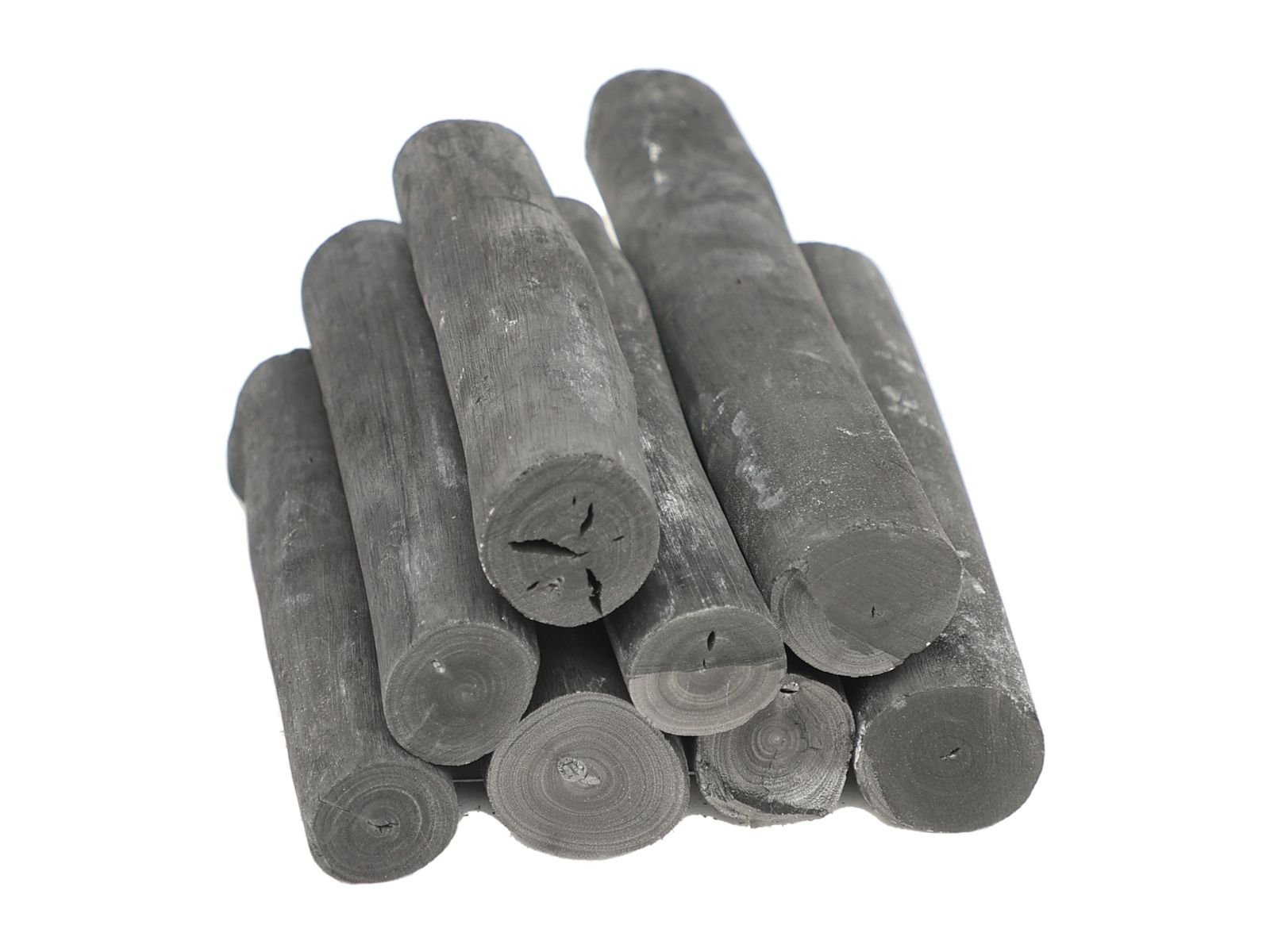
Is charcoal eco-friendly? The honest answer is that it depends far more on what the charcoal is made from and how it is used than on the word charcoal itself. Fuel made from cleared natural forest and packed with chemical binders sits at one end of the scale; fuel made from plantation hardwood, orchard prunings or sawmill residue and burned efficiently sits at the other. This article takes a balanced look at the real factors, so you can make a defensible choice rather than rely on marketing labels.
Key takeaways
- Whether charcoal is eco-friendly depends chiefly on feedstock and end use, not on the material category.
- Charcoal from plantation wood, fruitwood prunings and sawmill residue avoids the worst impact, which is natural-forest clearance.
- Pure lump, binchotan and ogatan burn without the chemical binders and accelerants found in some instant-light briquettes.
- A hotter, longer, cleaner burn means you use less fuel for the same cooking, which lowers the real-world footprint.
- Documentation such as EUDR readiness and per-lot testing lets you verify green claims instead of trusting them.
Is charcoal eco-friendly? Start with the feedstock
The single biggest factor in whether charcoal is eco-friendly is where the wood came from. Charcoal linked to the clearing of natural forest carries a heavy environmental cost, because it removes standing carbon stores and habitat that take decades to rebuild. Charcoal made from wood that was going to be grown, pruned or discarded anyway is a very different proposition, even though the two can look identical in the bag. Feedstock also shapes the social side of sustainability, since orchard and plantation supply chains tend to involve settled, documented growers rather than opportunistic forest cutting.
Three lower-impact feedstocks dominate responsible supply: plantation hardwood such as eucalyptus, grown and replanted as a crop; fruitwood prunings from lychee, longan and pomelo orchards; and clean sawmill sawdust, which is the raw material for ogatan. In each case the fuel is a by-product or a managed crop rather than a reason to fell forest. So when someone asks, is charcoal eco-friendly, the sharper question is really: what is this particular charcoal made from? To see how feedstock and processing differ, compare natural versus industrial charcoal.
The carbon question
Any combustion releases carbon dioxide, and charcoal is no exception, both when it is made and when it is burned. The environmental case is therefore never that charcoal is emission-free. It is that the emissions can be part of a short, renewable cycle rather than a one-way release from long-stored forest carbon. Some producers even capture the heat from carbonization to dry the next batch, trimming the energy cost of production, though this varies widely between workshops.
When the wood is a replanted crop or an existing residue, the carbon released is broadly the carbon that recently grew, and the land keeps producing more to reabsorb it. When the wood is sawmill waste, carbonizing it also avoids the methane and disposal problems of letting it rot or burning it uncontrolled in the open. None of this makes charcoal carbon-neutral on its own, and honest suppliers do not pretend otherwise, but it explains why feedstock choice matters far more to the overall footprint than the label on the bag. The honest summary is that responsibly sourced charcoal is a lower-impact fuel, not a zero-impact one, and buyers who grasp that distinction make better decisions.
Need this grade by the container?
Tell us your market, volume and target spec — we reply within one business day with a quote and a sample offer.
Clean burning and no chemical binders
Eco impact is not only about the wood; it is also about what else is in the fuel and how completely it burns. Pure hardwood lump charcoal, binchotan and ogatan are made without chemical binders or lighter-fluid additives. Ogatan is held together by the natural lignin in compressed sawdust, not by glue, so nothing synthetic is added to make the shape. That means fewer additives entering the air and the food, compared with some instant-light retail briquettes that rely on accelerants. The absence of binders also means the ash is cleaner and there is less of it to dispose of after cooking.
A cleaner-burning fuel is not just pleasanter to cook on; it also means fewer volatile emissions and less residue for the same amount of heat.
VUTRUX charcoal is independently tested by Vinacontrol, with fixed carbon typically around 95% for binchotan and 94% for ogatan, ash near 3% and sulphur effectively zero. High fixed carbon and low ash are practical signals of a clean, efficient burn, and they are numbers you can check rather than adjectives you have to trust. For indoor or enclosed cooking, that additive-free profile is not only greener but safer, since there are no synthetic accelerants to burn off near food.
Efficiency: burn less for the same result
An often-overlooked part of the eco question is efficiency. A denser, higher-carbon charcoal burns hotter and longer, so you need less of it to cook the same meal or run the same service. Binchotan is the clearest example: it holds a steady high heat for hours with very little smoke, which is why it is prized in professional kitchens where the grill runs all night. Over a busy week, the gap between a fuel that burns for two hours and one that burns for four means fewer bags opened, less delivery weight and less waste to clear.
Ogatan offers similar advantages for long service periods, with uniform pieces, extended burn time and low spark. Using a smaller quantity of a better fuel reduces the total wood, packaging and shipping behind each meal, which is a real if less visible environmental gain. Our ogatan wholesale guide explains how that consistency translates into predictable, efficient burns you can plan a menu around.
Responsible use and disposal
How charcoal is used affects its footprint as much as how it is made. A few simple practices make a measurable difference:
- Light only the quantity you need, and use a chimney starter rather than chemical accelerants.
- Choose a dense, high-carbon grade suited to your cooking, so fuel is not wasted on the wrong job.
- Extinguish and reuse leftover lumps where safe, since good charcoal can often be relit for a second session.
- Cooled ash from pure wood charcoal can be composted or dug into a garden in moderation.
These habits cost nothing, stretch each carton further and reduce waste, which is both economical and greener at the same time. Good sourcing and good habits reinforce one another. Storing charcoal somewhere dry helps as well, because damp fuel wastes energy driving off moisture before it can cook.
So, is charcoal eco-friendly? How to verify a claim
Because eco-friendly is an easy phrase to print on a bag, the useful skill is verification. So, is charcoal eco-friendly in a given case? Ask what it is made from, whether the feedstock is plantation wood, prunings or residue, and whether the supplier can show legality and deforestation-free documentation. For shipments into Europe, EUDR due-diligence readiness is a concrete test of whether a supplier can back its claims; see our guide to EUDR compliance for charcoal imports.
VUTRUX makes its charcoal from cultivated hardwoods, fruitwoods and sawmill residue, ships each lot with a certificate of analysis and material safety data sheet, and maintains EUDR and phytosanitary readiness across more than 40 markets from Hai Phong. Samples are available before ordering, so you can judge the fuel and its paperwork together. To match a responsibly sourced grade to your needs, request a quote or a sample.
Frequently asked questions
Is charcoal bad for the environment?
It can be, if it comes from cleared natural forest or contains chemical additives. It can also be a reasonable choice when it is made from plantation hardwood, orchard prunings or sawmill residue and burned efficiently. The material itself is neutral; the feedstock, the additives and the way you use it decide the real impact.
Which charcoal is the most eco-friendly?
Generally, pure charcoal made from a renewable or waste feedstock and burned efficiently. Ogatan made from compressed sawmill sawdust turns a by-product into fuel, while binchotan from plantation and orchard hardwood burns cleanly for a long time so you use less. Avoid instant-light briquettes with binders and accelerants if environmental impact is your priority.
Is charcoal carbon-neutral?
Not on its own. Making and burning charcoal both release carbon dioxide. The footprint is lower when the wood is a replanted crop or existing residue, because the carbon is part of a short, renewing cycle rather than a one-way release from long-stored forest carbon. Honest suppliers describe this balance rather than claiming zero impact.
Is lump charcoal better for the environment than briquettes?
Pure hardwood lump charcoal avoids the binders and fillers found in some retail briquettes, which is a point in its favour. However, engineered fuels such as ogatan, made from sawdust residue without chemical binders, can also be a responsible choice. The deciding factors are the feedstock and whether the product contains additives, not simply the shape.