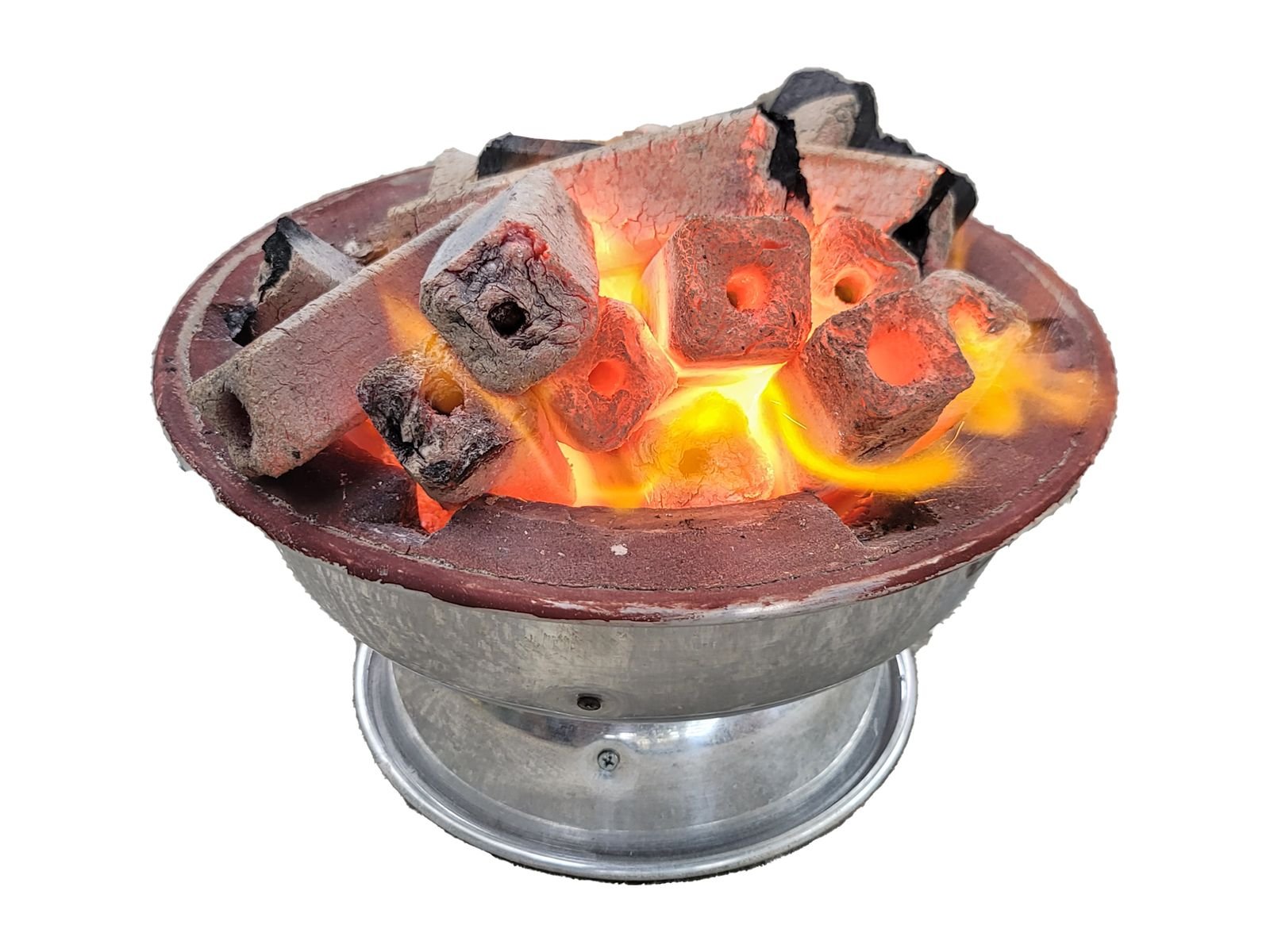
Volatile matter in charcoal is the fraction that vaporizes and burns as gas when the coal is heated, and it is the single best predictor of smoke, flare-ups and odor. A high volatile matter charcoal spits, smokes and imparts strong aromas; a low one gives the clean, near-invisible heat that binchotan is prized for. This guide explains what volatile matter charcoal figures mean, why the number matters for cooking and for quality, and the ranges to look for before you buy.
Key takeaways
- Volatile matter is the gas-phase fraction released when charcoal is heated; it governs smoke, flare and aroma.
- Low volatile matter is a hallmark of well-refined charcoal such as binchotan; high volatile matter signals under-carbonized product.
- Lump charcoal usually runs higher volatile matter than white charcoal; binchotan is often very low.
- Volatile matter, fixed carbon, ash and moisture together make up the proximate analysis on a COA.
- For indoor grills and delicate food, low volatile matter matters more than almost any other spec.
What volatile matter in charcoal is
Volatile matter is the portion of a charcoal that turns to gas and burns off when the coal is heated away from air. It is made up of the light, combustible compounds left behind by incomplete carbonization: residual tars, methanol and short-chain hydrocarbons trapped in the pore structure. On a lab report it is one of the four figures in a proximate analysis, sitting alongside fixed carbon, ash and moisture.
The amount of volatile matter is a direct fingerprint of how thoroughly the wood was carbonized. Char wood gently and briefly and much of its original volatile content survives; carbonize it fully, then refine it at high temperature as binchotan production does, and almost all of it is driven off. That is why volatile matter is often described as the difference between charcoal that is merely charred and charcoal that is truly finished.
It helps to picture the three combustible fractions in the order they leave the coal. Moisture goes first as steam; volatile matter goes next as flammable gas; and fixed carbon, the glowing core, burns last and longest. Volatile matter is the middle stage, the flare between the damp start and the steady heart of the fire, and it is the stage you most directly feel as smoke.
Why volatile matter charcoal levels drive smoke and flare
Volatile matter is where the smoke and drama of a fire come from. When a coal heats up, its volatile compounds vaporize and ignite in the air above the bed, producing visible flames rather than the steady radiant glow of burning carbon. The higher the volatile matter, the more pronounced the effects.
- Flare-ups. Gases igniting above the coals create sudden flames that scorch food and are hard to control.
- Smoke on lighting. Much of a coal's smoke is unburned volatile matter escaping before it reaches ignition temperature.
- Stronger odor and soot. Volatiles carry aromas and can deposit soot, which is unwelcome around delicate food.
- Less steady heat. A fire dominated by burning gas is livelier and shorter than one dominated by glowing carbon.
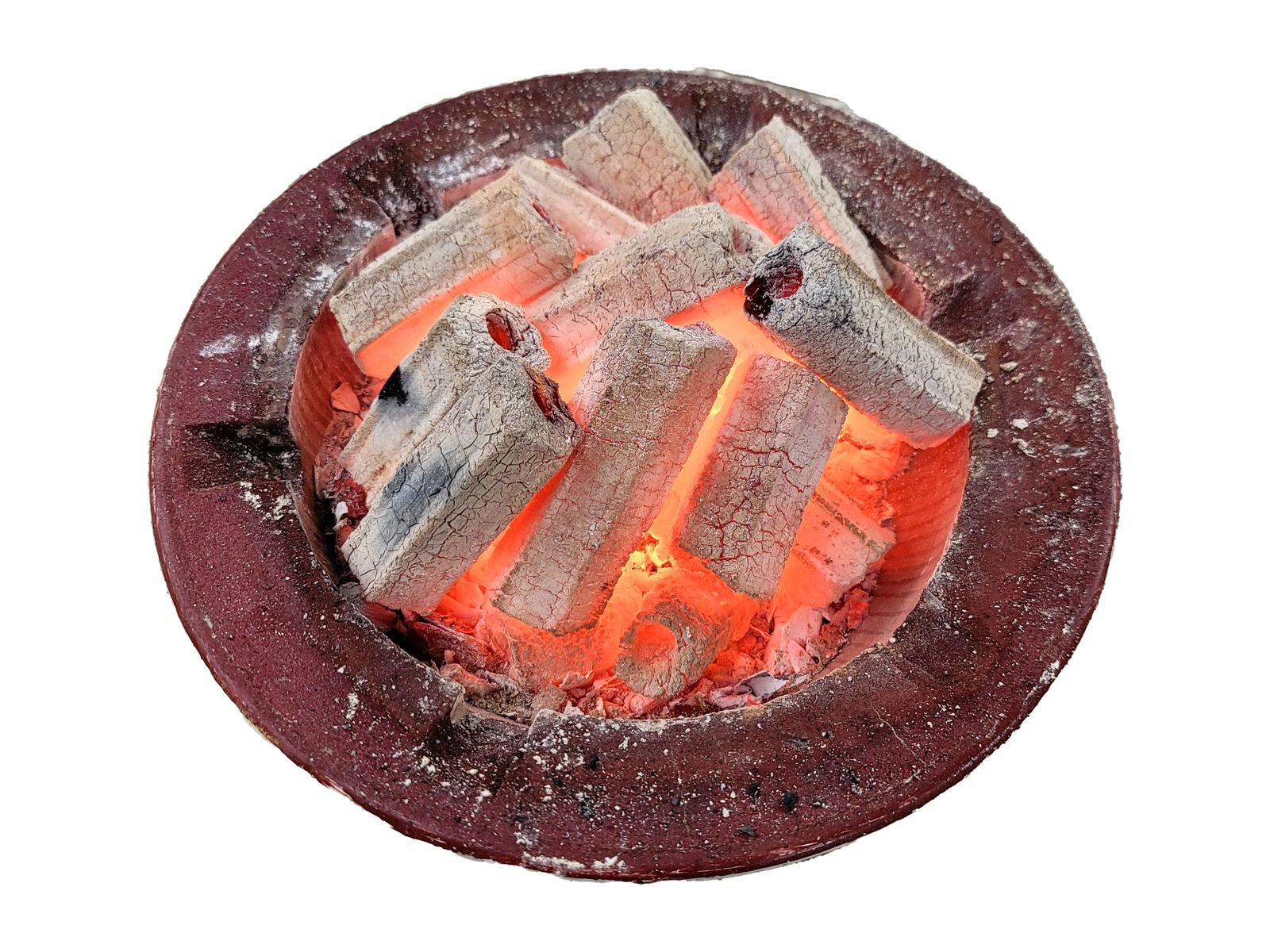
Low volatile matter is the technical reason binchotan burns almost invisibly, with intense radiant heat and next to no smoke, the profile that makes it the benchmark for indoor and precision grilling. It is also why lighting is the smokiest moment of any charcoal fire: that first surge of heat drives the volatiles off faster than they can fully burn.
Need this grade by the container?
Tell us your market, volume and target spec — we reply within one business day with a quote and a sample offer.
Volatile matter as a quality signal
More than any other single number, volatile matter separates a fully finished charcoal from an under-cooked one. A low figure means carbonization was taken to completion and the fuel is stable, clean and predictable. A high figure often means the opposite: a coal rushed through the kiln that will smoke, spit and burn unevenly.
The two-stage process behind binchotan — slow carbonization followed by high-temperature refining — is designed specifically to strip volatile matter out, which is why quality white charcoal tests so low. Cheaper, faster production leaves more behind. This is also a useful cross-check on marketing: a product sold as clean-burning or low-smoke should have the low volatile matter to prove it, verifiable on a COA rather than asserted on a bag. For private-label buyers this is doubly important, because a low-smoke claim printed on your own packaging is only ever as good as the volatile-matter figure standing behind it.
Typical volatile matter ranges by charcoal type
The ranges below are indicative and shift with species, standard and reporting basis, but the ordering is consistent: the more refined the charcoal, the lower the volatile matter.
| Charcoal type | Typical volatile matter | What it means at the grill |
|---|---|---|
| Binchotan (white charcoal) | Very low, often under ~5% | Near-smokeless, clean, steady radiant heat |
| Ogatan (sawdust briquette) | Low, roughly 5 to 10% | Clean burn with a long, even output |
| Hardwood lump | Moderate, roughly 10 to 25% | More aroma and flare; good for open barbecue |
| Under-carbonized or raw charcoal | High, often 25%+ | Smoky, spitting and unpredictable |
There is no single right answer: an open-flame barbecue may welcome the extra aroma of a higher-volatile lump, while a yakitori counter needs the lowest volatile matter it can find.
How volatile matter is measured
Volatile matter is measured by heating a weighed, dried sample in a covered crucible so gases escape but the carbon cannot burn, typically to around 950 degrees Celsius under ASTM D1762 or an equivalent method. The weight lost, after accounting for moisture, is the volatile matter, reported as a percentage.
As with the other proximate figures, the reporting basis matters. A dry-basis result excludes moisture and reads a little differently from an as-received one, so comparisons only hold when the basis is the same. Because the four proximate values are linked, fixed carbon is usually calculated by difference, meaning whatever remains after moisture, volatile matter and ash. That is one more reason a reliable volatile-matter figure matters: an error here shifts the headline fixed-carbon number too.
Two practical notes follow. First, always confirm the reporting basis before comparing volatile-matter figures from different suppliers, because a dry-basis number and an as-received one are not the same measurement. Second, ask for the figure on the exact lot you are buying; because charcoal is a natural product, volatile matter drifts between production runs and even between species.
What low volatile matter means for your business
For buyers, volatile matter translates almost directly into customer experience. The lower it is, the cleaner and more controllable the fire, which is why it should sit high on the checklist for certain applications. Volatile matter rarely appears on retail packaging, yet it shapes the customer's experience more visibly than almost any other number on the COA.
- Indoor and extraction-limited kitchens need low volatile matter to keep smoke and flare within what the ventilation can handle.
- Delicate, flavor-led cooking such as yakitori and robata depends on clean heat that will not mask the food.
- Premium retail benefits from a genuinely low-smoke product that lives up to its shelf claims.
- Catering and events that cook close to guests gain from a low-smoke fuel that will not drift across a venue.
If clean burning is central to your offer, match volatile matter to the setting using our guide to the best charcoal for restaurants. To check the volatile matter of a specific grade against your own requirement, request a quote and a sample and read the figure on the per-lot COA rather than taking it on trust.
Frequently asked questions
What is volatile matter in charcoal?
Volatile matter is the fraction of charcoal that vaporizes and burns as gas when heated, made up of residual tars and light hydrocarbons left by incomplete carbonization. It is one of the four proximate-analysis values, alongside fixed carbon, ash and moisture, and it largely governs smoke and flare.
Is high or low volatile matter better?
It depends on the use. Low volatile matter gives clean, low-smoke, steady heat, ideal for indoor grills and delicate cooking, and signals thorough carbonization. Higher volatile matter adds aroma and flare that some open-flame barbecue welcomes. For clean, precise cooking, lower is better.
Why does high volatile matter cause smoke and flare-ups?
When charcoal heats up, its volatile compounds vaporize and ignite in the air above the coals, producing flames rather than steady radiant heat. The more volatile matter present, the more smoke on lighting, the more flare-ups and the stronger the odor. Low volatile matter avoids most of this.
What is a typical volatile matter level for binchotan?
Binchotan is prized for very low volatile matter, often under about 5%, because its two-stage production drives off nearly all volatile compounds. Ordinary lump charcoal usually runs higher, roughly 10 to 25%, and under-carbonized charcoal higher still. Confirm the figure on a per-lot COA.
How is volatile matter measured?
A dried sample is heated in a covered crucible so gases escape but the carbon cannot burn, typically to about 950 degrees Celsius under ASTM D1762 or an equivalent method. The weight lost, after moisture, is the volatile matter. Check whether the result is quoted as-received or on a dry basis.