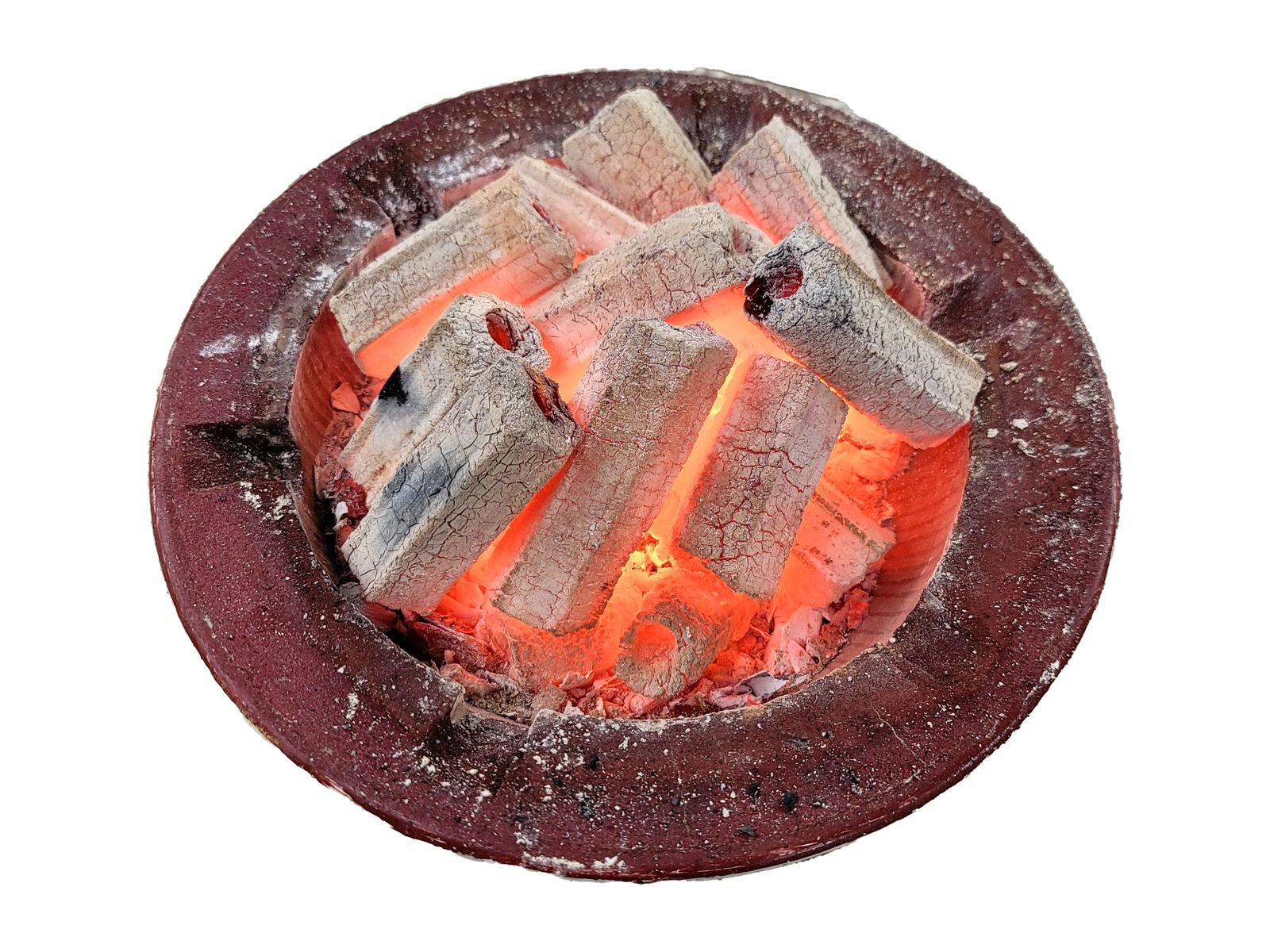
Comparing binchotan vs coconut charcoal means weighing two clean-burning natural fuels made from very different raw materials: dense hardwood versus coconut shell. Both outperform cheap industrial briquettes, yet they excel at different jobs - one built for premium grilling, the other for hookah and value briquettes. This informational guide compares source, heat, burn time, ash and best uses so you can choose with confidence.
Key takeaways
- Binchotan is natural hardwood white charcoal; coconut charcoal is compressed carbonised coconut shell.
- Binchotan gives intense, steady radiant heat ideal for grilling; coconut briquettes give even heat popular for hookah.
- Both are low-ash and near-neutral in odour compared with industrial briquettes.
- Neither needs petroleum accelerants - always verify a specific lot with a COA and burn test.
- VUTRUX supplies binchotan, ogatan and hardwood lump - not coconut charcoal; it is compared here for information only.
Binchotan vs coconut charcoal at a glance
Put binchotan vs coconut charcoal side by side and you are really comparing two raw materials that both burn cleanly: dense hardwood versus coconut shell. Both are natural, both are popular, and both outperform cheap industrial briquettes - but they suit different jobs. The table sets out the practical differences before we look at each in detail.
| Attribute | Binchotan (white charcoal) | Coconut charcoal |
|---|---|---|
| Raw material | Dense hardwood and fruitwood | Coconut shells (agricultural by-product) |
| Typical form | Natural pieces, round or split | Compressed briquettes, cubes or discs |
| Fixed carbon | Very high (about 95% on VUTRUX COA) | High (varies by producer) |
| Heat | Intense, radiant, very steady | Steady and even |
| Burn time | Long, hours per fill | Long and consistent |
| Ash | Very low | Low, fine light ash |
| Smoke and odour | Minimal, near-neutral | Low, near-neutral |
| Signature use | Yakitori, robata, premium grilling | Hookah and shisha, value BBQ briquettes |
| Sold by VUTRUX | Yes | No (comparison only) |
Source and how each is made
The starting material shapes everything that follows.
Binchotan
Binchotan is made from dense hardwoods and fruitwoods - eucalyptus, lychee, longan and orange–pomelo - carbonised at high temperature and then quenched. That process drives off volatiles and leaves an exceptionally hard, high-carbon piece that keeps the natural form of the wood. For the full definition, see what binchotan white charcoal is.
Coconut charcoal
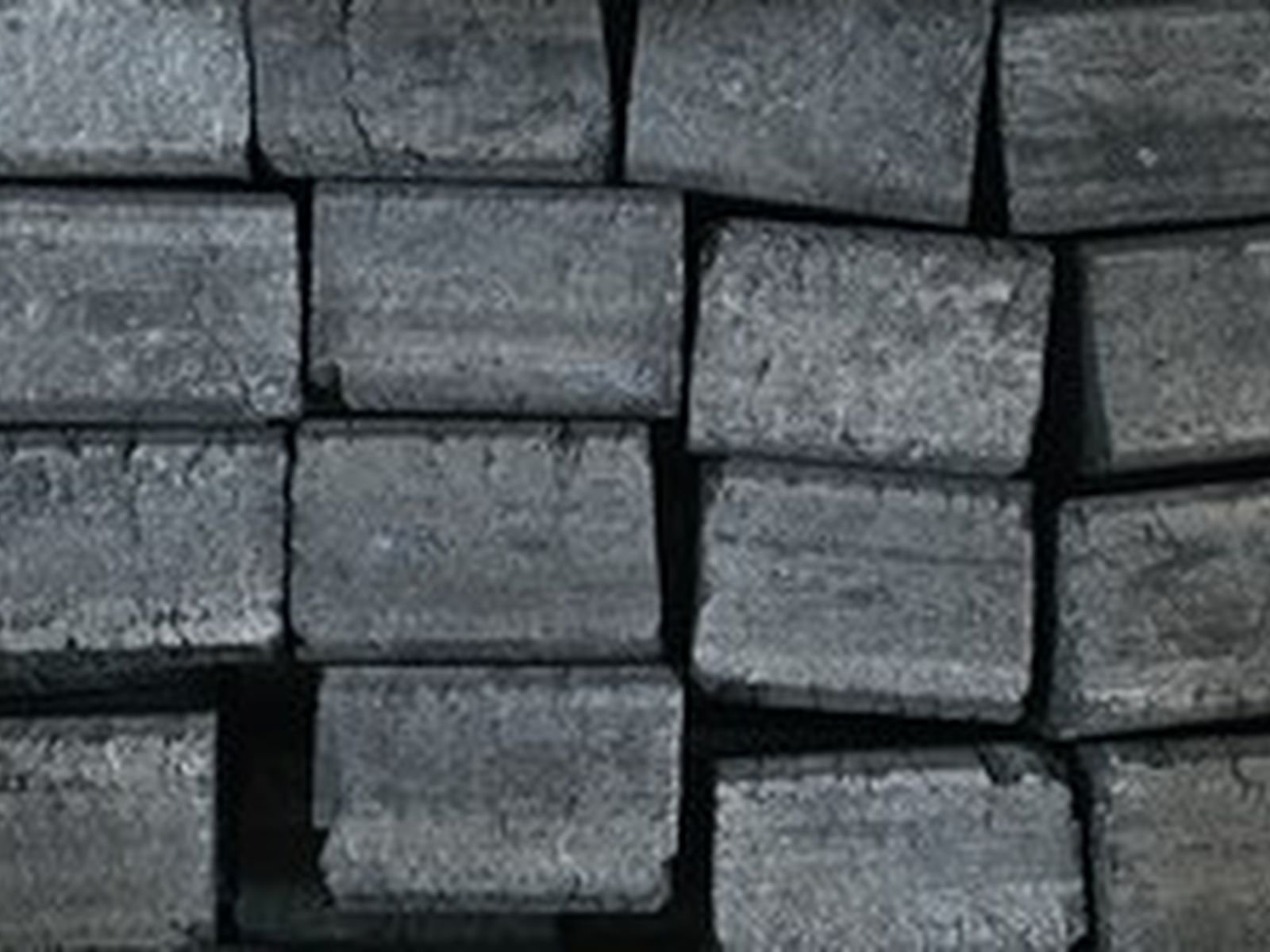
Coconut charcoal is made from carbonised coconut shells, a by-product of the food industry. Because shell fragments are small, the char is usually ground and compressed with a natural binder into uniform briquettes - cubes for hookah, or pillow shapes for barbecue. This makes coconut charcoal inherently uniform, much like any briquette, rather than a natural piece.
Both are natural in the sense that neither needs petroleum accelerants - a useful contrast with the products in our natural versus industrial charcoal guide.
That difference in source has a regulatory dimension too. Because binchotan and ogatan are wood-derived, responsible suppliers back them with EUDR due-diligence and phytosanitary documentation, while coconut charcoal, made from an agricultural by-product, sits under different rules. Whichever you buy, the test of a serious supplier is the same: documented, legal, traceable sourcing rather than a vague sustainability slogan.
Need this grade by the container?
Tell us your market, volume and target spec — we reply within one business day with a quote and a sample offer.
Heat, burn time and ash
On performance, binchotan vs coconut charcoal is closer than many expect, because both are high-carbon fuels - but the differences matter for specific jobs.
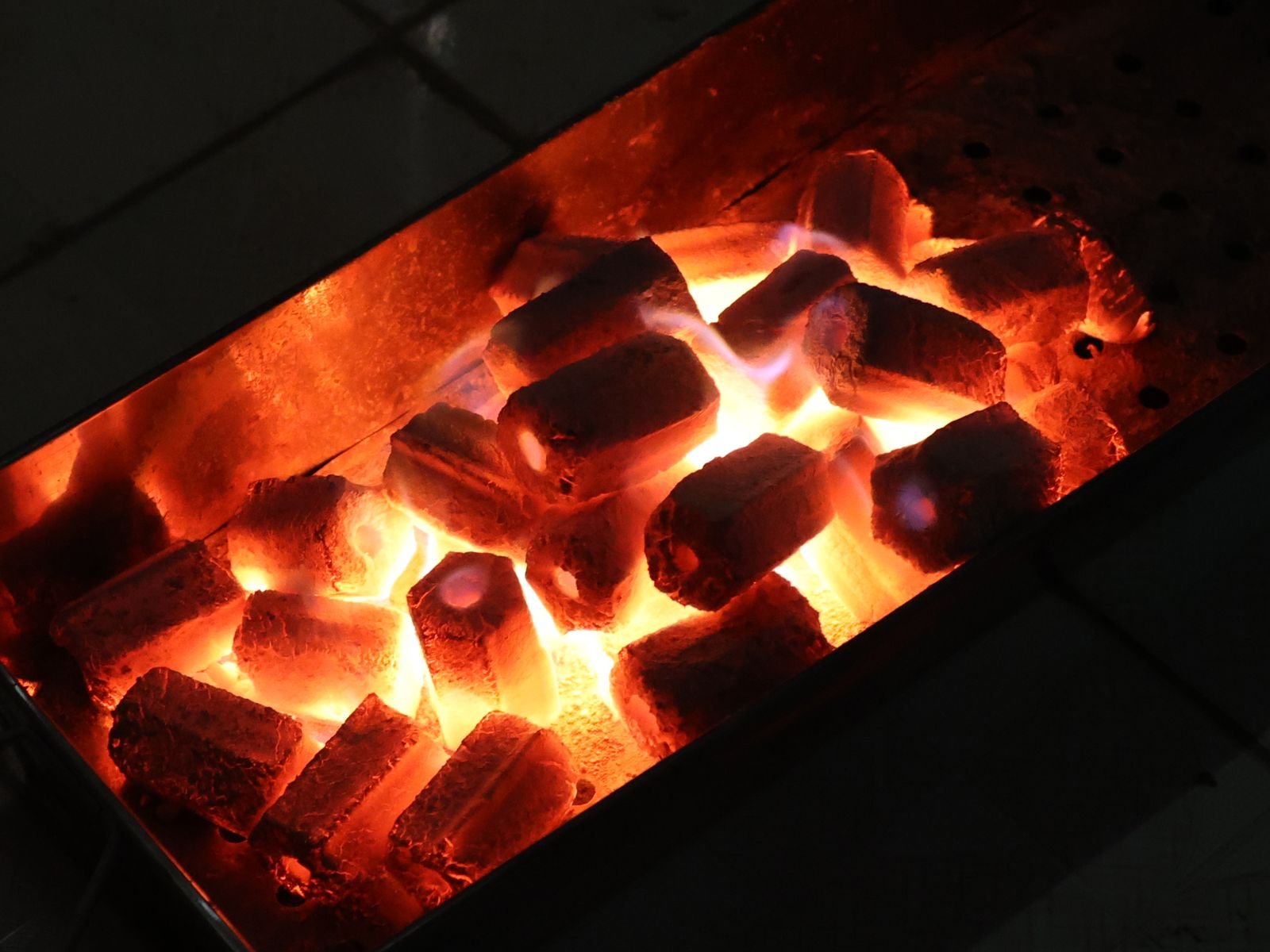
Heat. Binchotan is prized for intense, radiant infrared heat that stays remarkably steady for hours, letting cooks work close to the coals. Coconut briquettes deliver a steady, even heat too, though as a compressed cube they radiate a little differently from a dense natural stick.
Burn time. Both burn long. Dense binchotan holds heat for hours per fill, while quality coconut briquettes are also known for long, consistent burns, which is exactly why hookah lounges favour them.
Ash. Both are low-ash relative to industrial briquettes. Binchotan leaves very little ash and holds its shape as it burns down; coconut leaves a fine, light ash. Lower ash means less airflow choking and less mid-service cleaning either way.
Density is the quiet factor that decides much of this. A fuel that is heavy for its size stores more energy and radiates longer, which is why a dense binchotan stick can hold a station through a long service. Compressed coconut cubes are engineered for even density too, so both fuels reward you for judging weight, not just appearance, when you compare samples.
Smoke, odour and flavour
Both fuels earn their reputations by staying out of the way of the food. Fully carbonised binchotan burns almost odourless, which is why sushi and yakitori chefs choose it - nothing masks the taste of delicate proteins. Coconut charcoal is also valued for a neutral profile, the main reason it dominates hookah, where any off-flavour would ruin the session.
The practical takeaway: neither should add a chemical smell if it is genuinely pure. If a sample smokes heavily or smells acrid, that points to poor carbonisation, added binders or moisture - not to the category itself. Judge a specific lot on its COA and a burn test, never on reputation alone.
Flavour neutrality is also why both fuels command a premium over industrial briquettes that can carry a chemical note from binders or accelerants. If a customer is paying for a clean grilling or hookah experience, an off-taste is the fastest way to lose them, so the near-neutral profile of both binchotan and coconut is a genuine commercial asset, not just a technical footnote.
Best uses for each
Neither fuel is universally better; each owns particular jobs.
- Choose binchotan for: yakitori, robata, teppan and premium restaurant grilling, and premium retail lines where long, clean, radiant heat is the selling point. It also compares well against other grilling fuels in our binchotan vs lump vs briquettes guide.
- Choose coconut charcoal for: hookah and shisha, where uniform cubes and neutral flavour are the standard, and for value barbecue briquettes where a compressed, long-burning shape is wanted.
Many buyers actually stock both for different customers - a premium binchotan grilling line and a coconut hookah line - because they rarely compete for the same sale.
For retailers and importers, that separation is useful when planning a range. Rather than framing binchotan vs coconut charcoal as an either-or, many stock each for the audience it serves and label them clearly so customers self-select. A grilling shopper and a hookah shopper want very different things, and a shelf that speaks to both captures more of the market.
Which should you choose - and what VUTRUX supplies
If your customers grill - especially restaurants that sell on flavour and presentation - binchotan is usually the stronger choice for its steady radiant heat, near-neutral taste and premium positioning. If your market is hookah or value briquettes, coconut charcoal is the natural fit.
If you are still weighing binchotan vs coconut charcoal for a grilling programme, the deciding questions are simple: how close to the coals will cooks work, how long must a fill last, and does the concept sell on flavour and presentation? The more those answers point to premium grilling, the more binchotan earns its place.
To be clear about our range: VUTRUX supplies binchotan white charcoal, ogatan sawdust charcoal and hardwood lump charcoal - we do not sell coconut charcoal. We include coconut here for honest comparison so you can choose well. If binchotan or ogatan fits your market, tell us your target grade and volume and request a quote and sample.
Frequently asked questions
Is binchotan better than coconut charcoal?
It depends on the use. For grilling - especially yakitori, robata and premium restaurant work - binchotan's intense, steady radiant heat and near-neutral flavour make it the stronger choice. For hookah and for value barbecue briquettes, coconut charcoal's uniform cubes and neutral profile are hard to beat. Neither is universally better.
Does coconut charcoal burn hotter than binchotan?
Both are high-carbon fuels that burn hot. Binchotan is known for intense, radiant infrared heat that stays very steady over hours, ideal for cooking close to the coals. Coconut briquettes give a steady, even heat as well, though a compressed cube radiates a little differently from a dense natural binchotan stick.
Which lasts longer, binchotan or coconut charcoal?
Both are long-burning. Dense binchotan holds heat for hours per fill, while quality coconut briquettes are prized for long, consistent burns, which is why hookah lounges rely on them. Actual burn time depends on piece density and airflow, so compare specific products with a burn test.
Is coconut charcoal more sustainable than binchotan?
Both can be responsibly made from renewable inputs: coconut charcoal uses shells left over from the food industry, while binchotan uses hardwood and fruitwood, and ogatan uses sawdust from timber milling. What matters most is documented, legal sourcing - for wood-derived products that means EUDR due-diligence and phytosanitary paperwork.
Does VUTRUX sell coconut charcoal?
No. VUTRUX specialises in binchotan white charcoal, ogatan sawdust charcoal and hardwood lump charcoal. We compare coconut charcoal here for information only, so buyers can make an informed choice. If binchotan or ogatan suits your market, request a quote and a sample.