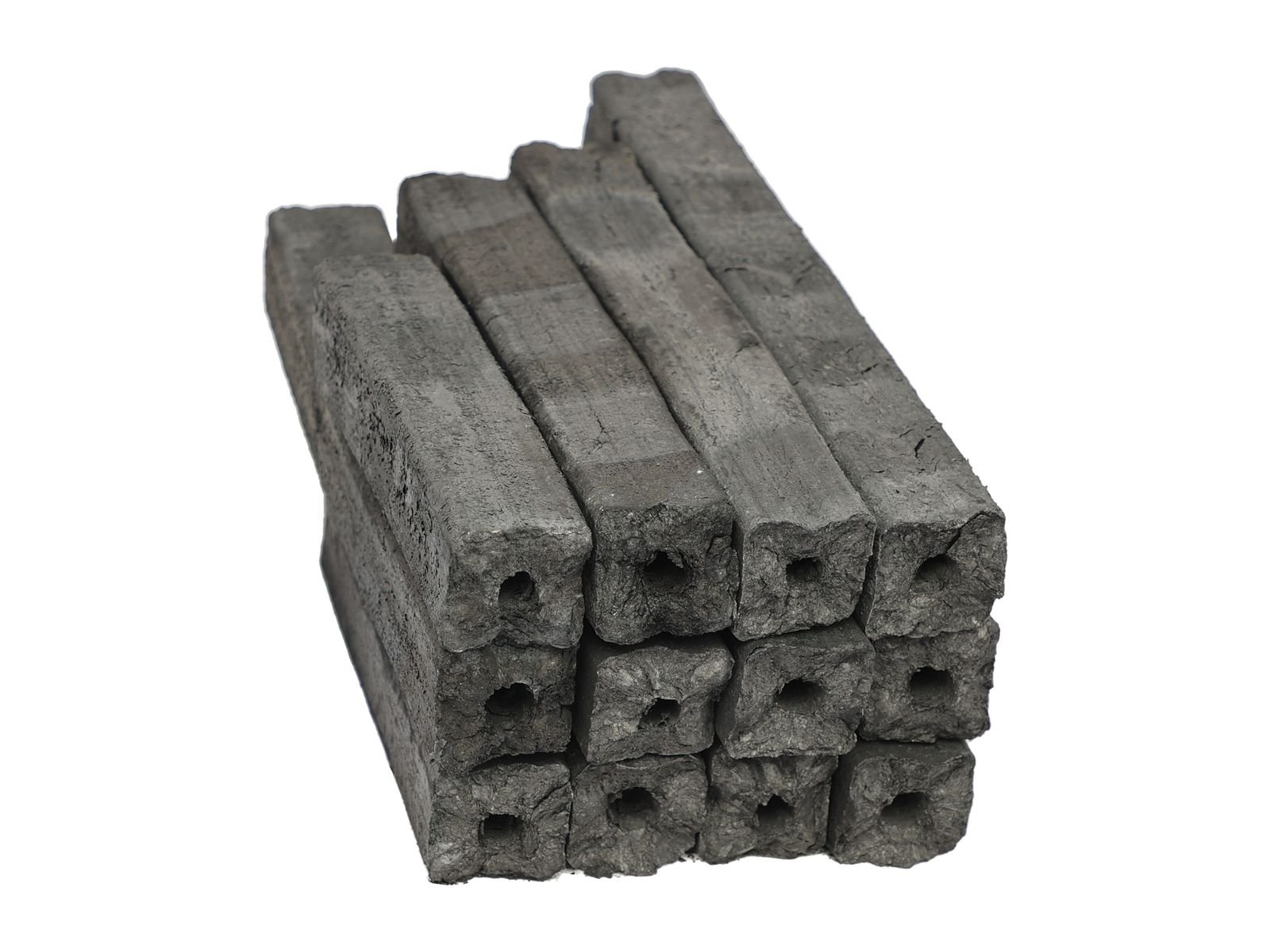
The link between charcoal and deforestation is real, but it is not automatic. Charcoal made from cleared natural forest contributes to deforestation; charcoal made from plantation hardwood, orchard prunings or sawmill residue does not. For importers and distributors, the task is to tell the two apart with evidence, because regulators and customers will increasingly expect you to. This guide explains how the link works and the specific checks responsible buyers make before they commit to a shipment.
Key takeaways
- Charcoal only drives deforestation when its wood comes from cleared natural forest; feedstock is the deciding factor.
- Plantation hardwood, fruitwood prunings and sawmill residue are deforestation-free sources when properly documented.
- Due diligence means proving legal, deforestation-free origin with records, not assuming it.
- The EU Deforestation Regulation has turned these expectations into formal requirements for many shipments.
- Traceability from kiln to carton is what lets a buyer defend a purchase to auditors, customs and customers.
How charcoal and deforestation are actually linked
The connection between charcoal and deforestation comes down to one question: was the wood taken from natural forest that was cleared to get it? Where charcoal is produced from felled primary or protected forest, it removes standing carbon and habitat and drives genuine deforestation. Where it is produced from wood that was cultivated, pruned or left over from sawmilling, that link is broken, even though the finished charcoal may look and burn much the same. None of this means charcoal is inherently destructive; it means the origin has to be established rather than assumed.
This distinction is why blanket statements about charcoal being simply good or bad miss the point. The same word covers fuel with wildly different origins and wildly different footprints. Responsible buying is the practice of separating deforestation-free supply from forest-linked supply using documentation rather than assumption, and it is entirely learnable. Once you know which questions to ask, the relationship between charcoal and deforestation stops being a vague worry and becomes something you can check lot by lot. The stakes are not only regulatory: retailers and hospitality groups increasingly audit their own supply chains, so a forest-linked lot can cost a distributor an account, not just a fine.
Deforestation-free feedstocks
Several feedstocks allow charcoal to be produced without clearing any forest, and a credible supplier will tell you exactly which one a lot came from:
- Plantation hardwood such as eucalyptus, grown as a crop and replanted after each harvest.
- Fruitwood prunings from lychee, longan and pomelo orchards, removed as part of routine tree management and previously often burned as waste.
- Sawmill residue such as clean hardwood sawdust, the raw material for ogatan, which would otherwise be discarded.
VUTRUX makes its binchotan from these cultivated hardwoods and fruitwoods, and its ogatan from sawmill sawdust, deliberately avoiding natural-forest wood. When a supplier can name the species and the land type behind a lot, you can classify its deforestation risk instead of guessing at it. Sawmill residue deserves special mention, because turning sawdust that would otherwise be burned or dumped into useful fuel is close to the opposite of deforestation. When you can point to a named plantation species or a sawmill by-product, the deforestation question is largely answered before it is asked. Our guide on how to import charcoal from Vietnam covers where this origin documentation fits into the wider import process.
Need this grade by the container?
Tell us your market, volume and target spec — we reply within one business day with a quote and a sample offer.
What due diligence really means
Due diligence is the structured process of proving that the charcoal you buy is legal and deforestation-free before it enters your supply chain. It is not a single certificate but a small system, and in practice it has three parts:
- Information. Collect the species, the country and area of origin, and the land type behind each lot.
- Risk assessment. Using that information, judge the likelihood that the wood is linked to deforestation or illegal harvest.
- Risk mitigation. Where any doubt exists, gather more evidence, request geolocation of the source, or decline the lot until it is resolved.
The point of this cycle is that a responsible buyer can show the reasoning and the records behind a purchase, not merely assert that it is fine. If a regulator or a major customer asks why you believed a shipment was deforestation-free, the due-diligence file is what answers them. Good due diligence is proportionate: a well-documented plantation lot needs less scrutiny than an unfamiliar source, and the effort should follow the risk. The three steps repeat for every new source, and the records they generate are exactly what a due-diligence statement is built from.
The EUDR context
The European Union Deforestation Regulation has turned these good-practice expectations into legal requirements for many products entering the EU. It obliges operators to demonstrate that goods are deforestation-free, legally produced and traceable to their area of origin, backed by a formal due-diligence statement lodged before the goods are placed on the market. The regulation also expects records to be kept for several years, so the documentation you gather is not a one-off formality but part of an ongoing file.
For charcoal buyers, that means a supplier must be able to provide origin information, often down to geolocation, and the documentation that supports a due-diligence declaration. A supplier who cannot is a compliance risk regardless of how good the product is on the grill. Getting this wrong can mean seized shipments and penalties, so it pays to confirm capability early. We cover the specifics in our guide to EUDR compliance for charcoal imports, including the exact documents to request.
The buyer's deforestation checklist
Before committing to a shipment, responsible buyers work through a short, concrete checklist rather than relying on a supplier's reassurance:
| Check | What good looks like |
|---|---|
| Feedstock | Plantation wood, orchard prunings or sawmill residue, named explicitly. |
| Origin | Country and area of origin identified for the lot. |
| Legality | Records showing the wood was harvested in line with local law. |
| Traceability | Lot numbers linking the carton back to a production batch. |
| Documentation | Per-lot certificate of analysis, phytosanitary certificate and EUDR readiness. |
None of these checks require specialist forestry knowledge; they require a supplier willing to put origin in writing. If a supplier cannot satisfy even the first two rows of this table, there is little point negotiating on price until they can. European buyers who want a deeper checklist for choosing a partner can read our guide for selecting a charcoal supplier for European importers.
How VUTRUX supports deforestation-free buying
VUTRUX is built around feedstocks that avoid natural-forest clearance: cultivated eucalyptus and fruitwoods for binchotan, and sawmill residue for ogatan. Each lot ships with a certificate of analysis and a material safety data sheet, and the company maintains EUDR due-diligence and phytosanitary readiness for the more than 40 markets it serves from Hai Phong on FOB, CIF or DDP terms. This is why buyers who take the charcoal and deforestation question seriously tend to consolidate around a small number of suppliers they have already vetted.
That combination of a low-risk feedstock and per-lot documentation is what lets buyers defend a purchase to their own auditors, customs authorities and customers with evidence rather than hope. Samples are available before any order, so you can assess quality and paperwork together and keep a retained sample to check later lots against. To discuss origin, documentation and volumes for your market, request a quote or a sample.
Frequently asked questions
Does making charcoal cause deforestation?
It can, but only when the wood is taken from natural forest that is cleared to produce it. Charcoal made from plantation hardwood, orchard prunings or sawmill residue does not drive deforestation, because no forest is felled to create it. The feedstock, not the fact that it is charcoal, determines the answer.
How do I know if charcoal is deforestation-free?
Ask the supplier to name the species and land type behind the lot and to provide legality and origin documentation. Deforestation-free charcoal typically comes from plantation wood, orchard prunings or sawmill residue and can be traced back to a production batch. If a supplier cannot document origin, treat the charcoal as unverified.
What does the EUDR require for charcoal?
The EU Deforestation Regulation requires operators to show that products are deforestation-free, legally produced and traceable to their area of origin, supported by a due-diligence statement. In practice, a charcoal buyer needs a supplier who can provide origin information and the records behind that declaration. Our EUDR guide covers the detail.
Is charcoal from Vietnam linked to deforestation?
Not inherently. Vietnam has large cultivated hardwood plantations and fruit orchards, so charcoal from eucalyptus, lychee, longan and pomelo, or from sawmill sawdust, can be deforestation-free. As always, the safeguard is to confirm the specific feedstock and to require legality, traceability and origin documentation for your lot.