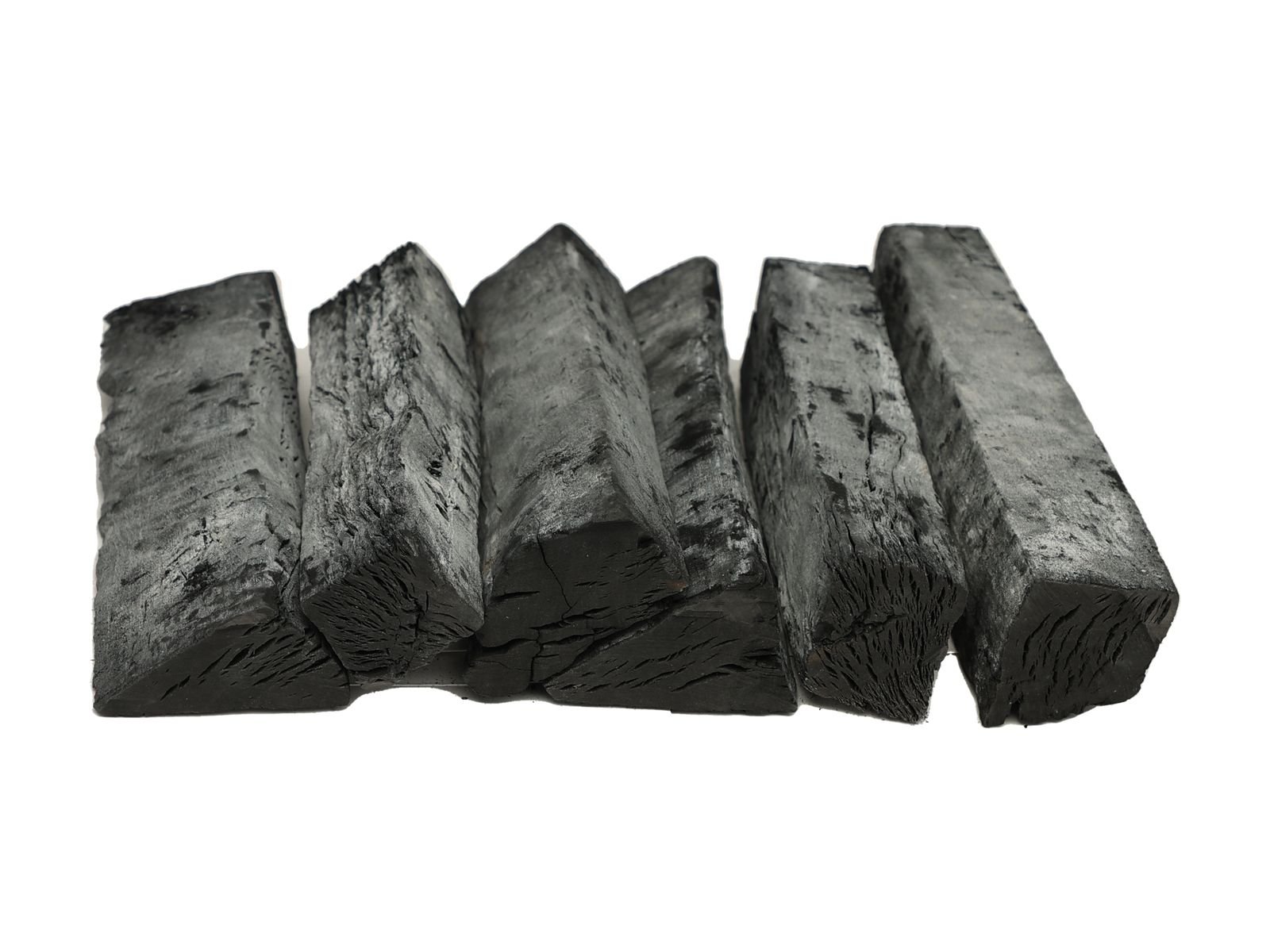
Finding the right charcoal supplier for Europe is less about price per ton and more about paperwork, consistency and timing. EU importers in Germany, France, the Netherlands, Italy and Spain face EUDR due diligence, phytosanitary rules and origin documentation before a single carton clears customs. Here is what to expect on grades, compliance and lead times when sourcing from Vietnam.
Key takeaways
- A credible charcoal supplier for Europe must deliver EUDR due-diligence data, a phytosanitary certificate and correct proof of origin, not just competitive pricing.
- Grade demand varies by market: binchotan for French, Italian and Spanish fine dining; lump and briquettes for German and Dutch retail and re-export.
- Plan roughly 30 to 45 days of sea transit from Hai Phong to North-European ports, plus production and booking lead time.
- Always sample before committing a container, and agree Incoterms (FOB, CIF or DDP) and payment terms (T/T or L/C) up front.
How to choose a charcoal supplier for Europe
For a serious importer, the cheapest offer is rarely the best one. A dependable charcoal supplier for Europe is judged on whether every shipment clears customs cleanly, matches the agreed specification, and arrives when promised. Price matters, but paperwork and consistency decide whether you have a business or a series of expensive problems.
Before you commit to any factory, check that it can provide the following as standard:
- Compliance documentation: EUDR due-diligence data, a phytosanitary certificate, and correct proof of origin.
- Independent-lab COA per lot: verified fixed carbon, ash, moisture and volatile matter, not a generic spec sheet. Learn what to look for in our guide to reading a charcoal COA.
- Samples before any container, so the delivered product matches what you approved.
- Clear Incoterms and payment terms: FOB, CIF or DDP, on T/T or L/C.
- A track record across markets. VUTRUX ships premium binchotan and hardwood charcoal FOB Hai Phong to 40+ markets, which means the export mechanics are already proven.
If you are new to the route, our step-by-step guide on how to import charcoal from Vietnam walks through the process end to end.
It is also worth testing responsiveness before you order. A supplier that answers technical questions clearly, sends documents in English and can hold a consistent specification across lots will save you far more than a small cut in unit price. Ask for references in your region, request the most recent COA, and confirm who owns each step of the export, from fumigation and pallet treatment to booking the vessel.
Compliance and documentation: EUDR, phytosanitary and origin
Documentation is where most first-time charcoal imports into the EU go wrong. Get these right and clearance becomes routine.
| Document | Purpose | Prepared by |
|---|---|---|
| EUDR due-diligence statement | Proves the wood is deforestation-free and legal, with geolocation of the harvest area | Importer, using traceability data from the supplier |
| Phytosanitary certificate | Confirms the plant-based goods are free of pests | Vietnamese plant-protection authority |
| Certificate of Origin / EUR.1 | Establishes origin and enables preferential tariff treatment under the EU-Vietnam FTA | Issuing authority or registered (REX) exporter |
| Commercial invoice and packing list | Customs valuation and contents | Exporter |
| Bill of Lading | Title and transport contract | Carrier or forwarder |
| Independent-lab COA | Verifies the quality spec of the lot | Accredited laboratory |
The biggest change in recent years is the EU Deforestation Regulation (EUDR). Wood charcoal is in scope, so importers acting as operators must file a due-diligence statement, including the geolocation of where the wood was harvested and evidence of legal sourcing, before placing product on the EU market. Your supplier cannot file it for you, but it must give you the traceability data that makes it possible. We cover the detail in our dedicated explainer on EUDR compliance for charcoal imports.
On origin, the EU-Vietnam Free Trade Agreement (EVFTA) can offer preferential tariff treatment when the shipment travels with valid proof of origin, either an EUR.1 movement certificate or a statement on origin from a REX-registered exporter. Confirm the current tariff classification and rate for your product with your customs broker rather than assuming.
Need this grade by the container?
Tell us your market, volume and target spec — we reply within one business day with a quote and a sample offer.
Which grades sell best by market
Demand is not uniform across Europe. Matching the grade to the destination market is one of the simplest ways to move stock faster.
| Market | Strongest demand | Typical buyers |
|---|---|---|
| Germany | Hardwood lump and briquettes; growing restaurant binchotan | Retail chains, BBQ distributors, grill houses |
| France | Binchotan for yakitori and fine dining; lump for bistros | Restaurants, specialty food importers |
| Netherlands | Briquettes and lump for bulk and re-export | Rotterdam distributors and re-exporters |
| Italy | Premium lump and binchotan for high-end grills | Restaurants, HORECA wholesalers |
| Spain | Large-format lump and binchotan for asador-style grilling | Parrilla restaurants, retail |
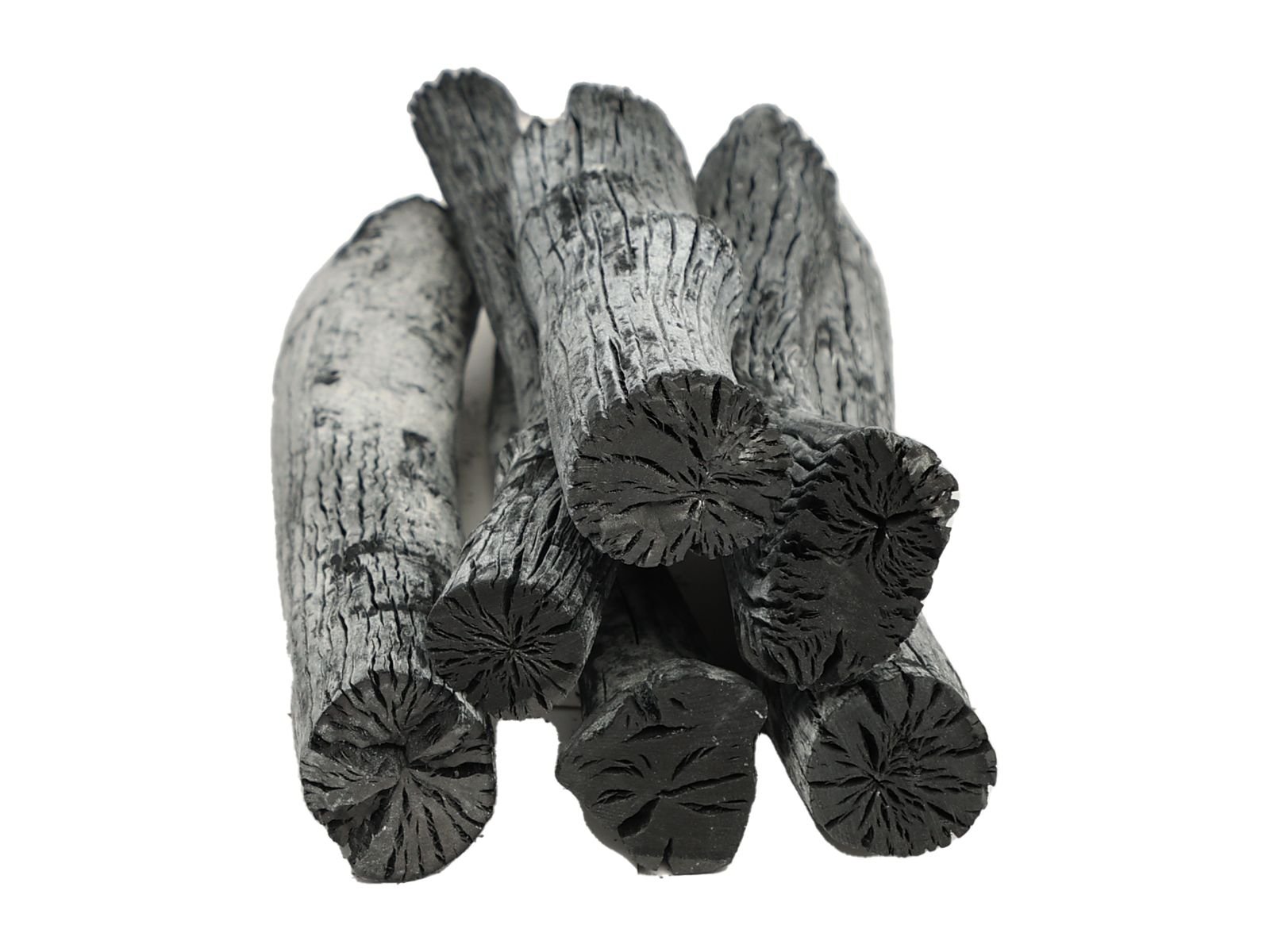
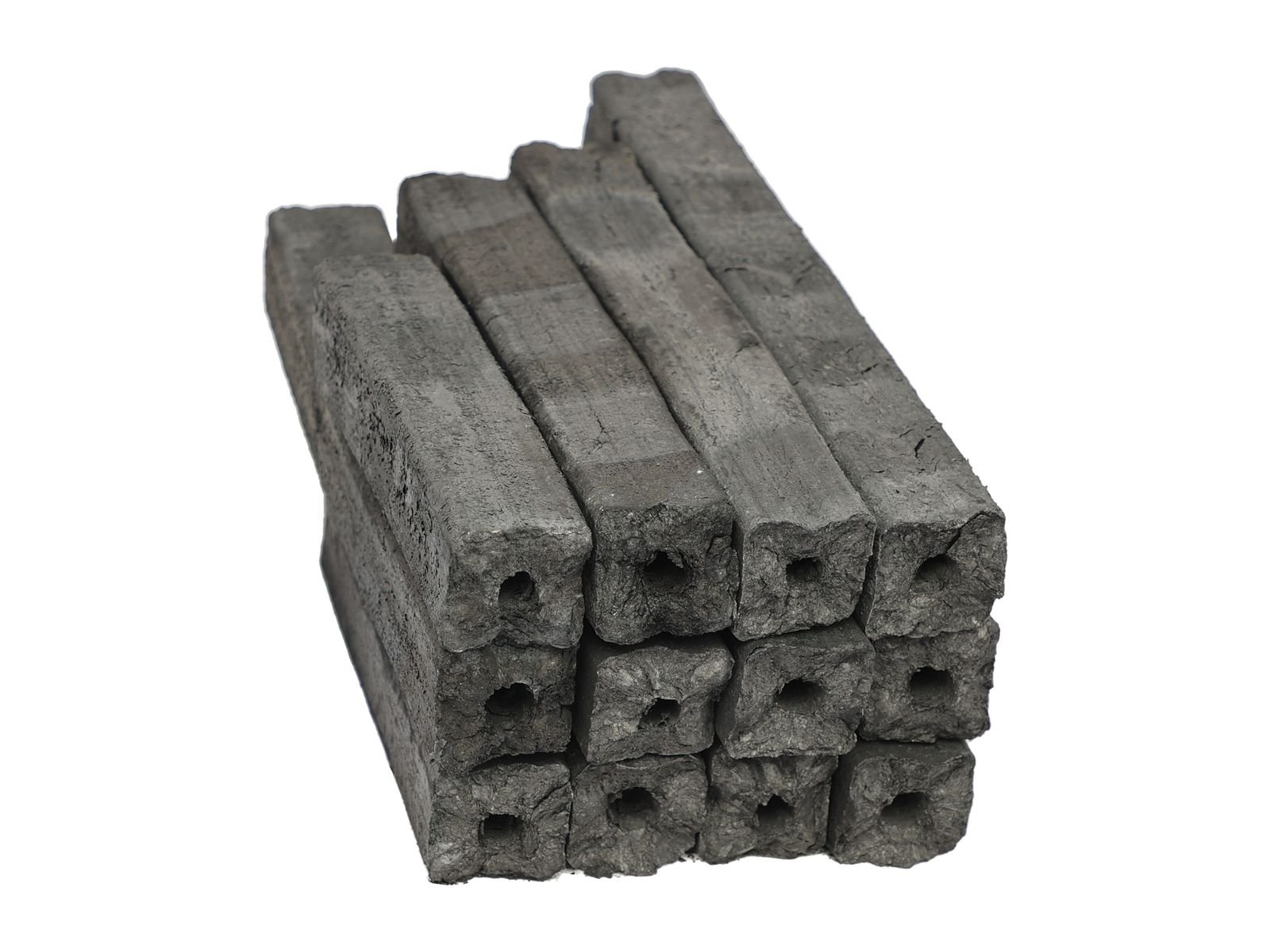
Across all of these, three families cover most orders: binchotan white charcoal for chefs who want clean, long, smokeless heat; natural hardwood lump for versatile restaurant and retail grilling; and coconut-shell briquettes for consistent, long-burning value. Matching the grade to the destination, and to the end user, is what keeps stock turning rather than sitting in a warehouse.
Packaging is part of the grade decision. Retail buyers in Germany and the Netherlands often need printed consumer bags or private-label cartons with barcodes and language-specific labeling, while restaurant and re-export buyers usually prefer plain, sturdy cartons that travel and store well. Agree artwork, bag size and carton weight early, because packaging changes affect both cost and lead time.
Lead times and container planning
Realistic scheduling prevents the two classic importer headaches: empty shelves and demurrage. Treat every stage below as a range and confirm exact dates at booking.
| Stage | Typical duration |
|---|---|
| Sample dispatch and approval | Several days to around two weeks by courier |
| Production and consolidation | Around two to four weeks, depending on grade and volume |
| Ocean booking and cut-off | Around one to two weeks before sailing |
| Sea transit, Hai Phong to North-EU ports | Around 30 to 45 days, and transshipment can add time |
| Customs clearance and EUDR checks | Build in a buffer on arrival |
On loading, charcoal either weights out or cubes out depending on how it is packed: loose lump is dense and tends to hit weight limits first, while boxed briquettes and binchotan can fill the volume of a 40ft high-cube before they reach maximum payload. The practical takeaway is to plan full-container loads for the best FOB economics, and to confirm the exact carton count and net weight per grade with your supplier before booking. For trial orders, ask about LCL or shared-container options rather than over-committing.
Terms, samples and how to start
VUTRUX works on the terms European buyers expect: FOB Hai Phong, CIF or DDP, with payment by T/T or L/C, and a sample approved before any container ships. Prices depend on grade, volume and Incoterm, so the fastest way to a firm number is to tell us what you need.
- Send your target market, grade, monthly volume and preferred spec.
- Approve a sample against an independent-lab COA.
- Confirm Incoterm, payment terms and shipment schedule.
- Book the container and receive full compliance documentation with the shipment.
Ready to compare a real offer against your current source? Request a quote with your volume and target spec, or browse the product range first. We reply within one business day with pricing and a sample offer.
Frequently asked questions
Does EUDR apply to charcoal imported into the EU?
Yes. Wood charcoal falls within the scope of the EU Deforestation Regulation, so importers acting as operators must file a due-diligence statement with the geolocation of the harvest area and evidence of legal, deforestation-free sourcing. Choose a supplier that can provide the traceability data you need to complete it.
Can I get preferential import duty on Vietnamese charcoal?
Under the EU-Vietnam Free Trade Agreement, preferential tariff treatment may be available when the goods travel with valid proof of origin, such as an EUR.1 certificate or a statement on origin from a REX-registered exporter. Always confirm the current classification and rate for your specific product with your customs broker.
What is a realistic lead time to a North-European port?
As a planning rule, allow a few weeks for production and consolidation plus roughly 30 to 45 days of sea transit from Hai Phong to ports such as Rotterdam, Hamburg or Antwerp, with extra time where transshipment is involved. Add a buffer for customs and EUDR checks on arrival.
Do you supply less than a full container for a first order?
We always start with a sample so you can verify quality before committing volume, and we can discuss trial quantities and shared-container options for first orders. Full-container loads give the best FOB economics once you are confident in the grade.
Which European markets does VUTRUX already serve?
VUTRUX ships premium binchotan and hardwood charcoal FOB Hai Phong to more than 40 markets, including major European destinations. That means the export documentation, lab testing and logistics for the EU route are already established rather than being built from scratch for your order.