
Supplying binchotan to Japanese restaurants abroad is a test of consistency: every yakitori counter, robata bar and kaiseki kitchen expects the same clean, radiant heat it would get in Tokyo, shipment after shipment. Whether you run a single izakaya or manage procurement for a chain, the challenge is not finding binchotan once but securing a steady, yakitori-grade supply that holds its specification across borders. This guide explains what Japanese kitchens demand from white charcoal and how VUTRUX keeps that standard flowing to more than 40 markets.
Key takeaways
- Japanese restaurants demand binchotan for its clean, smokeless radiant heat, long burn and neutral flavour on delicate proteins.
- Yakitori-grade binchotan means dense, dry, consistently sized pieces (roughly 80-200 mm) that pack a konro and burn down cleanly.
- VUTRUX offers binchotan from eucalyptus, lychee and longan, and orange-pomelo, in grades A and B, so kitchens can match fuel to menu.
- Consistency across shipments comes from an independent-lab COA per lot, samples before ordering, and full export compliance to 40+ markets.
Why Japanese restaurants insist on binchotan
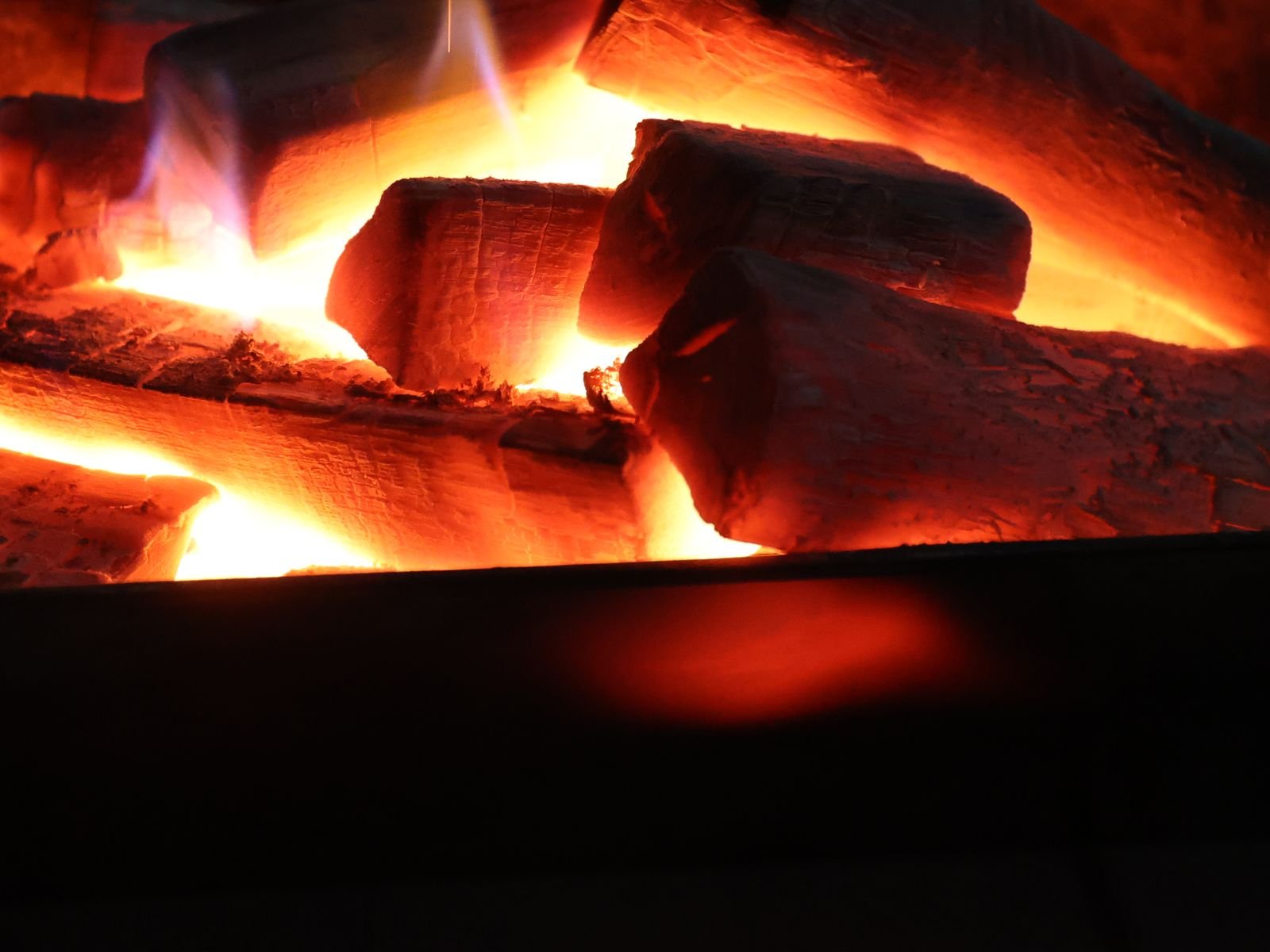
In a Japanese kitchen, charcoal is not a background ingredient - it is part of the cooking technique. Yakitori, robata, kushiyaki and sumiyaki all depend on the steady infrared heat that only dense white charcoal delivers. That is why the binchotan Japanese restaurants rely on is held to a stricter standard than ordinary grilling fuel: it must burn hot and long, throw almost no smoke, and add no smell or taste to delicate chicken, seafood and vegetables.
Binchotan earns that trust through its chemistry. Fired from dense hardwoods and fruitwoods to a fixed carbon of roughly 95%, with sulphur effectively at 0% and very low volatile matter, it produces clean radiant heat rather than flame and smoke. A chef can sear skin crisp over the hottest coals and finish gently a few centimetres higher without ever tasting the fuel. For diners who know the cuisine, that neutrality is the whole point. If you are new to the material, our primer on what binchotan white charcoal is explains how it is made and why it behaves this way.
What yakitori-grade binchotan actually means
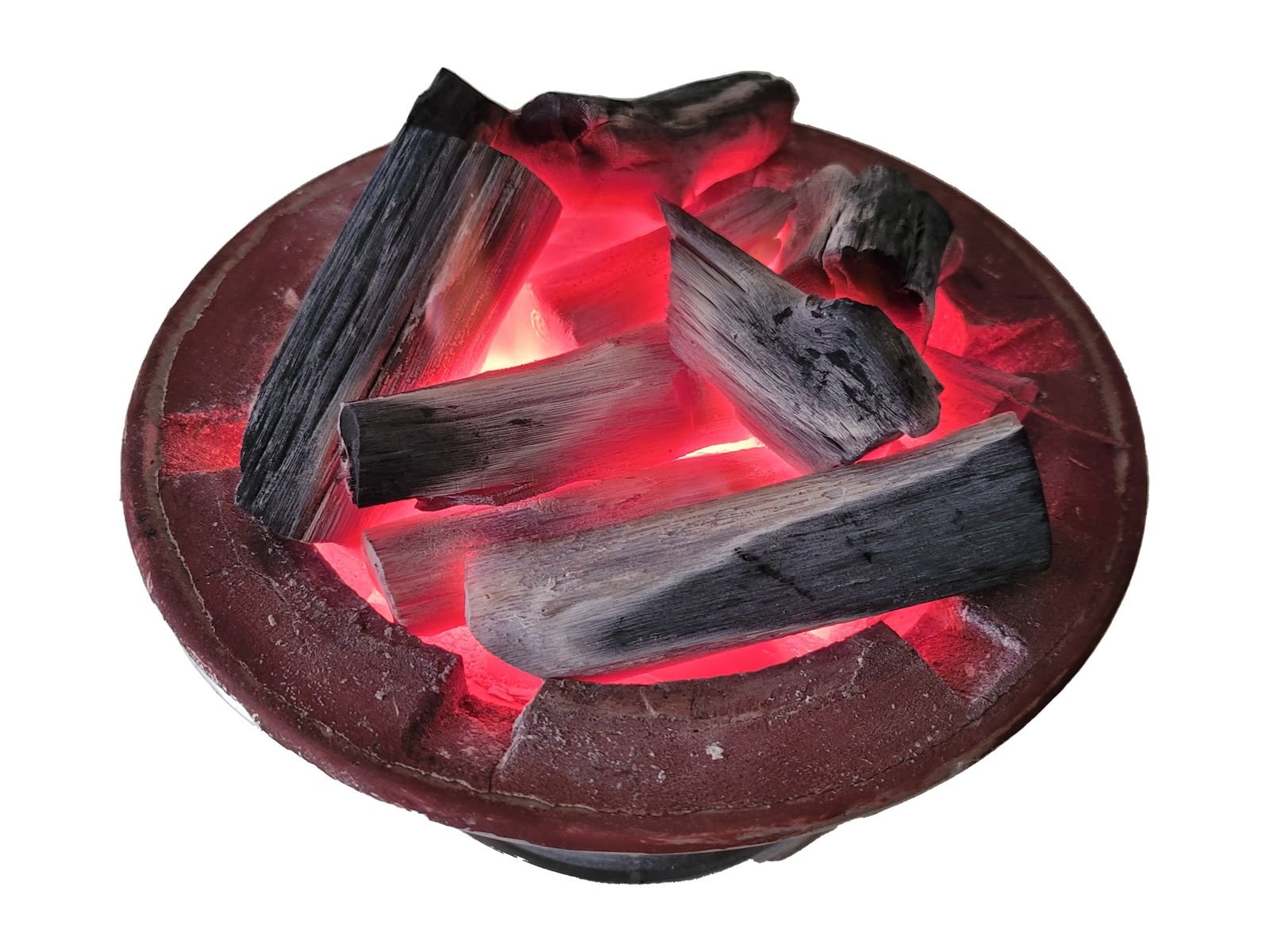
"Yakitori-grade" is not a legal term, but in practice it describes binchotan that is dense, dry, consistently sized and low in fines. A counter cook lays skewers directly across the coals, so the pieces have to sit flat, pack tightly into a narrow konro, and hold their shape as they burn down. Charcoal that arrives cracked, damp or full of dust wastes money and disrupts service.
Three properties matter most to a Japanese kitchen. First, heat you can hold: binchotan's density gives it a calorific value near 8,300 kcal/kg and a long, patient burn, so one load carries a service instead of fading between rushes. Second, clean combustion: near-zero sulphur and low volatiles mean no acrid smoke to taint tare-glazed chicken or fresh seafood. Third, predictable sizing: pieces roughly 80 to 200 mm, offered round or split, light evenly and stack neatly. Together these traits separate true yakitori-grade white charcoal from generic lump sold as "binchotan". Our guide to the best charcoal for restaurants puts these qualities in the wider context of a professional kitchen.
Fines and dust deserve special attention. Every broken piece and every handful of powder at the bottom of a carton is fuel a counter cook cannot lay a skewer on, so it burns money without cooking anything. Good yakitori-grade binchotan is graded and packed to minimise breakage in transit, which is why sturdy 10 kg cartons and careful loading matter almost as much as the charcoal itself. When you evaluate a supplier, weigh the usable pieces from a carton rather than judging on the headline lab numbers alone.
Need this grade by the container?
Tell us your market, volume and target spec — we reply within one business day with a quote and a sample offer.
Matching wood and grade to the counter
Authentic binchotan can come from several dense species, and each has a slightly different character on the grill. VUTRUX fires binchotan from three sources, so a kitchen can match the fuel to its menu and its volume rather than accept whatever is available.
| Wood | Character on the grill | Best suited to |
|---|---|---|
| Eucalyptus (bạch đàn) | Very hard, long, steady endurance burn | High-volume yakitori and robata counters |
| Lychee and longan (vải/nhãn) | Dense, refined, very clean heat | Premium, delicate skewers and seafood |
| Orange-pomelo "mai tieu" (cam bưởi) | Hard, even, low odour | Balanced all-round service |
Beyond species, VUTRUX grades binchotan A and B, round or split. Grade A gives the most uniform, dense pieces with the longest, most predictable burn, which suits an exhibition counter where every skewer is on display; Grade B is more economical for back-of-house prep and busier work. Many kitchens buy both and deploy each where it earns its keep. Lychee and longan are especially prized where a menu leans on refined, low-odour heat for delicate seafood and premium skewers.
Consistency across every shipment
The hardest part of supplying binchotan to Japanese restaurants abroad is not the first order - it is the tenth. A sample can be perfect and the follow-up container disappointing if the supplier does not control production and testing. This is where documentation earns its keep.
VUTRUX issues an independent-lab certificate of analysis (COA) per lot, from Vinacontrol, so each shipment can be checked against the specification you approved rather than a flattering one-off test. Expect fixed carbon around 95%, ash near 3%, moisture around 3% and sulphur effectively 0%, reported as ranges because charcoal is a natural product that drifts a little between production runs. A per-lot COA, an MSDS, and a sample before every new grade are the practical tools that keep a chain's kitchens serving identical food in different cities. This discipline is what turns a good first impression into a supply a head chef can build a menu around.
Volumes, packing and lead times for a busy kitchen
Japanese kitchens plan tightly, so packing and volume matter as much as quality. VUTRUX packs binchotan in 10 kg cartons, and a single 20ft container holds roughly 9.6 MT net - about 960 cartons. For a dedicated yakitori restaurant that is often several months of fuel; for a group or distributor it is a practical base unit to consolidate across sites.
Cartons are easy to store, rotate and count, which helps a kitchen track its real burn rate and set honest reorder points. Because binchotan is close to pure carbon, part-used pieces can be starved of air in a lidded metal pot at the end of service and relit next time, stretching every carton further. Plan orders ahead of your reorder date to absorb production and sea-freight lead times, and keep a safety buffer so a single delayed sailing never leaves your grill cold in the middle of service.
Forecasting is the other half of reliability. A counter that logs how many cartons a typical week consumes can turn that figure into a container schedule, ordering early enough that a new shipment arrives before the last one runs out. Groups with several sites gain further by consolidating: pooling demand into full containers lowers the landed cost per carton and smooths out the peaks and troughs of individual restaurants. The goal is simple - never let a delayed vessel dictate what is on the menu.
Building a reliable binchotan supply chain
A dependable supply of binchotan for Japanese restaurants comes down to choosing an exporter who treats consistency as the product, not a bonus. VUTRUX ships FOB Hai Phong, with CIF or DDP available, payment by T/T or L/C, to more than 40 export markets. For EU buyers, EUDR due-diligence and phytosanitary paperwork are prepared alongside the COA and MSDS, and independent Vinacontrol self-heating testing concludes the charcoal is not IMDG Class 4.2 - though carriers may still book it under UN 1361, which we help document.
The safest way to start is to test before you commit: approve a sample on your own konro, confirm the burn time and heat through a real service, then lock in a grade and a schedule. When you are ready, request a sample and an export quote and we will match the wood, grade and volume to your kitchens. For the full commercial picture, our binchotan charcoal wholesale guide walks through specifications, terms and ordering step by step.
Frequently asked questions
What charcoal do Japanese restaurants use for yakitori and robata?
Almost always binchotan, the dense white charcoal prized for its steady radiant heat, very low smoke and neutral flavour. Its high fixed carbon, around 95%, and near-zero sulphur let chefs cook delicate chicken, seafood and vegetables cleanly. Some kitchens also use ogatan to manage cost on high-volume items, but the exhibition grill runs on binchotan.
How do I keep binchotan quality consistent across shipments?
Insist on an independent-lab certificate of analysis for each lot, and approve a physical sample before every new grade. Because charcoal is a natural product, only a per-lot COA tied to your shipment - not a single old test - tells you the coal will match what you approved. VUTRUX issues a Vinacontrol COA per lot for exactly this reason.
What is the minimum order for binchotan?
A practical base unit is one 20ft container, which holds roughly 9.6 MT net of binchotan - about 960 cartons of 10 kg. For a single restaurant that is often several months of fuel; groups and distributors typically consolidate larger volumes. Ship terms are FOB Hai Phong, with CIF or DDP available.
Can VUTRUX ship binchotan with EU compliance documents?
Yes. Shipments can include EUDR due-diligence and phytosanitary documentation alongside the per-lot COA and MSDS. Independent self-heating testing concludes the charcoal is not IMDG Class 4.2, although carriers may still book it under UN 1361, which we help document so freight moves smoothly.