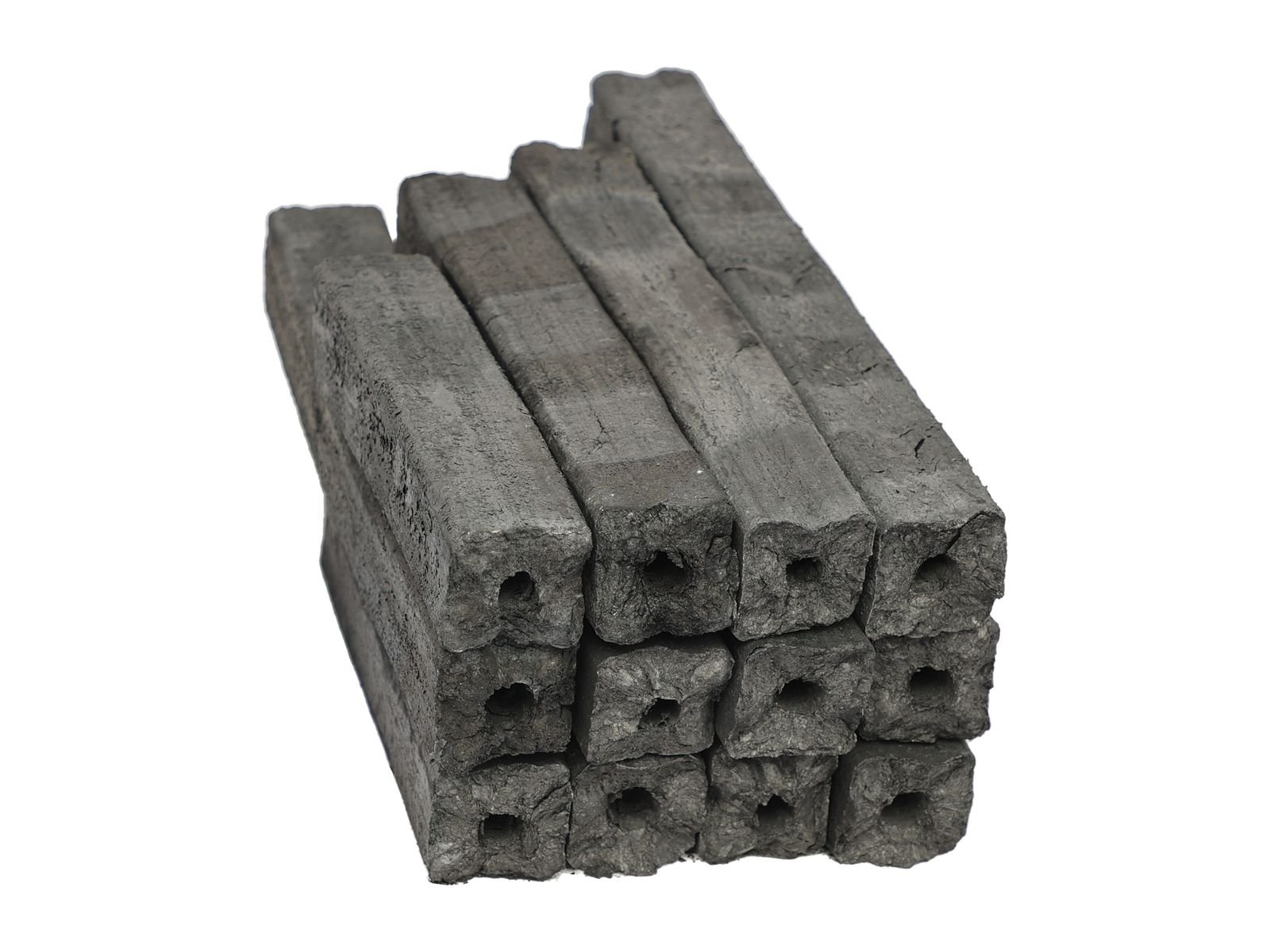
South Korea's love of grilled meat, from samgyeopsal to galbi and the whole world of KBBQ, makes it a strong and growing market for imported charcoal. To import charcoal into South Korea you clear the Korea Customs Service and, crucially, meet Korea Forest Service quality rules that few other markets impose. This guide covers demand, the tariff, why a Certificate of Origin matters more here, and the quality inspection and labelling charcoal needs before retail sale.
Key takeaways
- Korea's KBBQ culture drives steady demand for charcoal, with premium binchotan prized by higher-end restaurants.
- Unlike the EU, US and Japan, Korea's MFN duty on charcoal is not always zero; a Certificate of Origin under VKFTA, AKFTA or RCEP secures the preferential rate.
- Wood charcoal and molded (briquette) charcoal are regulated wood products that must pass quality inspection and carry a grade label before retail sale.
- Import VAT of 10% applies on the landed value and is generally reclaimable by registered businesses.
- Clearance runs through the Korea Customs Service UNI-PASS system; most volume lands at Busan.
Korea's Charcoal Demand: KBBQ and Beyond
Few cuisines put fire at the centre of the table like Korea's. Korean barbecue (KBBQ), samgyeopsal, galbi and bulgogi grilled where diners sit, has made charcoal a daily necessity for thousands of restaurants, and grilling over real charcoal (sootbul) is a genuine selling point many venues advertise. Domestic oak charcoal (chamsut) is the classic choice, but demand consistently outstrips local supply, pulling in imports.
That opens two segments for importers: high-volume charcoal for mainstream KBBQ, and premium binchotan for upscale restaurants that want a cleaner, longer, more controllable burn. Matching the right grade to each buyer is the key commercial decision; our guide to the best charcoal for restaurants breaks down which fuels suit which service.
Because Korean diners increasingly care about smoke, smell and safety in enclosed spaces, low-ash, low-smoke charcoal has a real edge in this market, which is one reason binchotan and clean ogatan travel well here. Restaurant groups increasingly promote their fuel as a mark of quality, so a documented, consistent charcoal supply supports their story to diners as much as it serves their kitchen.
What It Takes to Import Charcoal into South Korea
To import charcoal into South Korea, goods are declared to the Korea Customs Service (KCS) through its UNI-PASS electronic clearance system, normally via a licensed customs broker. Wood charcoal is classified under the Korean tariff schedule (HSK) at 4402.90.
Here Korea differs from the other big markets. Whereas the EU, the US and Japan apply a zero MFN duty to wood charcoal, Korea's basic rate is not guaranteed to be zero, so duty can be a live cost unless you claim a preference (see the next section). On top of any duty, import VAT of 10% is charged on the landed value and is generally reclaimable by a VAT-registered business.
Your standard entry documents are the commercial invoice, packing list and Bill of Lading, plus the Certificate of Origin and the quality documentation described below. Because two extra layers apply here, origin and forestry quality, it pays to brief your broker on both before the goods sail. Getting either wrong is the usual reason a first Korean shipment stalls at the border, so treat both as part of the order rather than an afterthought.
Need this grade by the container?
Tell us your market, volume and target spec — we reply within one business day with a quote and a sample offer.
Why Your Certificate of Origin Matters More Here
Because Korea can levy a positive MFN duty on charcoal, the Certificate of Origin does real financial work in this market rather than merely proving provenance. Vietnam and Korea are linked by several agreements that grant preferential, often zero, duty to Vietnamese-origin goods:
- the Vietnam-Korea FTA (VKFTA), using origin certificate Form VK;
- the ASEAN-Korea FTA (AKFTA), using Form AK;
- the RCEP agreement, with its own origin declaration.
To claim the preference, the goods must meet the relevant rules of origin and travel with a valid, correctly completed C/O; your broker will advise which agreement gives the best rate for your entry. Getting this right can be the difference between paying duty and paying none, so line it up before shipment rather than trying to fix it after arrival. For the full origin-side sequence, see our guide on how to import charcoal from Vietnam.
Korea Forest Service Quality Rules for Charcoal
Korea imposes a requirement that catches many first-time importers by surprise. Under the framework administered by the Korea Forest Service for the sustainable use of timber, wood charcoal and molded (briquette) charcoal are designated wood products that must meet official quality standards and carry a quality and grade label before they can be sold at retail.
In practice this means imported charcoal is subject to a quality inspection, testing properties such as fixed carbon, ash, moisture and harmful substances, after which a grade and label are assigned. The rule exists partly because poor-quality molded charcoal has raised safety concerns in the past, so authorities check what actually reaches consumers, not just what the paperwork claims. For an importer, that makes a credible, independent COA the single most useful document to put in front of the inspection, because it maps directly onto the properties they test.
Good documentation makes this smooth. VUTRUX supplies an independent Vinacontrol COA per lot, with binchotan typically around 95% fixed carbon, roughly 3% ash and 3% moisture and effectively no sulphur, figures that support a strong grade. Learning to read those numbers helps you anticipate the inspection result; our walkthrough on how to read a charcoal COA shows you how.
Documents, Ports and Landed Cost
Pulling it together, your file to import charcoal into South Korea is: commercial invoice, packing list, Bill of Lading, a preferential Certificate of Origin, a per-lot COA, and the Korea Forest Service quality inspection and labelling for retail goods. Pallets must meet ISPM 15; the Animal and Plant Quarantine Agency (APQA) oversees plant-health matters, though fully carbonised charcoal is generally low-risk.
| Cost line | Who sets it | Notes |
|---|---|---|
| Import duty (HSK 4402.90) | Korea Customs Service | Often reduced to zero with a valid C/O under VKFTA/AKFTA/RCEP |
| Import VAT | Tax authority | 10% on landed value; usually reclaimable |
| Quality inspection | Approved body | Required before retail sale |
| Clearance, THC, inland | Broker / terminal / trucker | Per entry and by distance |
Most charcoal enters through Busan, with Incheon and Gwangyang also handling volume. Because duty depends on your origin paperwork and freight moves constantly, we quote to your named Korean port rather than publish fixed prices; send your grade and volume to request a quote and a sample offer.
Planning Volume, MOQ and Lead Time for Korea
Sizing the order correctly avoids both stockouts and tied-up cash. Charcoal ships by the container, so it helps to know the typical net loads before you commit:
| Product | Approx. net per 20ft | Best fit |
|---|---|---|
| Binchotan | ~9.6 MT (about 960 x 10 kg) | Premium white charcoal for upscale KBBQ |
| Ogatan hexagon | ~15 MT | Hollow-core, very even heat for high volume |
| Ogatan square | ~16 MT | Solid, dense, long burn |
Beyond volume, build extra lead time into a Korean order for two reasons unique to this market: securing the right preferential Certificate of Origin, and allowing for the Korea Forest Service quality inspection and labelling before retail sale. Both become predictable once you have run a shipment, but they surprise first-time importers who plan only for ocean transit and clearance.
Demand is steady thanks to year-round KBBQ, with clear lifts around holidays and grilling season, so ordering ahead of peaks protects your shelves. Agree the spec, approve a sample, and confirm your origin and forestry-quality paperwork early, and reorders settle into a simple, repeatable cycle rather than a scramble each time.
Frequently asked questions
Is charcoal duty-free when imported into South Korea?
Not automatically. Unlike the EU, US and Japan, Korea's MFN rate on charcoal is not guaranteed to be zero, but a valid Certificate of Origin under VKFTA, AKFTA or RCEP secures the preferential, often zero, rate for Vietnamese-origin charcoal. Confirm the current rate with your broker.
What are the Korea Forest Service quality rules for charcoal?
Wood charcoal and molded charcoal are designated wood products that must pass a quality inspection and carry a grade label before retail sale. Testing covers properties such as fixed carbon, ash, moisture and harmful substances, so a strong per-lot COA helps.
Which port should I ship charcoal to in Korea?
Busan handles the majority of container volume, with Incheon and Gwangyang also available. Clearance runs through the Korea Customs Service UNI-PASS system, normally via a licensed customs broker who files your entry electronically.
What documents do I need to import charcoal into South Korea?
A commercial invoice, packing list, Bill of Lading, a preferential Certificate of Origin, a per-lot COA, ISPM 15 pallets, and the Korea Forest Service quality inspection and labelling for retail goods. Request a quote and we will confirm the set for your port.