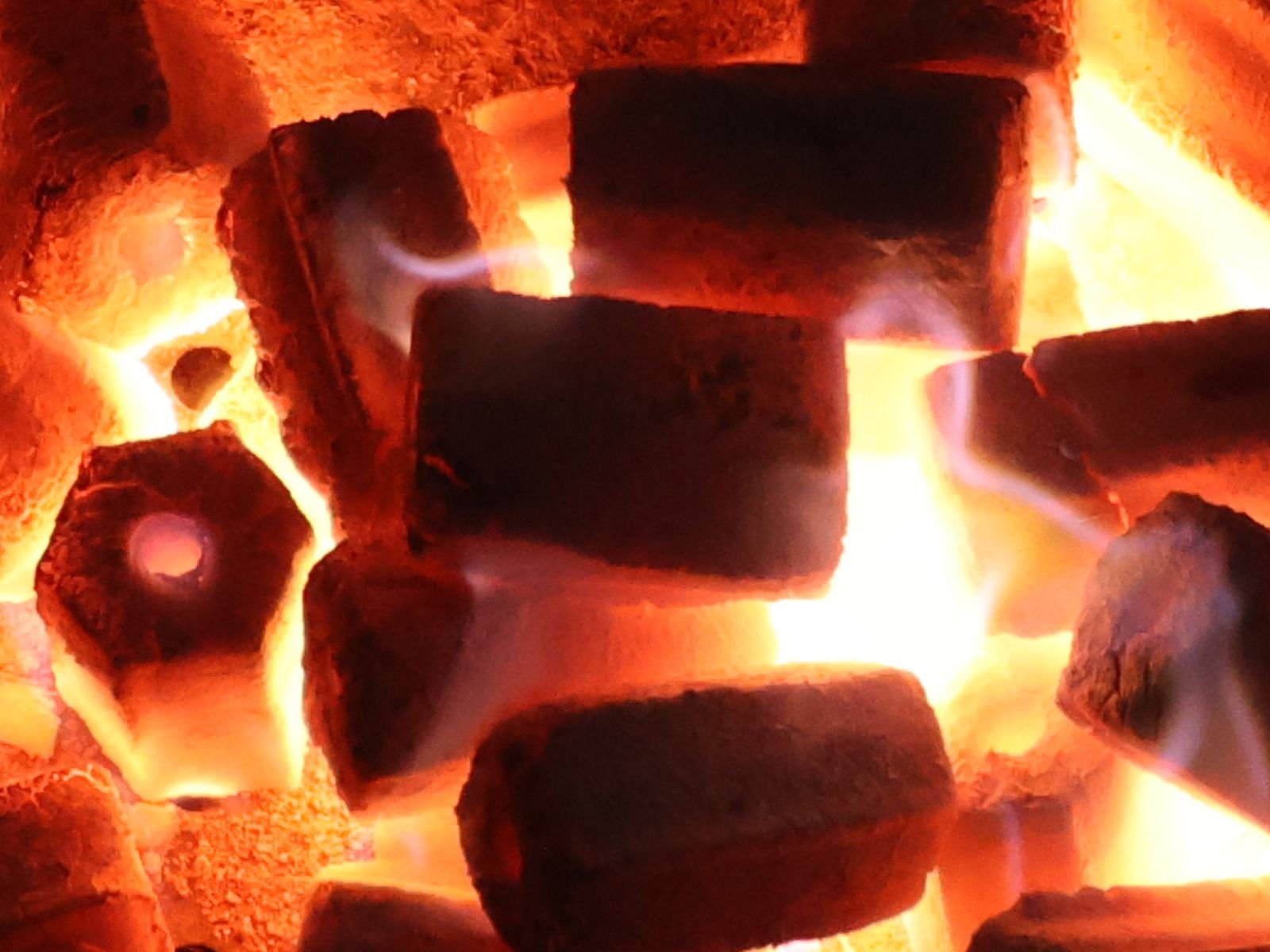
Ash content is the quiet number on a charcoal spec that tells you how much of what you are buying is not fuel at all. Every charcoal leaves some mineral residue when it burns, but the amount varies enormously - and it directly affects heat, burn time and how much you have to clean up. This guide explains what ash content in charcoal means, why lower is better, what drives it up, and how to check it before you order so you pay for fuel rather than filler.
Key takeaways
- Ash content is the non-combustible mineral residue left after burning; it produces no heat, so lower is better.
- High ash dilutes heat, chokes airflow so the fire fades faster, and leaves more residue to clean up.
- Premium natural charcoal such as VUTRUX binchotan and ogatan typically tests around 3% ash; filler-heavy briquettes can run 10-20% or more.
- Verify ash with a per-lot independent-lab COA, check the reporting basis, and match it to a sample you burn yourself.
What ash content in charcoal means
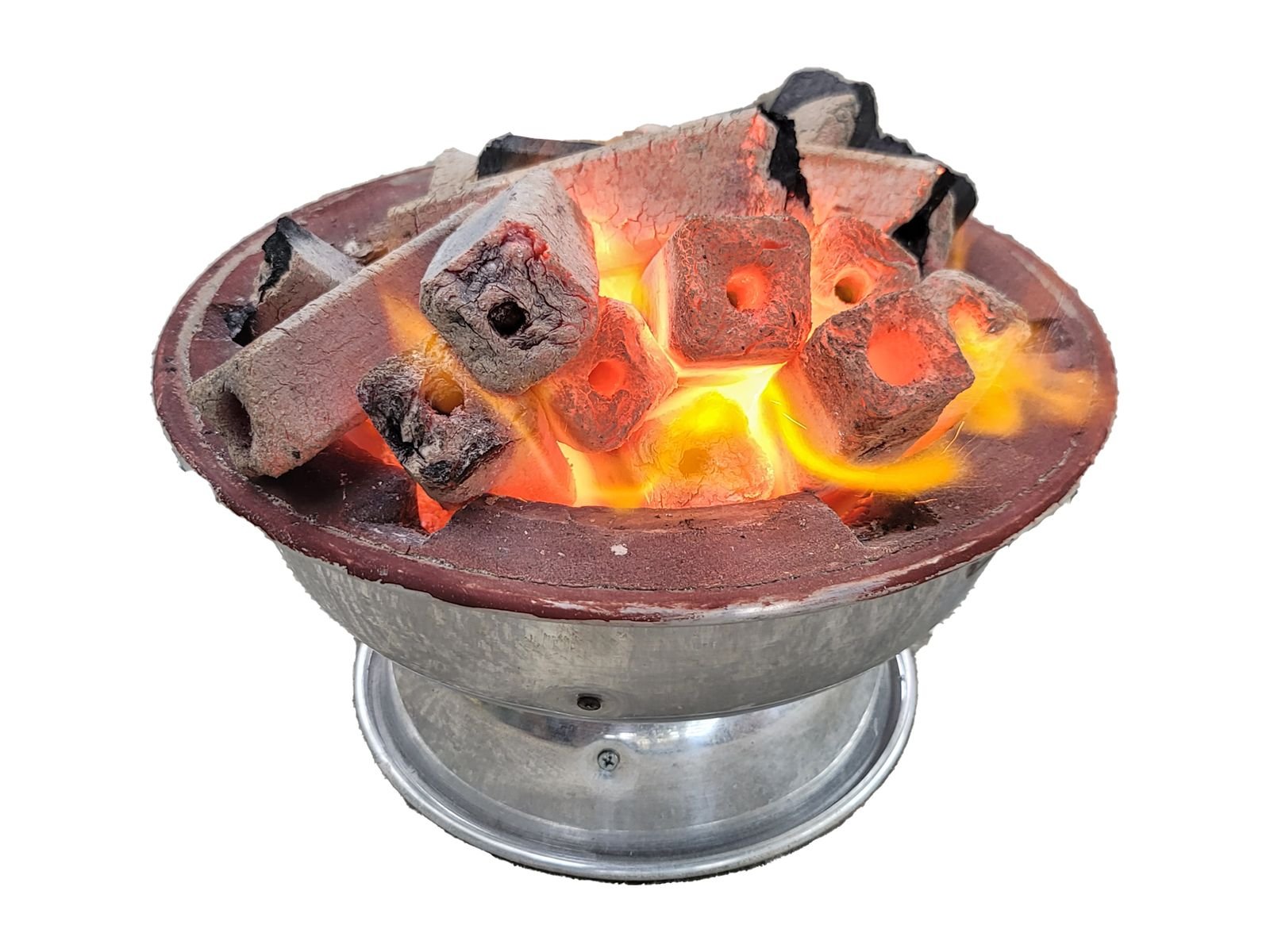
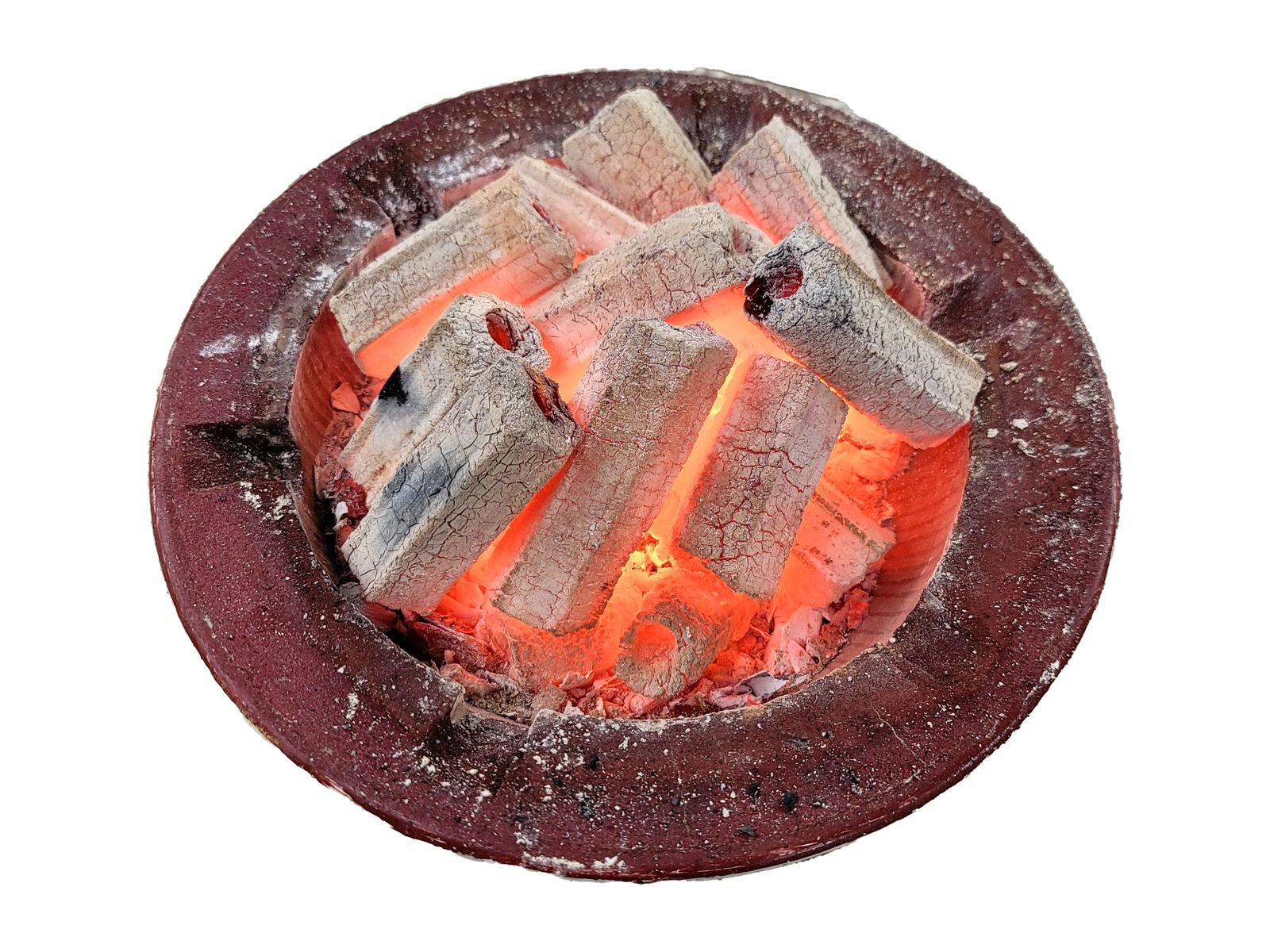
Ash content is the non-combustible mineral residue left behind after charcoal has finished burning - the fine grey powder in the bottom of the grill. It produces no heat at all. Measured as a percentage of the charcoal's weight, ash content in charcoal is one of the four figures in a proximate analysis, alongside fixed carbon, moisture and volatile matter, and it is one of the clearest signals of quality a buyer has.
The principle is simple: everything that is ash is not fuel. A charcoal that tests at 3% ash is almost entirely combustible material, while one at 15% is carrying a large dead weight of minerals that will never give off heat. That is why premium natural charcoal keeps ash low - VUTRUX binchotan and ogatan typically test around 3% - and why a high ash figure is often the first clue that a charcoal has been bulked out or made from poor raw material. For the broader quality contrast, see our comparison of natural versus industrial charcoal.
Why lower ash is better
Low ash matters for three practical reasons that any chef or pitmaster feels directly. The first is heat. Ash contributes nothing to combustion, so a high-ash coal delivers less usable energy per kilogram; you burn more fuel to reach the same temperature. Low-ash charcoal concentrates the heat where you want it.
The second is burn behaviour. As a coal burns, ash accumulates around the embers and begins to choke airflow, so a high-ash fire fades faster and needs more raking and tending to keep breathing. A low-ash charcoal holds a steadier, longer burn because the bed stays open. The third is cleanliness. More ash means more residue to shovel out, more dust drifting onto food and surfaces, and slower turnaround between services. In a busy kitchen that cleanup time is a real cost. Together these are why, for the demanding heat of professional cooking, low ash is not a luxury but a baseline requirement.
There is a knock-on effect on cost that is easy to miss. Because a high-ash coal delivers less heat per kilogram and fades faster, a kitchen ends up buying and burning more of it to do the same work, while also spending more staff time on cleanup. A low-ash charcoal that costs a little more per kilogram can therefore be cheaper in practice, once you account for usable heat and labour. Ash content, in other words, is as much an economic number as a technical one.
Need this grade by the container?
Tell us your market, volume and target spec — we reply within one business day with a quote and a sample offer.
What drives ash content up
Ash comes from the mineral matter naturally present in the raw material, plus anything picked up or added during manufacture. Understanding the sources explains why some charcoals run so much higher than others.
- Raw material: dense, clean hardwoods and fruitwoods carry relatively little mineral content, while bark, twigs, roots and fast-grown softwoods carry more.
- Dirt and contamination: charcoal made carelessly, with soil, sand or bark left in, tests higher in ash.
- Fillers and binders: some cheap briquettes are bulked with mineral fillers or bound with additives that raise ash sharply.
- Incomplete or crude carbonisation: poor process control leaves more inorganic residue behind.
This is where raw-material discipline shows. VUTRUX binchotan is fired from dense hardwoods and fruitwoods - eucalyptus, lychee and longan, and orange-pomelo - and ogatan is pressed from clean sawdust, both of which keep ash naturally low. Coconut-shell and bamboo charcoals, which VUTRUX does not supply, have their own quite different ash profiles, a reminder that ash is tied closely to the source material.
Typical ash ranges by charcoal type
The ranges below are indicative for good-quality product and vary with species, grade and standard. Use them to sense-check a specification rather than as hard limits.
| Charcoal type | Typical ash content | What it means in use |
|---|---|---|
| Binchotan (white charcoal) | Around 3% | Very little residue, clean, steady burn |
| Ogatan (sawdust briquette) | Around 3% | Low residue, uniform long burn |
| Quality hardwood lump | Roughly 2 to 5% | Modest residue, lively heat |
| Filler-heavy briquettes | Often 10 to 20% or more | Heavy residue, more cleanup, diluted heat |
The gap between premium natural charcoal and filler-heavy product is stark: a difference from roughly 3% to 15% ash means about five times as much dead, non-combustible weight in every kilogram you buy and burn. For a format-by-format view of how these fuels behave, see our comparison of binchotan versus lump versus briquettes.
How ash content is measured and reported
Ash content is measured as part of a proximate analysis, most commonly under ASTM D1762 for wood charcoal. In essence, a weighed sample is burned completely in air at high temperature until only mineral residue remains; that residue, expressed as a percentage of the original sample, is the ash. Because the method is standardised, results from an accredited laboratory are directly comparable.
Two details decide whether two ash figures can be compared fairly. One is the reporting basis: an as-received result includes the sample's moisture, while a dry-basis result excludes it, so the same charcoal can show slightly different ash percentages depending on which is used. The other is sampling - the tested sample must be drawn representatively from the actual lot. VUTRUX provides an independent-lab certificate of analysis from Vinacontrol for each lot, so the ash figure is traceable to your shipment rather than to a favourable one-off test. Our guide on how to read a charcoal COA walks through the full report.
One practical caution: do not judge ash by eye alone. A charcoal can look clean and still test high if it was made from mineral-rich material, and a little surface dust does not by itself mean a high ash figure. The reliable signal is the laboratory result on the certificate, cross-checked against what you see when you burn a representative sample down to the end. Numbers and observation together give you the true picture.
How to buy low-ash charcoal with confidence
Buying low-ash charcoal is straightforward once you know what to ask for. Insist on a per-lot certificate of analysis that names the laboratory and test method, check the reporting basis, and match the paperwork to a physical sample you burn yourself. Watch the whole grill through a full burn: a low-ash charcoal will leave a small, fine bed of ash rather than a thick heap, and will hold its heat instead of choking.
VUTRUX makes this simple with a sample before any order and an independent Vinacontrol COA per lot, showing ash typically around 3% alongside fixed carbon, moisture and sulphur, all quoted as realistic ranges. Charcoal ships FOB Hai Phong, with CIF or DDP available, to more than 40 export markets, each shipment carrying its own COA and MSDS. When you want to confirm a low-ash specification against your own requirement, request a sample and a quote and burn it before you buy.
Frequently asked questions
What is a good ash content for charcoal?
Premium natural charcoal typically keeps ash around 3%, and roughly under 5% is a reasonable benchmark for quality lump. Filler-heavy briquettes can run 10 to 20% or higher. Lower ash means more usable heat, a steadier burn and less residue to clean, so it is one of the clearest quality signals on a COA.
Why does high ash content matter when grilling?
Ash produces no heat, so a high-ash coal gives less energy per kilogram and you burn more fuel for the same temperature. As it accumulates it also chokes airflow, so the fire fades faster and needs more tending, and it leaves more dust and residue to clean between services.
What causes high ash content in charcoal?
Mostly the raw material and how it is made. Bark, twigs, roots and dirt raise ash, as does careless carbonisation. Cheap briquettes are often bulked with mineral fillers or binders that push ash sharply higher. Dense, clean hardwoods and fruitwoods, carbonised properly, keep it naturally low.
How can I check the ash content before buying?
Ask for a per-lot certificate of analysis from an accredited laboratory that names the test method and reporting basis, then match it to a physical sample you burn yourself. A low-ash charcoal leaves a small, fine ash bed rather than a thick heap and holds its heat instead of choking.