Choosing the best charcoal for BBQ restaurants is a margin decision as much as a flavor decision. At volume, small differences in heat, burn time and ash add up across every cover, every shift and every reorder. This guide breaks down which grade fits which BBQ menu, how to think in cost per cover rather than price per kilogram, and how to lock in supply that behaves the same way every service.
Key takeaways
- The best charcoal for BBQ restaurants depends on your menu and volume, not on one universal product.
- Hardwood lump gives the fast, high sear that grill-forward BBQ menus rely on.
- Ogatan briquettes deliver uniform, predictable heat and a long burn for high-volume lines.
- Binchotan offers the cleanest, longest, most controllable heat for premium and skewer-based BBQ.
- Judge fuel on cost per cover, and protect it with sample approval, a per-lot COA and reliable lead times.
What sets the best charcoal for BBQ restaurants apart
Before you compare grades, define what a high-output grill actually demands. The best charcoal for BBQ restaurants is the fuel that performs on the criteria that move service and cost, not the one with the most marketing on the bag. Charcoal is a modest line on the invoice, but it drives throughput, food quality and waste, so it deserves the scrutiny you give a headline ingredient.
- Heat intensity and type - fierce searing heat for crust, or steady radiant heat for even cooking.
- Burn time - enough duration to carry a service without constant rebuilding.
- Ash volume - low ash keeps airflow open and cuts mid-service clean-outs.
- Smoke and aroma - clean where flavor is delicate, gently smoky where the char is the point.
- Consistency - the same size and behavior lot after lot, so cook times stay reliable.
- Cost per cover - the real number, once burn time, ash and waste are counted.
- Documented supply - repeatable quality backed by lab data you can reorder against.
Weigh those factors against your own menu and volume. A brisket-and-ribs smokehouse, a churrasco grill and a skewer counter each stress the fire differently, so the best charcoal for BBQ restaurants is a match to your service rather than a single winner, chosen for how your fire behaves under real covers.
Hardwood lump: fast sear for grill-forward menus
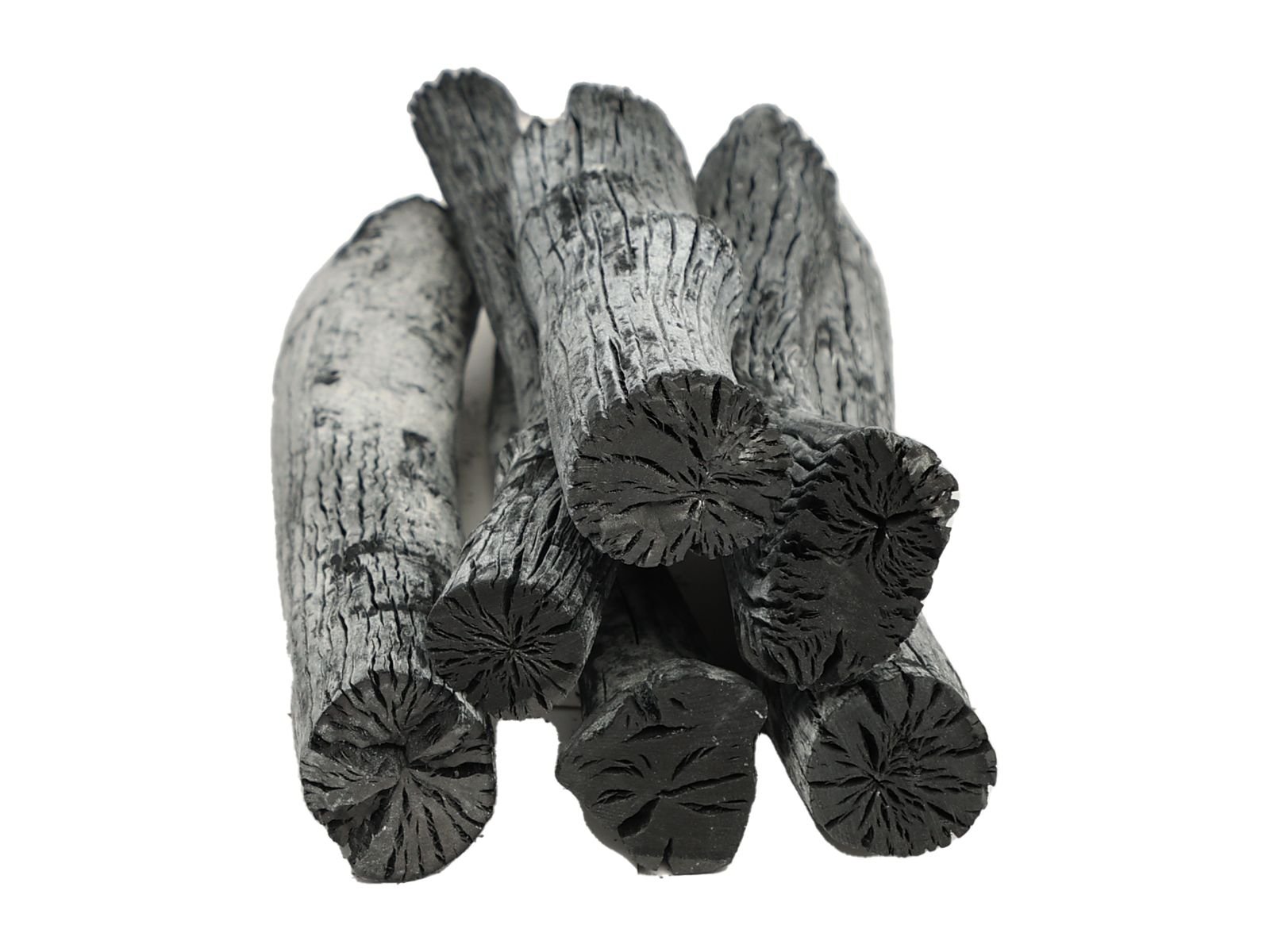
Hardwood lump charcoal is the workhorse of grill-forward BBQ. It lights quickly, climbs to a fierce searing temperature in minutes and carries the gentle wood aroma that defines a chargrilled steak, chop or burger. That early high heat is exactly what sets a crust on thick cuts before the interior overcooks.
The trade-off is pace. Lump burns faster and less evenly than briquettes or binchotan, so cooks work the bed actively and top up through a busy service. Piece size varies by nature, which is why graded, lab-verified lump and a dependable supplier matter for consistent results across a full week of covers. VUTRUX supplies hardwood lump alongside its binchotan range, graded to a specification you approve from a sample.
Many BBQ kitchens run a hybrid bed to get the best of both worlds: a long-burning base for a stable resting and finishing zone, topped with fresh lump for the initial sear. This pairs the aroma and instant heat of lump with the stability a crowded pass needs, and it stretches the faster-burning fuel across a longer service.
Need this grade by the container?
Tell us your market, volume and target spec — we reply within one business day with a quote and a sample offer.
Ogatan briquettes: uniform heat for high-volume lines
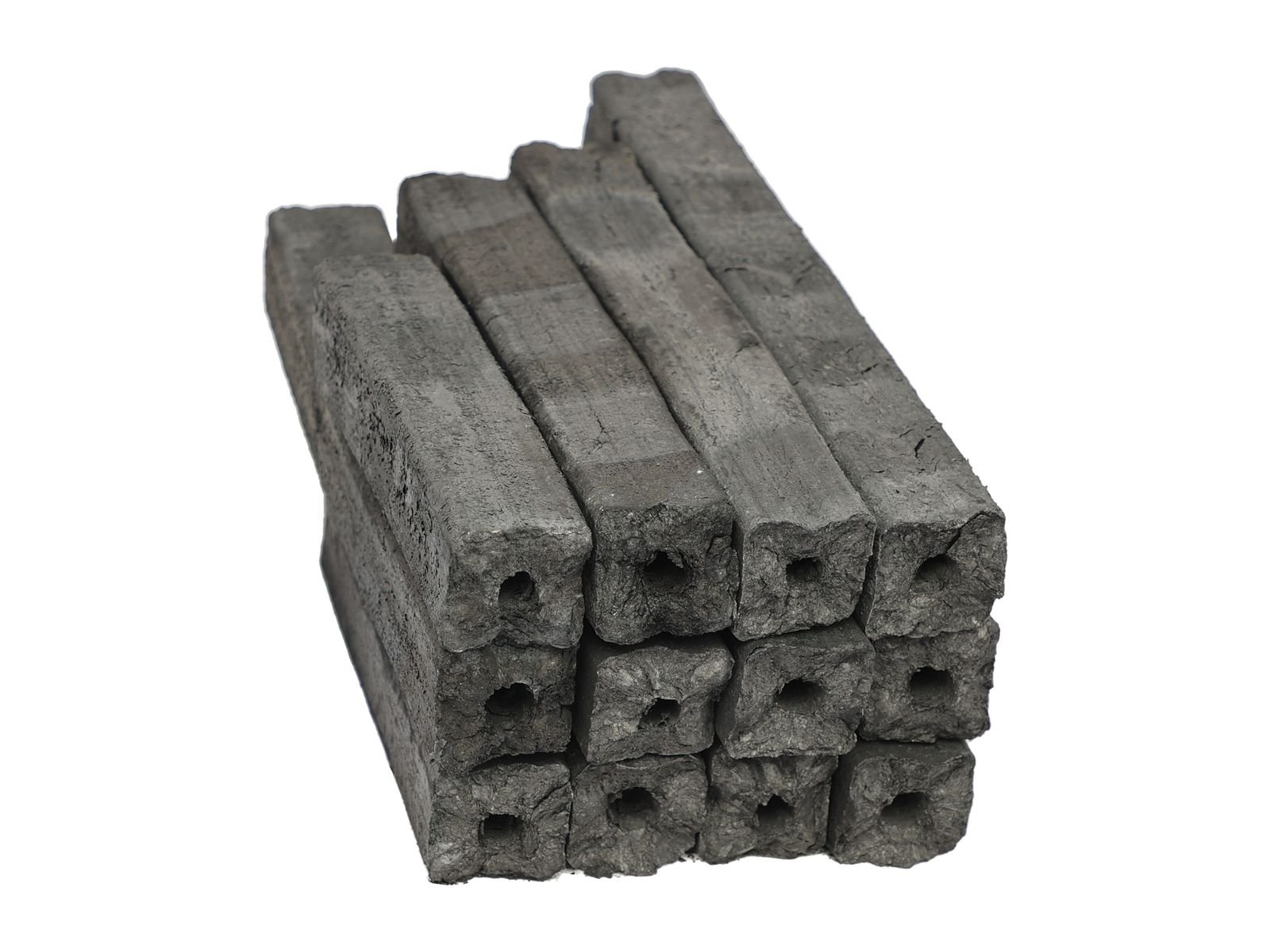
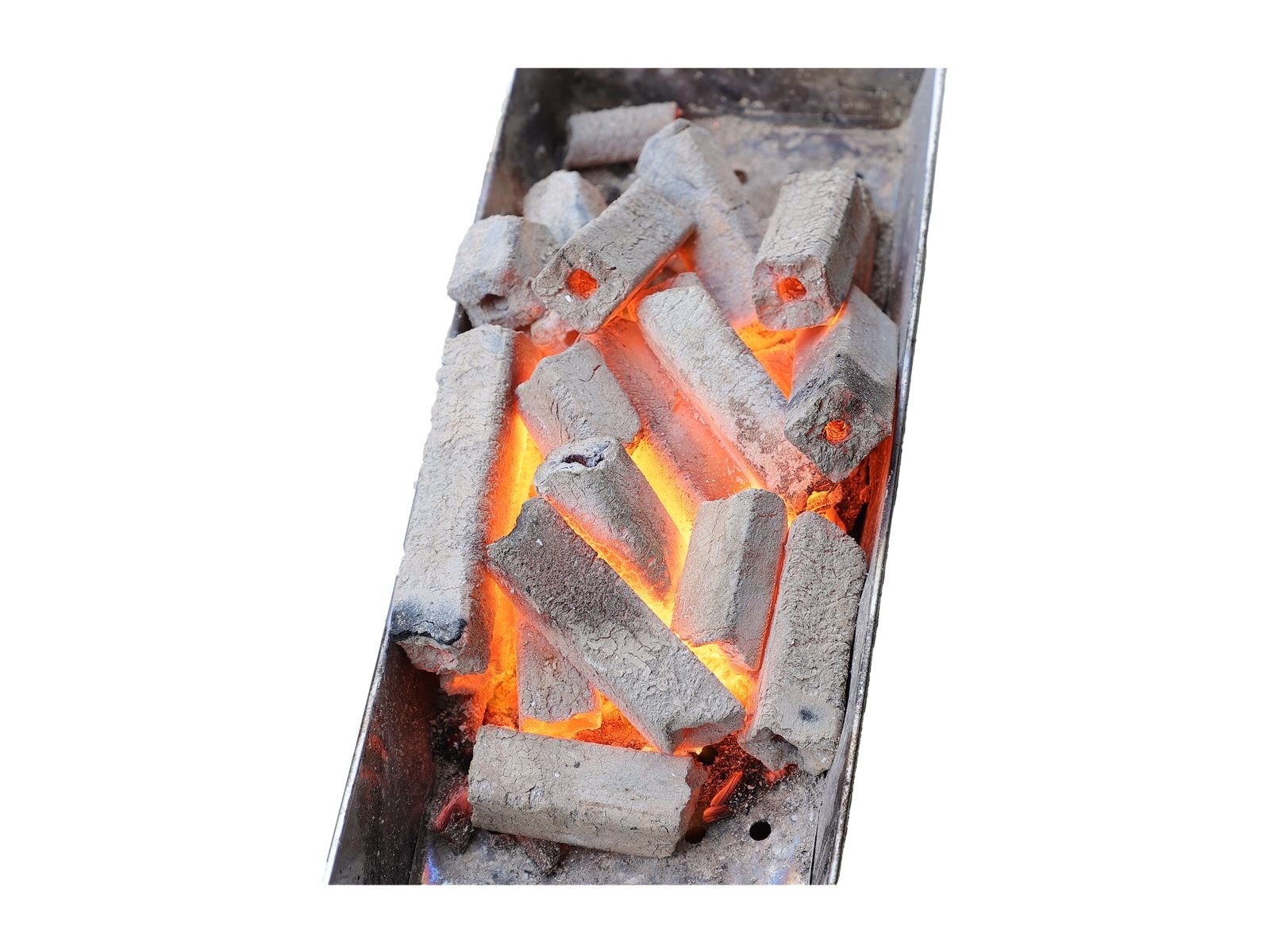
When a line must push out many covers at the same doneness, ogatan briquettes earn their place. Ogatan is a machine-extruded sawdust charcoal with a very uniform shape, so it produces a steady heat plateau and a long, predictable burn that keeps cook times consistent across a shift and across staff. Independent-lab testing puts fixed carbon typically around 94 percent with low ash near 3 percent, which means clean, efficient heat.
VUTRUX produces ogatan in two forms. The hexagon shape has a hollow core that draws air through the center for faster lighting and a strong, even burn, while the square shape is solid and dense for maximum burn time. Both stack neatly in a grill bed, which helps a high-volume line load and manage the fire quickly.
Ogatan is also the most cost-effective grade per kilogram of usable heat, which is why busy grill houses and catering operations lean on it. Where a menu mixes robust and delicate dishes, some kitchens run an ogatan base for steady output with a small binchotan zone for items that must stay smoke-free.
Binchotan: clean, long heat for premium BBQ
For premium BBQ, skewer counters and anywhere flavor purity is the selling point, binchotan white charcoal is the benchmark. Its dense structure delivers intense, radiant infrared heat that cooks evenly from close range, with almost no smoke or odor to mask delicate meats, seafood or vegetables. An independent-lab COA typically shows fixed carbon around 95 percent, ash near 3 percent and negligible sulphur, which translates to a clean, controllable fire.
Binchotan also burns for hours at a stable temperature and can be extinguished and relit across several services, which lowers its real cost per cover despite a higher price per kilogram. VUTRUX offers binchotan from dense hardwoods and fruitwoods - eucalyptus, lychee and longan, and orange-pomelo mai tieu - in grades A and B, round or split, in sizes from roughly 80 to 200 millimetres. Our guide to the best charcoal for restaurants covers how these grades map to yakitori, robata and steakhouse setups.
The one caution is lighting: binchotan is slow to start and best lit in a chimney or on a gas burner, never with lighter fluid. For a high-turnover BBQ line, set up a lighting station so fresh coals are always coming up to temperature ahead of the rush.
Volume grilling economics: cost per cover, not per kilogram
The cheapest bag rarely delivers the cheapest service. A premium fuel that burns longer with less ash can beat a cheaper one that needs constant refueling and mid-service clean-outs. In volume grilling, judge every candidate on cost per cover, not price per kilogram.
Run the comparison in your own kitchen during a sample trial. For each fuel, track how many kilograms a typical service burns, how many times staff rebuild or top up the bed, and how much unburnt product is discarded. A grade that costs more per kilogram but halves refuels and waste often wins on the only number that matters. The table below is a practical starting point for matching grade to BBQ concept.
| BBQ concept | Recommended grade | Why it fits |
|---|---|---|
| Steakhouse / open-flame grill | Hardwood lump | Fast, fierce sear and natural chargrill aroma |
| High-volume grill line | Ogatan briquettes | Uniform heat and predictable cook times |
| Churrasco / rotisserie | Ogatan or hardwood lump | Long, steady heat with manageable ash |
| Yakitori / skewer counter | Binchotan | Radiant, smoke-free heat and a long, stable burn |
| Catering and events | Ogatan briquettes | Easy handling, long burn, lowest cost at volume |
For a full side-by-side of the three formats and how they behave under load, see binchotan vs lump vs briquettes.
Securing consistent, compliant BBQ charcoal supply
Picking the right grade is only half the job; the other half is making the same quality arrive every time. The best charcoal for BBQ restaurants is only as good as the consistency behind it, so build supply on evidence, not promises.
- Sample before you order and keep a retained sample to check future lots against.
- Require an independent-lab COA per lot covering fixed carbon, ash and moisture, so consistency is documented rather than assumed.
- Confirm compliance up front - EUDR due-diligence and phytosanitary paperwork for smooth customs clearance, plus an MSDS for your files.
- Agree clear terms - FOB, CIF or DDP and T/T or L/C payment - so your landed cost is predictable.
Protect continuity as well as quality. Ocean freight adds weeks of lead time, so plan reorders against a realistic sailing schedule and hold a buffer sized to your burn rate, with extra ahead of peak grilling seasons. As a guide, one 20-foot container holds roughly 9.6 tonnes of binchotan or around 15 to 16 tonnes of ogatan, which helps you size an order to real consumption.
VUTRUX exports premium binchotan, ogatan and hardwood lump charcoal FOB Hai Phong to more than 40 markets, with a sample before order and a lab COA on every lot. Tell us your menu, volume and target spec and request a quote, and we will recommend the grade and case format that fit your service.
Frequently asked questions
What is the best charcoal for a high-volume BBQ restaurant?
There is no single winner; the best charcoal for a BBQ restaurant depends on your menu and volume. High-output grill lines usually favour ogatan briquettes for their uniform, predictable heat, steakhouses lean on hardwood lump for a fast sear, and skewer or premium concepts choose binchotan for clean, long-lasting radiant heat. Match the grade to how you actually cook.
Is lump or briquette charcoal better for a BBQ restaurant?
Both have a place. Hardwood lump lights fast and sears hard, which suits steaks, chops and grill-forward menus, but it burns quicker and less evenly. Ogatan briquettes give uniform size, a steady heat plateau and a long burn, which is ideal for high-volume lines and catering where consistency and cost per cover matter most. Many kitchens run both.
How much charcoal does a BBQ restaurant use per service?
It varies widely with grill type, cover count, service hours and the grade, so there is no universal figure. The reliable method is to measure consumption during a sample trial on your own equipment, counting kilograms burned, refuels and discarded product per service, then plan reorder volumes from that real data.
Can BBQ restaurants reuse charcoal to cut costs?
Yes, especially with binchotan. Because it is so dense, binchotan can be smothered in a sealed metal container and relit across several services, which lowers its real cost per cover. Lump and ogatan are generally burned in a single session. Never quench any charcoal with water, which cracks it and makes it spit when relit.
How do I keep BBQ charcoal quality consistent between deliveries?
Standardise on a lab-verified specification, sample before every new supplier and keep a retained sample, and require an independent-lab COA per lot covering fixed carbon, ash and moisture. Agree clear incoterms and payment terms, and work with an exporter who can document EUDR and phytosanitary compliance for smooth, repeatable clearance.