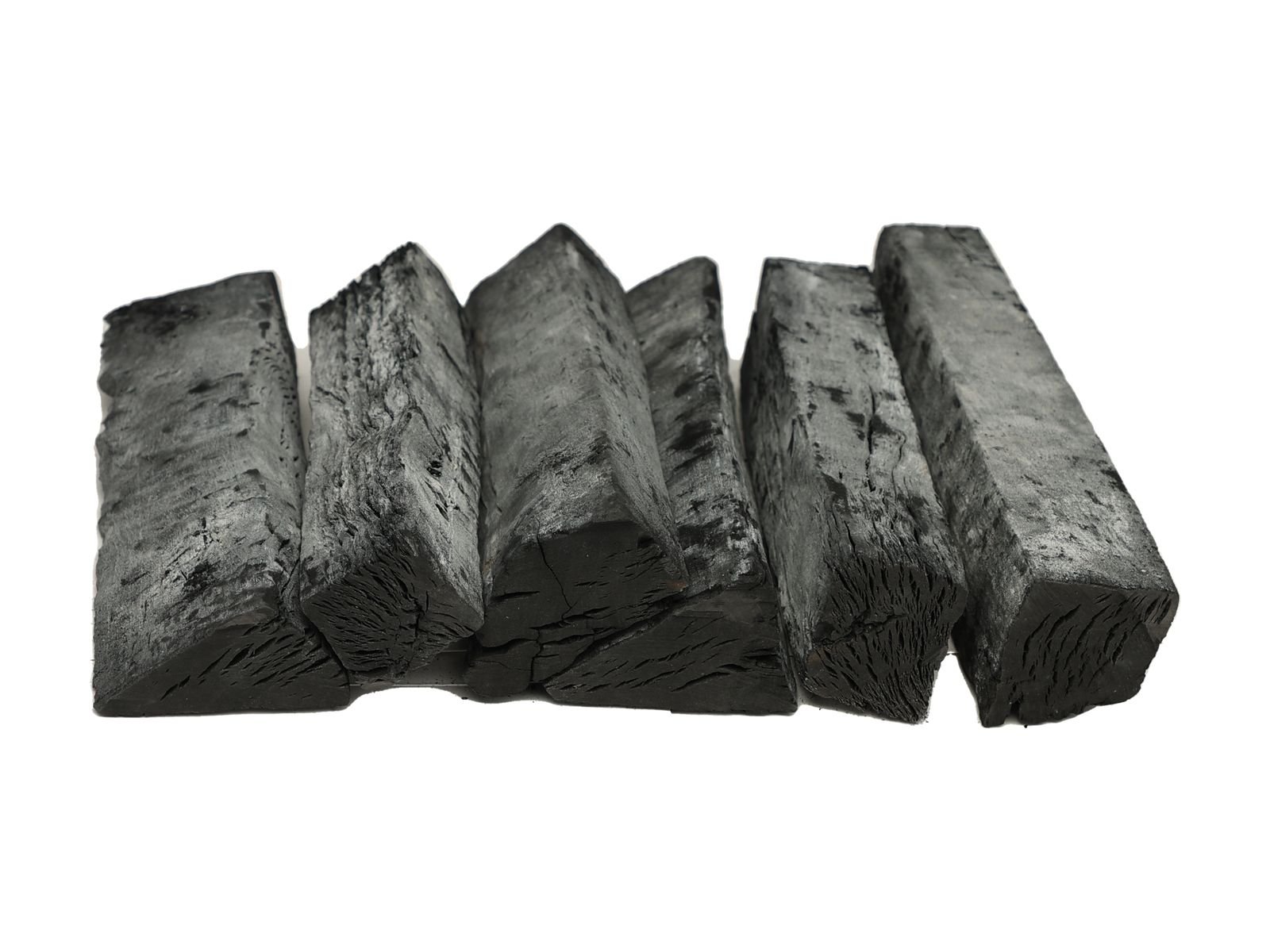
Choosing the best charcoal for home cooking is less about brand names and more about matching fuel to your grill, your menu and how long you want to cook. The three formats a home cook meets most often, dense white binchotan, natural hardwood lump and machine-made ogatan briquettes, each behave very differently over the coals. This guide explains how they burn, which dishes suit each one, and how to buy and store charcoal so every cook is clean, hot and predictable.
Key takeaways
- The best charcoal for home cooking depends on your grill and dishes, not a single winning product.
- Binchotan gives long, steady, almost smokeless heat, ideal for skewers, seafood and slow sessions.
- Hardwood lump lights fast and sears hard, making it the easy pick for weeknight steaks and burgers.
- Ogatan briquettes burn long and evenly with low ash, which suits relaxed, low-and-slow cooking.
- Buy on documented quality, keep charcoal bone dry, and judge value by cost per cook, not price per bag.
What home cooks actually need from charcoal
Before comparing grades, it helps to define what good charcoal for home cooking really has to do. A backyard cook does not need the same fuel as a high-volume restaurant, but the criteria overlap: the coals should light without fuss, reach the right temperature, hold it long enough to finish the food, and do it cleanly.
- Heat and burn time - enough intensity for what you cook, and enough duration to avoid refueling mid-meal.
- Smoke and smell - low and clean for delicate food, or gently aromatic where you want that char.
- Ash and cleanup - less ash means better airflow during the cook and a faster clear-out after.
- Ease of lighting - some coals catch in minutes, others reward patience with hours of heat.
- Consistency - pieces that behave the same way every time, so your cook times stay reliable.
No single fuel wins on every point, which is why the honest answer to which charcoal is best is that it depends. The rest of this guide maps the three main formats to the way real home cooks actually grill.
Binchotan: clean, long heat for careful cooking
Binchotan, or white charcoal, is the premium end of charcoal for home cooking. It is made from dense hardwoods and fruitwoods, and that density is its whole story: it burns hot, steady and almost smokeless for hours. If you like grilling skewers, fish, vegetables or anything delicate where you do not want smoke masking the flavor, binchotan is hard to beat. To understand how it is made and why it behaves this way, see our primer on what binchotan white charcoal is.
The trade-offs are real, though. Binchotan is slow to light, needing a chimney or a gas burner and fifteen minutes or more of patience, and it costs more per kilogram than other formats. In return it holds a stable temperature for a long session and can be extinguished and reused, which softens the price over time. VUTRUX produces binchotan from eucalyptus, lychee, longan and orange-pomelo wood in grades A and B, round or split, in sizes from roughly 80 to 200 mm, packed in 10 kg cartons.
For a home cook, binchotan rewards a particular style: light it once, cook a long relaxed meal, and let the coals do the work with very little smoke and very little ash to clear away afterwards.
Need this grade by the container?
Tell us your market, volume and target spec — we reply within one business day with a quote and a sample offer.
Hardwood lump: fast heat for everyday grilling
Natural hardwood lump charcoal is the workhorse of the backyard. It is simply carbonized hardwood in irregular chunks, and it lights fast, reaches a fierce searing heat within fifteen to twenty minutes, and carries a gentle wood aroma that people associate with proper charcoal grilling. For weeknight steaks, burgers, chops and anything you want to sear hard and eat soon, lump is the natural default.
Lump does burn faster and less evenly than binchotan or briquettes, and because the pieces vary in size you get a mix of hot spots and cooler zones, which is actually useful for setting up a two-zone fire. It also throws a few more sparks and a little more ash. VUTRUX supplies hardwood lump charcoal alongside its binchotan range, so you can match a fast-searing fuel to the same documented quality standard.
If you are weighing the three formats side by side, our comparison of binchotan vs lump vs briquettes breaks down heat, burn time and cost in more detail.
Ogatan briquettes: steady, low-ash and low-fuss
Ogatan is a machine-made charcoal pressed from compacted sawdust and then carbonized. VUTRUX makes it in two shapes: a hexagon with a hollow core, which draws air through the center for an even burn, and a solid square. Because every piece is identical, ogatan gives a very predictable, flat heat plateau and a long burn with notably low ash, which makes cleanup easy.
For home cooking, ogatan suits relaxed, longer sessions where you want set-and-forget heat: low-and-slow barbecue, a long grill over an evening, or cooking for a crowd where steadiness matters more than a fierce initial sear. It lights more slowly than lump but far more evenly, and the hollow hexagon in particular is designed to catch and spread heat through its core. For more on shapes, sizes and how it is produced, see our guide to ogatan charcoal briquettes.
One honest note: ogatan is a natural, industrial-format charcoal, not a coconut-shell or bamboo product. If flavor neutrality and a long, tidy burn are your priorities, it is an excellent value choice for the home.
How to choose charcoal for home cooking
The quickest way to choose charcoal for home cooking is to start from your grill and your usual dishes, then pick the format that fits. The table below is a practical starting point.
| How you cook | Best format | Why it fits |
|---|---|---|
| Skewers, seafood, delicate food | Binchotan | Long, radiant, almost smokeless heat |
| Weeknight steaks and burgers | Hardwood lump | Fast to light, fierce searing heat |
| Low-and-slow, long sessions | Ogatan briquettes | Even, predictable heat with low ash |
| Cooking for a crowd | Ogatan or lump | Steady heat that is easy to top up |
| Small kamado or konro | Binchotan or lump | Efficient in a compact, well-sealed grill |
Grill type matters as much as the food. A well-sealed ceramic kamado or a small konro makes the most of dense binchotan, while an open kettle grill is very forgiving with lump. If you often cook two ways in one session, keep two fuels on hand and build a bed that combines a steady zone with a hot searing zone.
Buying, storing and getting value at home
Good results start before the first match. Buy on evidence, not marketing. A reputable exporter can show an independent-lab certificate of analysis, or COA, covering fixed carbon, ash and moisture; premium charcoal typically runs around 94 to 95 percent fixed carbon with roughly 3 percent ash and 3 percent moisture, and effectively no sulphur. Those numbers are what separate a clean, hot, long-burning fuel from a cheap bag that smokes and dies early.
Storage is the other half of value. Charcoal is porous and readily absorbs moisture, and damp coals are hard to light and can spit, so keep your supply in a dry, sealed container off a cold floor. Handle binchotan gently, since dropping the dense pieces can crack them.
Finally, judge cost the way professionals do, by cost per cook rather than price per bag. A denser fuel that burns longer, leaves less ash and can be reused often beats a cheaper bag you get through twice as fast. VUTRUX supplies binchotan, hardwood lump and ogatan FOB Hai Phong to more than 40 markets, with a sample before any order and a lab COA on every lot. Whether you are a keen home cook or a retailer stocking shelves for them, tell us your target grade and volume and request a quote or a sample.
Frequently asked questions
What is the easiest charcoal for a beginner?
Natural hardwood lump is the most forgiving place to start. It lights quickly with a chimney starter, reaches searing heat in fifteen to twenty minutes, and gives clear visual cues as it ashes over. Once you are comfortable managing a fire, dense binchotan rewards you with longer, cleaner, more controllable heat.
Is binchotan worth it for home cooking?
If you value long, steady, low-smoke heat and cook delicate food such as skewers or seafood, yes. Binchotan costs more per kilogram, but it burns for hours and can be extinguished and reused, so the real cost per cook is lower than the sticker suggests. For quick weeknight searing, lump is the more practical everyday choice.
What charcoal burns the longest?
For raw burn time, dense binchotan leads, followed by quality briquettes such as ogatan, with natural lump the shortest of the three. In a sealed grill like a kamado, all three last considerably longer than on an open kettle because the airflow, and therefore the burn rate, is tightly controlled.
How should I store charcoal at home?
Keep it dry. Charcoal is porous and absorbs moisture from the air and the floor, and damp coals are hard to light and may spit sparks. Store it in a sealed container or bag, raised off a cold or damp floor, and let cold pieces reach room temperature before lighting for the cleanest start.
Can I use restaurant-grade charcoal at home?
Absolutely. The same binchotan, hardwood lump and ogatan that supply professional kitchens work beautifully on a home grill; you simply buy less of it. The advantage is consistency and a documented quality specification, so your results are the same every cook rather than varying bag to bag.