
Using firewood economically comes down to three things you control long before you strike a match: how dry the wood is, how it is sized, and how you feed it air. Get those right and the same stack of wood delivers far more usable heat, less smoke and less waste. This guide covers seasoning, splitting and burn technique for cooking and heating, and explains where a denser fuel like charcoal earns its place when wood alone cannot keep up.
Key takeaways
- Using firewood economically starts with dry wood: aim for a moisture content below about 20 percent.
- Season hardwood for months, ideally a year or more, split and stacked under cover with good airflow.
- Right-sized, split logs ignite faster and burn more completely than large unsplit rounds.
- Control the burn with airflow and load size; a starved or smothered fire wastes fuel as smoke.
- For high, steady cooking heat, charcoal made from hardwood is denser and cleaner than raw wood.
What using firewood economically really means
When people talk about using firewood economically, they usually mean getting the most heat out of every log while buying and burning as little as possible. Efficiency is not a single trick; it is the product of moisture, size and airflow working together. A fire that hisses, smokes and blackens the glass is not just unpleasant, it is money going up the chimney as unburnt fuel.
Wood releases its energy in stages. First the heat drives off moisture, then it drives off volatile gases, which only burn if they get hot enough and meet enough oxygen; finally the remaining charcoal in the log glows. If the wood is wet, most of the early heat is wasted boiling off water instead of warming your food or your room. That single fact explains why seasoning matters more than almost anything else.
The practical goal is simple: burn dry, well-sized wood with enough air that the smoke itself catches fire. Everything below is in service of that one idea.
Season and store wood for maximum heat
Freshly cut, or green, wood can be nearly half water by weight. Burning it wastes energy, coats your flue with creosote and produces heavy smoke. Seasoned wood, dried to roughly 20 percent moisture or less, lights easily and gives far more heat per log, which is the single biggest win in using firewood economically.
- Give it time. Most hardwoods need six months to two years to season, and dense species such as oak sit at the longer end.
- Split before you stack. Splitting exposes the wet interior and dramatically speeds drying.
- Stack for airflow. Keep the pile off the ground and loosely stacked, with sun and wind reaching it.
- Cover the top only. Shelter it from rain but leave the sides open so moisture can escape.
You can confirm dryness cheaply with a moisture meter, or read the signs: seasoned wood is lighter in weight, darker and split or cracked across the grain at the ends, and knocks together with a hollow ring rather than a dull thud.
Need this grade by the container?
Tell us your market, volume and target spec — we reply within one business day with a quote and a sample offer.
Size and split for low-waste burning
Log size has a bigger effect on efficiency than most people expect. Large rounds have little surface area for their volume, so they are slow to catch and tend to smolder, while smaller, split pieces ignite quickly and burn more completely. The economical approach is to keep a range of sizes on hand.
- Kindling - thin, bone-dry sticks to establish a flame fast.
- Small splits - to build the fire up to temperature without smothering it.
- Medium splits - the main workhorse for steady heat.
- A few larger pieces - added only once the fire is hot, to carry a long, slow burn.
Match wood to the job as well. Dense hardwoods such as oak, ash and the fruitwoods pack more energy per log and burn longer, which is why they are prized for both heating and cooking; light softwoods light fast but burn out quickly and are better kept for kindling. Feeding a hot fire the right-sized piece at the right time is the quiet skill behind burning less wood for the same result.
Burn technique: airflow, load size and lighting
Even perfect wood burns badly with poor technique. The aim is a hot, bright fire that consumes its own smoke, not a choked, smoldering one. Three habits make most of the difference.
- Light from the top down. Placing kindling on top of the larger logs and lighting it there gives a cleaner, more complete burn than lighting from below, because the rising heat ignites the gases as they are released.
- Give it air early. Open the vents fully while the fire establishes; a common cause of waste is damping a young fire down too soon, which chills it and produces smoke instead of flame.
- Load little and often. Small, regular additions keep the firebox hot and efficient, whereas one huge load smothers the fire and drops it into a smoky smolder.
Once you have a bright bed of embers you can moderate the air to hold a steady output, but never so far that the flames disappear and the smoke thickens. If the glass blackens or the smoke turns grey and heavy, the fire is telling you it is starved of air or fed with wet wood.
Firewood vs charcoal: choosing the efficient fuel
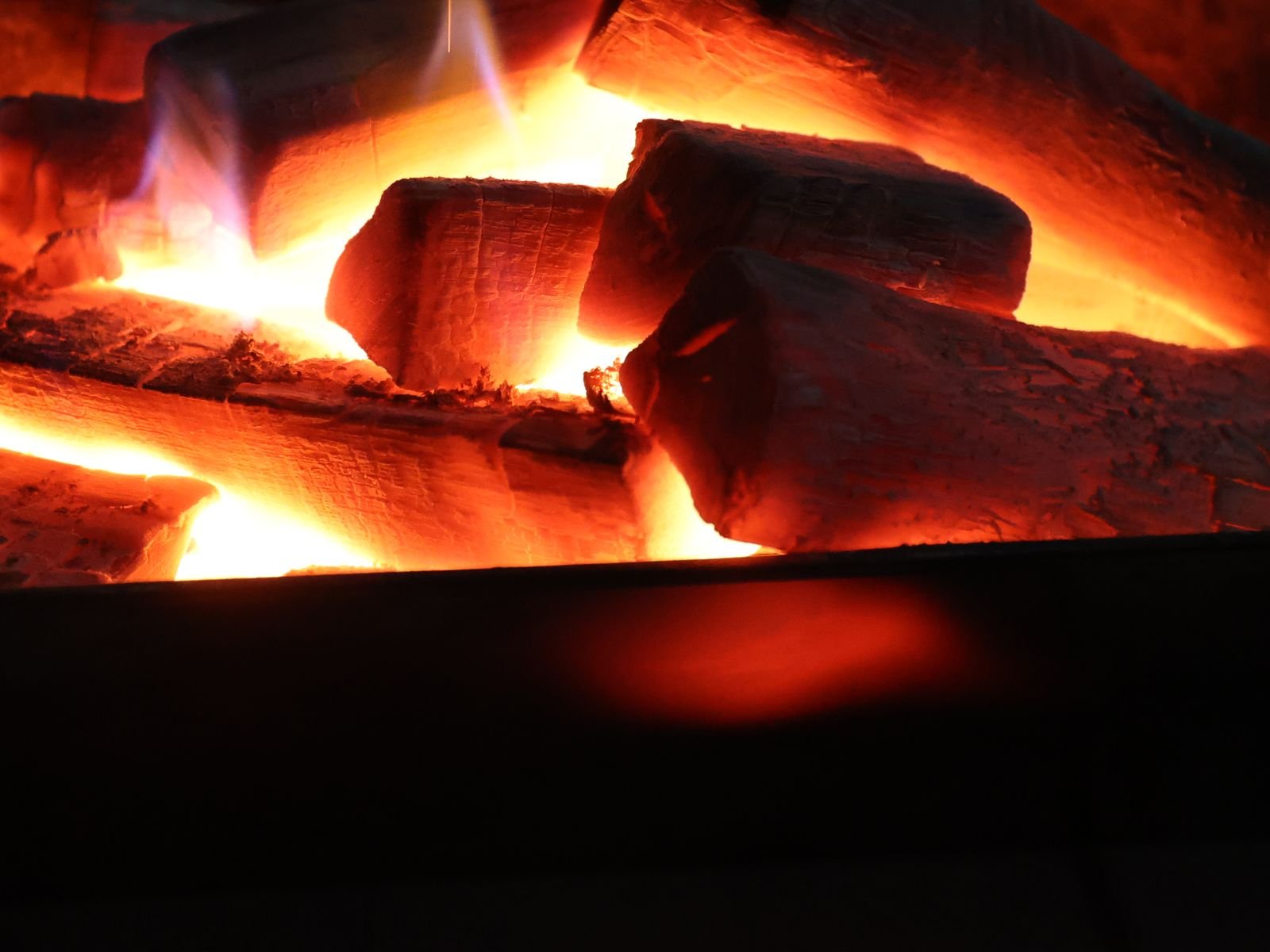
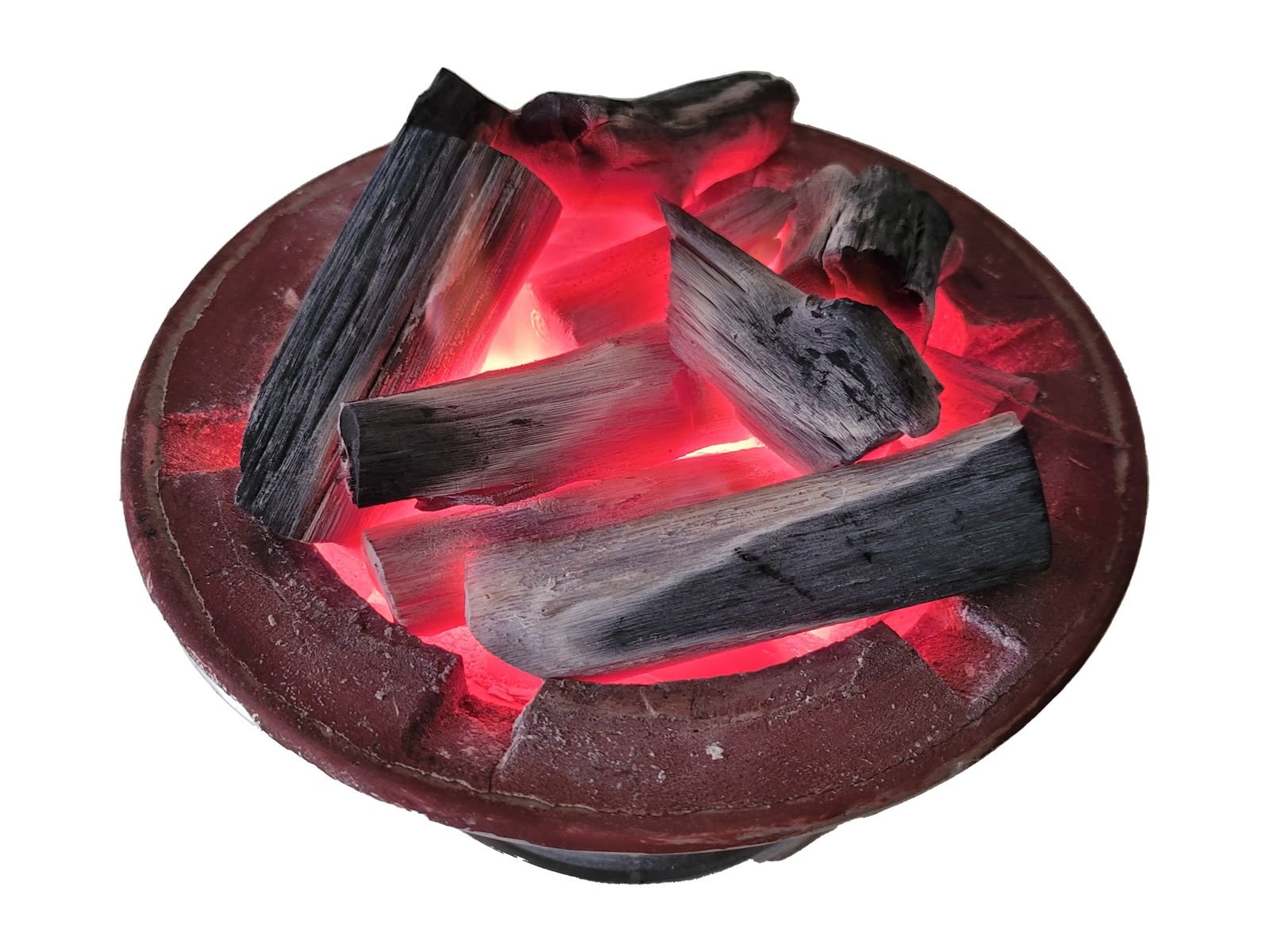
Wood is excellent for ambience, radiant warmth and long heating burns, but it is not always the most efficient fuel for cooking. Charcoal is essentially what remains after wood has already given up its water and volatile gases, so it burns hotter, steadier and far cleaner, with little smoke and a fraction of the fuss. For grilling and high-heat cooking, that difference is decisive.
| Need | Firewood | Charcoal |
|---|---|---|
| High, steady cooking heat | Variable, needs tending | Hot and stable for hours |
| Smoke and flavor | More smoke, strong wood aroma | Low smoke, clean or subtle aroma |
| Storage and handling | Bulky, must be seasoned first | Dense, compact, ready to burn |
| Ambience and long heating | Excellent | Not its purpose |
This is where the two fuels complement rather than compete. Many cooks heat with wood but grill over charcoal, because a dense hardwood charcoal delivers the controllable, smokeless heat that raw logs struggle to match. For a fuller comparison of natural and processed fuels, see natural vs industrial charcoal and our breakdown of binchotan, lump and briquettes.
Getting more heat from hardwood, as wood or charcoal
The same qualities that make a wood species good firewood, high density and low resin, also make it excellent raw material for charcoal. VUTRUX turns dense hardwoods and fruitwoods such as eucalyptus, lychee, longan and orange-pomelo into binchotan white charcoal and hardwood lump, along with ogatan pressed from compacted sawdust. Independent-lab testing puts the fixed carbon of that charcoal around 94 to 95 percent, with roughly 3 percent ash and 3 percent moisture and effectively no sulphur, which is why it burns so much hotter and cleaner than the wood it came from.
If your goal is efficient heat for cooking rather than heating a room, moving from firewood to a quality charcoal is often the most economical step of all: no seasoning wait, less storage, far less smoke, and a longer, more controllable burn. To learn how the flagship product is made and used, read what binchotan white charcoal is.
VUTRUX exports charcoal FOB Hai Phong to more than 40 markets, with a sample before order and a lab COA on every lot. If you supply firewood or solid fuel to a market and want to add a premium charcoal line, request a quote or a sample.
Frequently asked questions
How can you tell if firewood is properly seasoned?
Seasoned wood is noticeably lighter than green wood, darker at the cut ends, and often split or cracked across the grain. Two dry logs knocked together give a sharp, hollow ring rather than a dull thud. For certainty, a cheap moisture meter should read around 20 percent or less on a freshly split face.
Does hardwood really burn longer than softwood?
Yes. Dense hardwoods such as oak and ash pack more energy into the same volume, so they burn longer and hold heat better than light softwoods. Softwoods light quickly and are ideal as kindling, but they are consumed fast, which makes hardwood the more economical choice for sustained heat.
Is it cheaper to cook with firewood or charcoal?
It depends on the task. For long heating burns, well-seasoned wood is hard to beat on cost. For high-heat, controllable cooking such as grilling, charcoal is often more economical in practice because it burns hotter and steadier with far less smoke and tending, so less fuel is wasted reaching and holding temperature.
How long does firewood take to season?
Most hardwoods need six months to two years, depending on species, climate and how the wood is stacked. Dense woods like oak sit at the longer end. Splitting the logs, keeping them off the ground, and covering only the top while leaving the sides open all speed the process considerably.
Why does my wood fire smoke so much?
Heavy smoke almost always means wet wood or too little air. Unseasoned logs spend their early heat boiling off water and smolder instead of flaming. Burn only seasoned wood, open the vents fully while the fire establishes, and light from the top down so the rising heat ignites the smoke as it is released.