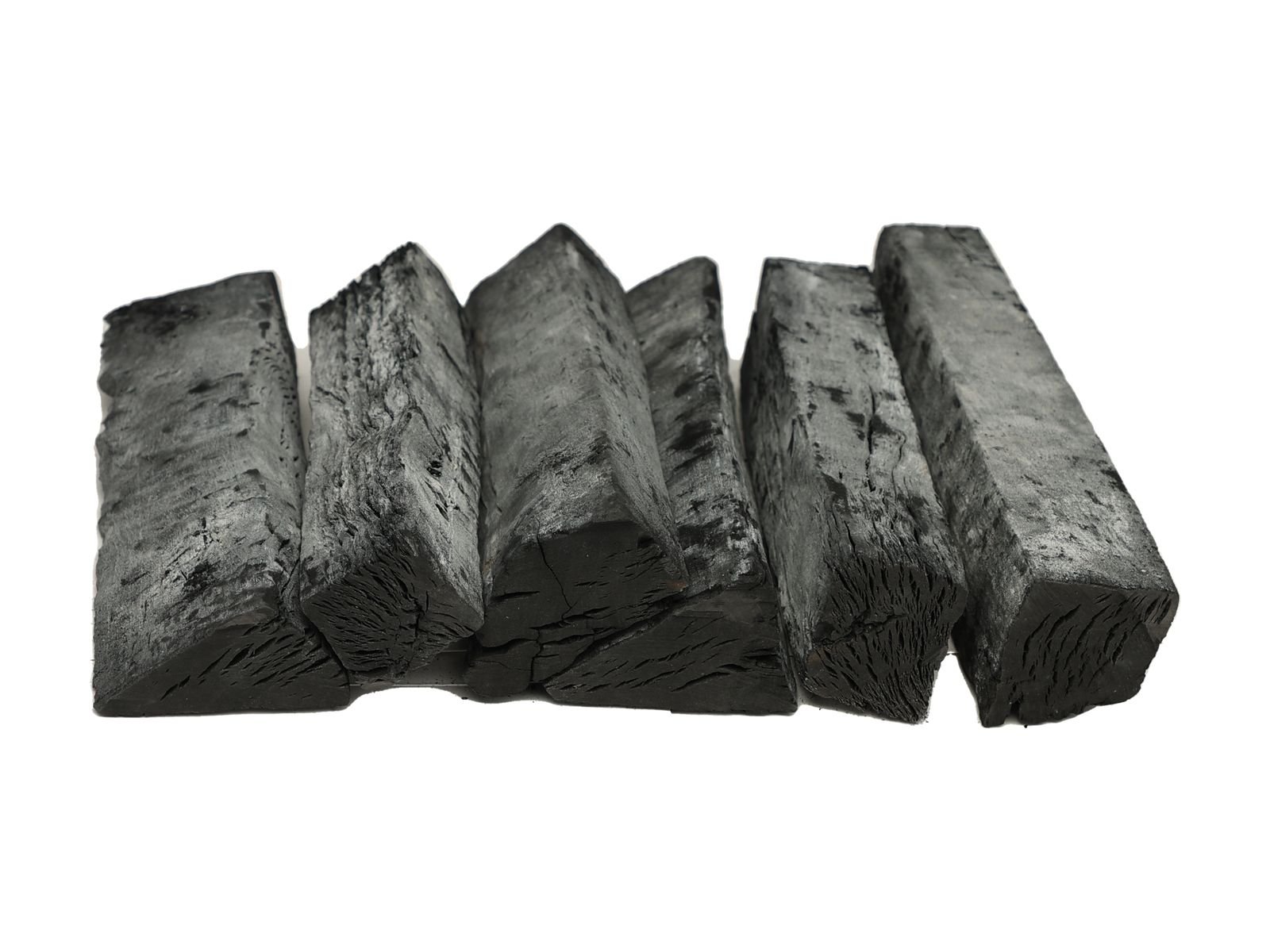
The best charcoal for camping is fuel you can pack small, light without fuss and trust far from the nearest shop. Away from a kitchen, you want predictable heat, a long burn from a small volume, and clean handling that will not foul delicate outdoor cooking. This guide compares the main formats for backpacking, car camping and picnics, and explains why compact, dense charcoal usually wins outdoors.
Key takeaways
- The best charcoal for camping balances pack weight, easy lighting and a long burn from a small volume.
- Ogatan briquettes are the most practical all-round camping fuel: uniform, dense, long-burning and clean.
- Binchotan suits longer trips where its reuse and steady heat justify the slower light.
- Hardwood lump lights fastest for a quick cook but burns through more quickly.
- Never burn charcoal inside a tent, awning or camper - carbon monoxide is odorless and can be fatal.
What makes the best charcoal for camping
Cooking outdoors changes what you want from charcoal. At home you can grab another bag; on a trip you carry everything in, so the best charcoal for camping has to earn its place in the pack. Four things matter more outdoors than they do in a backyard.
- Energy density - the most usable heat for the least weight and volume, so you carry less.
- Easy, wind-tolerant lighting - fuel that catches reliably without a mains hob or a can of accelerant.
- Long, steady burn - enough heat from one load to cook a full meal without constant tending.
- Clean handling and low ash - less mess to pack out and less residue to foul food.
Safety sits above all of these. Charcoal must only ever be burned in the open air, never inside a tent, awning, camper or car, because it gives off carbon monoxide. With that rule fixed, the best charcoal for camping comes down to matching a format to your trip: how far you are carrying it, how long you need to cook, and how much fuss you want when it is time to light up.
Ogatan briquettes: the practical all-rounder
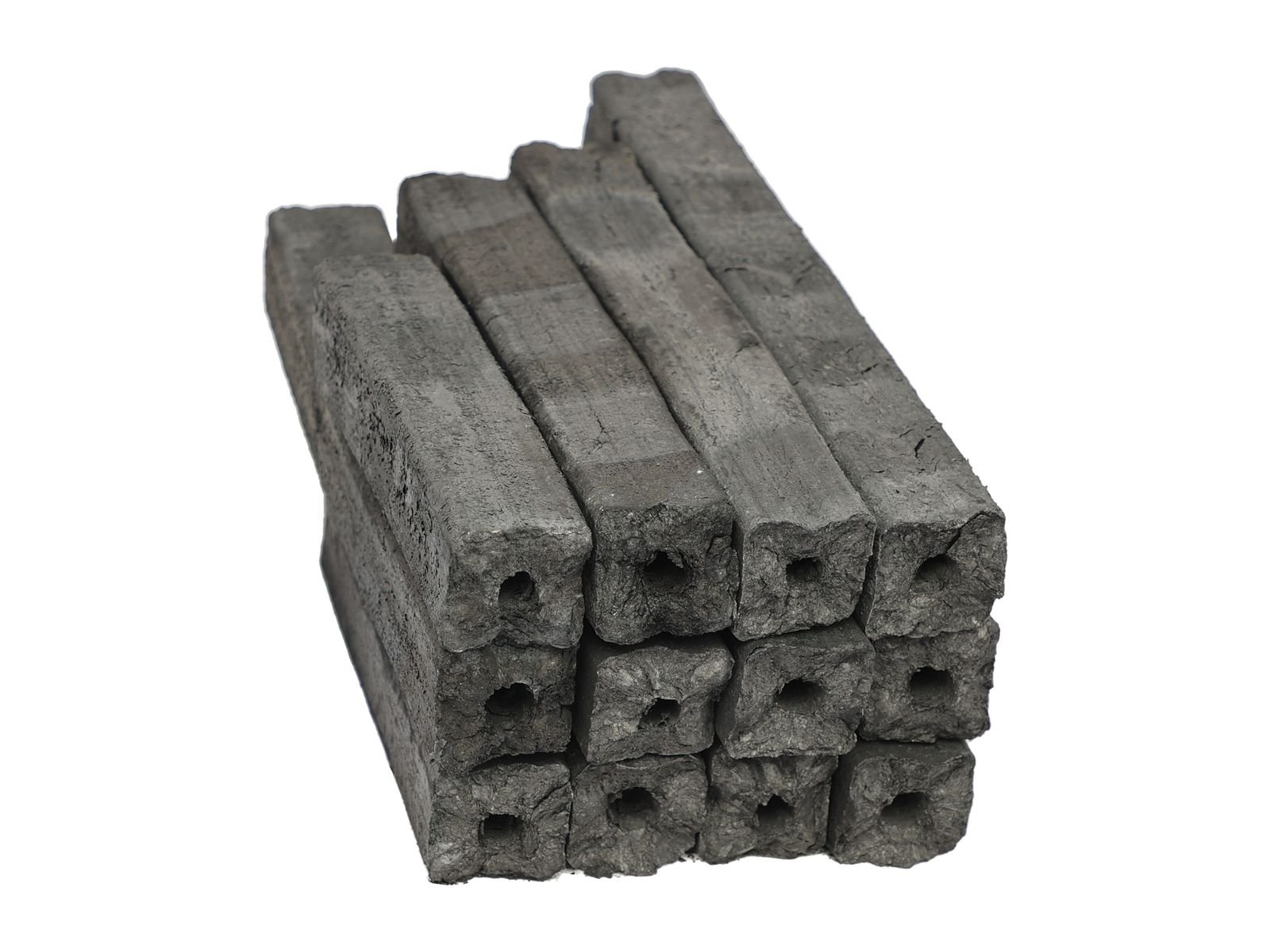
For most trips, ogatan briquettes are the most practical camping fuel. Ogatan is a machine-extruded sawdust charcoal with a uniform shape and high density, so a small, packable volume delivers a long, steady burn. Independent-lab testing typically shows fixed carbon around 94 percent and low ash near 3 percent, which means efficient heat and little residue to pack out.
VUTRUX makes ogatan in two shapes. The hexagon has a hollow core that pulls air through the center, so it lights faster and burns strongly and evenly - handy when you are working with a small chimney or a windy pitch. The square is solid and dense for the longest burn from the least volume, which suits a slow cook or a longer evening around the grill. Both shapes stack tightly in a pack and resist crumbling, so you are not left with a bag of dust at the trailhead.
Need this grade by the container?
Tell us your market, volume and target spec — we reply within one business day with a quote and a sample offer.
Binchotan for longer trips and reuse
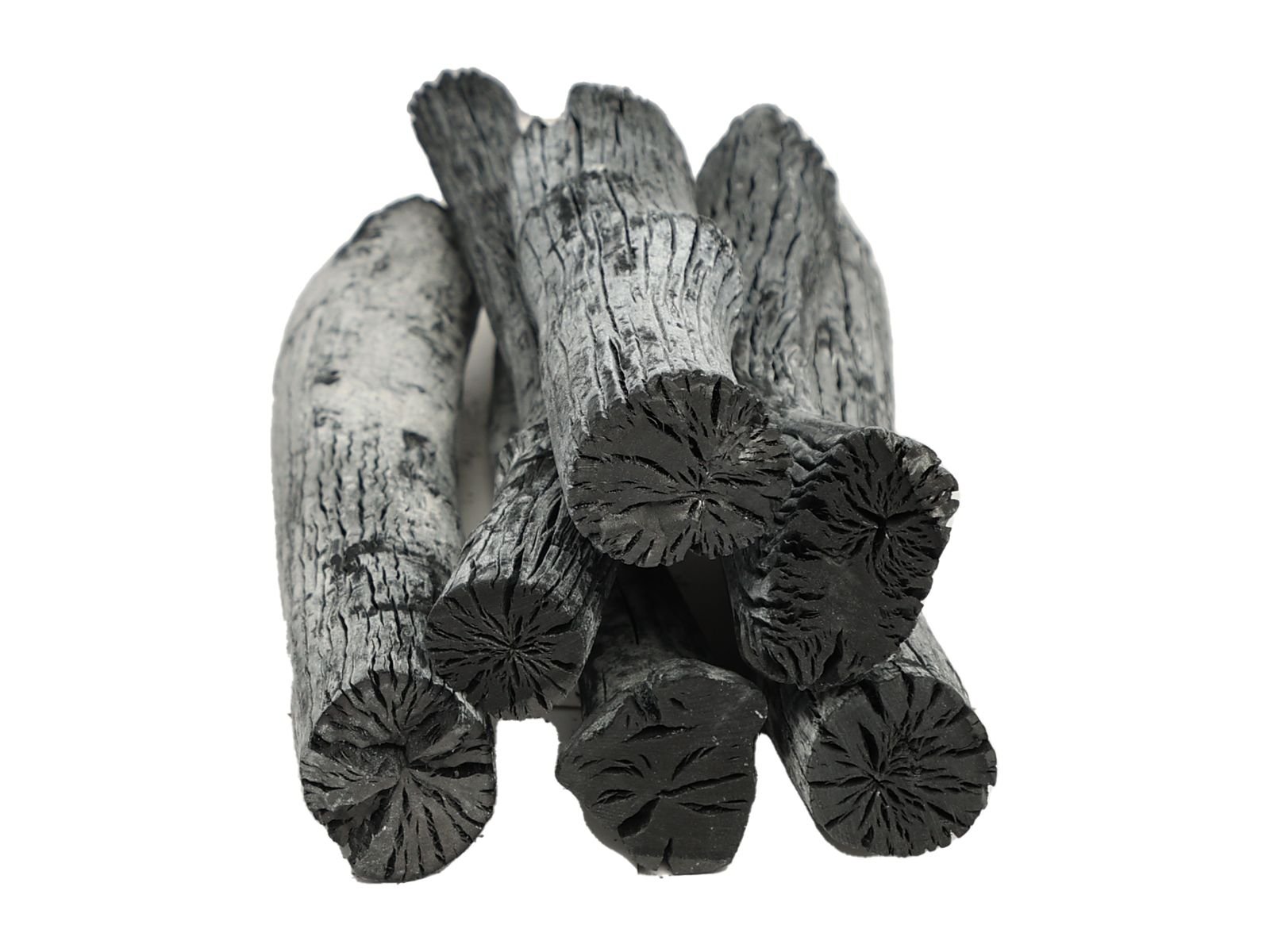
On longer trips, or when you want the cleanest possible heat, binchotan white charcoal is worth its extra weight. It is a very dense hardwood charcoal - fixed carbon typically around 95 percent - that burns hot, steady and nearly smokeless for hours, with very little ash. Crucially for a multi-day trip, binchotan can be smothered in a sealed metal tin and relit the next evening, so a single load can serve more than one meal.
The trade-off is lighting. Binchotan is slow to catch and cannot be started with lighter fluid, so allow time and use a compact chimney over a camp stove or a solid firelighter. Our guide on how to light and use binchotan covers the technique, which is the same whether you are on a konro or at a campsite. For weekend trips where you want a quick, low-effort fire, ogatan or lump is the easier choice.
Hardwood lump for a fast, simple cook
When you just want a fast, simple cook - a picnic burger or a quick grill before dark - hardwood lump charcoal is the easiest to light. It catches quickly, reaches a searing heat fast and adds a natural wood aroma. The trade-off is that lump burns through more quickly and less evenly than ogatan or binchotan, so you carry more of it for the same cooking time and tend the fire more actively.
Lump also produces more dust and fines than extruded ogatan, which can be a nuisance in a pack. For a short outing it is a fine, low-effort choice; for a longer trip where pack weight and burn time count, a denser fuel usually wins. The full comparison of binchotan, lump and briquettes lays out the differences in burn time, heat and ash.
Quick comparison: which format for which trip
Different trips reward different fuel. Use this quick comparison to pick a format, then confirm the real burn time on your own stove and grill before a big trip, because grills, wind and appetite all change the numbers.
| Trip type | Best format | Why |
|---|---|---|
| Backpacking / weight-critical | Ogatan square | Most burn time for the least weight and volume |
| Car camping / base camp | Ogatan hexagon | Lights faster, strong even heat, easy to manage |
| Multi-day, slow cooking | Binchotan | Long, clean burn and can be relit the next day |
| Quick picnic / short cook | Hardwood lump | Fastest to light for a one-off grill |
As a rule of thumb, denser fuels give you more cooking time per kilogram, so they reward any trip where you carry your own weight. Lump wins only when speed and simplicity beat efficiency, and where a nearby car means the extra weight of a fast-burning fuel costs you nothing.
Lighting, storage and safety outdoors
Whatever you pack, a few habits keep outdoor cooking safe and clean.
Light it without accelerants
A small chimney starter, natural wax or wood-wool firelighters, or a windproof burner all light charcoal cleanly. Skip petroleum lighter fluid: it taints food, and it rarely brings dense ogatan or binchotan to full ignition anyway.
Never burn charcoal in an enclosed space
Burning charcoal releases carbon monoxide, a gas you cannot see or smell. Every year people die after taking a grill or a lit chimney into a tent, awning, camper or car for warmth. Cook only in the open air, and let the last coals die outside.
Store it dry and pack it out
Keep charcoal in a sealed bag so it stays dry and lights easily - damp coal is hard to start and can spit. Let ash cool completely, then pack it out with the rest of your rubbish. If you are a retailer or distributor stocking camping charcoal, VUTRUX supplies ogatan, binchotan and hardwood lump wholesale FOB Hai Phong, with a sample before order and a lab COA on every lot - request a quote or a sample to match a format to your range.
Frequently asked questions
What is the best charcoal for camping and backpacking?
For most trips the best charcoal for camping is ogatan briquettes, because their dense, uniform shape gives a long, steady burn from a small, packable volume. Backpackers who count every gram often prefer the solid square ogatan, while longer trips can justify binchotan for its reuse. Hardwood lump is fine for a quick one-off cook.
Can I use charcoal briquettes for camping?
Yes. Uniform briquettes such as ogatan are among the best camping options: they light reliably, hold a steady heat and burn long, so you carry less fuel. Choose clean, natural charcoal briquettes with a low ash content and avoid any product with binders or accelerants that can taint food.
Is it safe to use charcoal in a tent?
No. Never burn charcoal inside a tent, awning, camper or car, even to keep warm. Charcoal gives off carbon monoxide, an odorless gas that can be fatal in an enclosed space, and coals keep releasing it long after the flames die down. Cook only in the open air and let spent coals cool outside.
How do I light charcoal while camping without lighter fluid?
Use a small chimney starter over a camp stove, or natural wax or wood-wool firelighters, and give dense fuel a few extra minutes to catch. Shield the fire from wind while it establishes. Avoid petroleum lighter fluid, which flavours food and often burns off before dense ogatan or binchotan reaches full ignition.
How much charcoal should I bring for a camping trip?
It depends on the fuel, the grill and how long you cook, so measure it once at home. Light the amount you think you need, time how long it holds a cooking heat, and adjust. Dense fuels such as ogatan and binchotan deliver more cooking time per kilogram than lump, so you can pack less for the same meals.