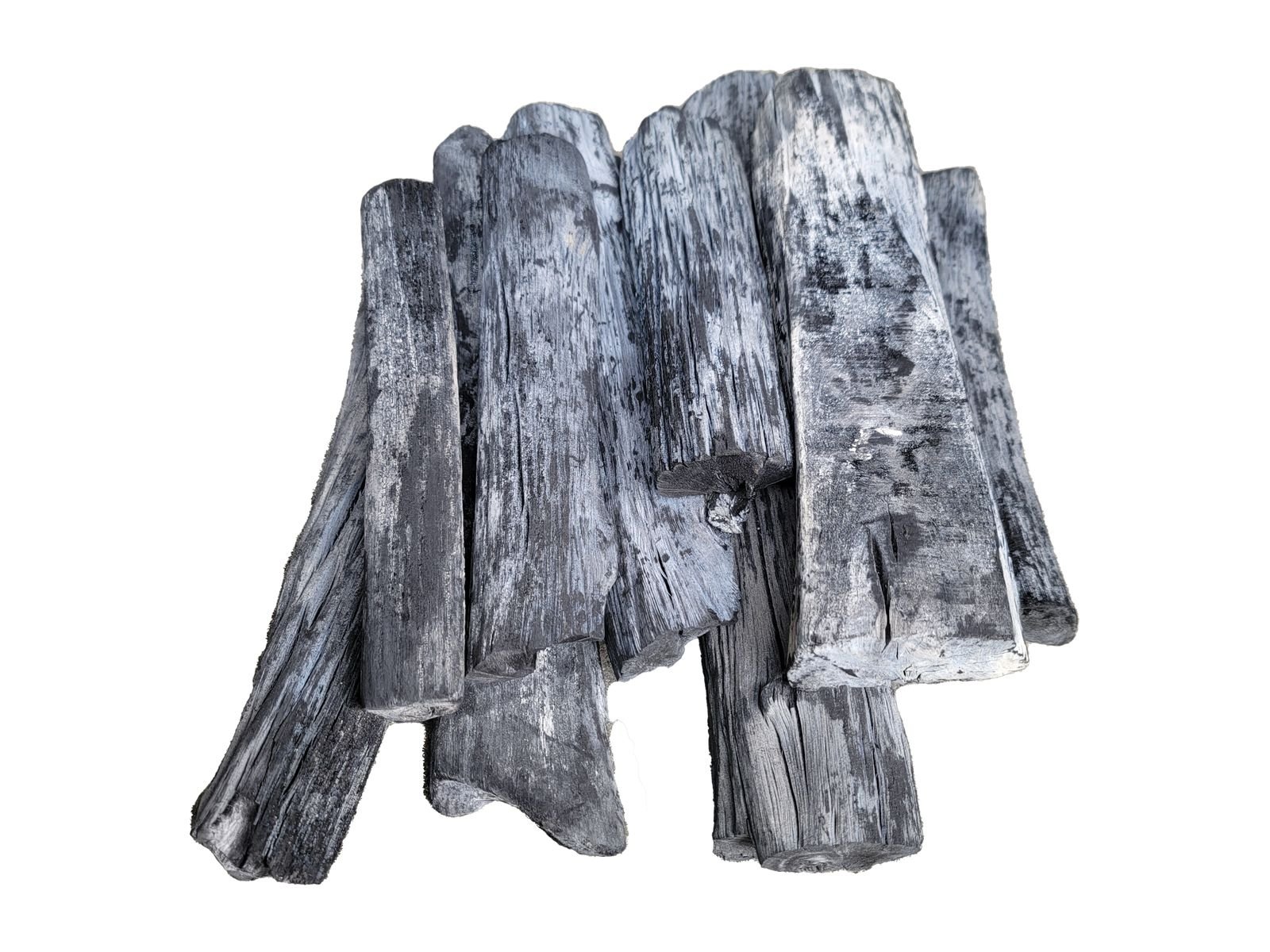
The best charcoal for robata has to do one thing exceptionally well: hold a controllable, radiant heat across a wide grill so a chef can cook many items at different intensities at once. That is why robatayaki counters, like their yakitori cousins, run on binchotan white charcoal. This guide focuses on the two things that decide success at the robata grill - heat control and grade selection - so you can build reliable heat zones and keep a long service steady.
Key takeaways
- Robata demands a wide, controllable bed of radiant heat, which makes binchotan the best charcoal for robata grilling.
- Build heat zones by varying charcoal depth and food height, not by constantly adding fuel.
- High fixed carbon (around 95%) and low ash keep the bed hot and the airflow open through a long service.
- Grade and size matter: a deep bed of larger pieces for steady heat, splits for quick top-ups.
- Test a grade on your own grill before ordering, and insist on a per-lot COA for consistency.
What makes robata different
Robatayaki is cooked over a wide, open hearth where the chef arranges food at different distances from the coals, often on a long grill or raised on racks. Unlike a compact yakitori konro, a robata grill is about breadth: seafood, vegetables, skewers and larger cuts may all be cooking at once, each needing a different intensity. The fuel therefore has to provide a broad, even bed of radiant heat that the chef can shape, rather than a single hot spot.
It also has to behave over a long service with minimal smoke, because much robata cooking is theatre performed in front of guests. That combination - wide, steady, radiant and clean - is exactly what binchotan delivers, which is why binchotan is widely regarded as the best charcoal for robata on serious counters. The clean heat lets the natural flavour of premium seafood and vegetables lead, with only a whisper of char.
There is also a service-experience dimension. Robata is frequently cooked in front of guests, so a fuel that flares, smokes or smells would undermine the whole performance. A calm, glowing binchotan bed looks the part and lets the aromas of the food, not the fuel, reach the counter.
Controlling heat on a robata grill
Heat control on robata is physical, not electronic, so the fuel's behaviour is everything. Start by building the bed unevenly: a deeper pile of glowing binchotan at one end for searing, thinning to a shallower layer at the other for gentle finishing and holding. Because binchotan burns with a long, steady output, those zones stay put through service instead of collapsing after twenty minutes, so you are not constantly rebuilding the fire.
You then fine-tune by moving food up and down and nearer or farther from the coals, rather than by dumping on more fuel. Binchotan's low ash - around 3% - matters here: ash smothers airflow and cools a bed, so a clean-burning fuel keeps the coals breathing and the heat honest. Top up at the searing end with a few pre-lit splits when needed. For the full lighting and management routine, our guide on how to light and use binchotan walks through it step by step.
Airflow is the other lever. A robata hearth breathes from below, so keeping the bed free of ash and arranging pieces with small gaps lets oxygen reach the coals and hold the heat where you want it. If a zone starts to fade, rake it together to concentrate the embers before reaching for fresh fuel; often you do not need more charcoal, just better contact between the pieces you already have.
Need this grade by the container?
Tell us your market, volume and target spec — we reply within one business day with a quote and a sample offer.
Choosing the best charcoal for robata: grade and size
Grade and size selection is where a good robata bed is won or lost. VUTRUX binchotan comes in grades A and B, round or split, in sizes roughly 80 to 200 mm. For robata, larger, denser pieces are your foundation: they build a deep, long-lasting bed that radiates steadily and resists temperature swings when the counter gets busy. Keep a supply of splits and medium pieces on hand to top up the hot zone quickly without chilling the whole grill.
The wood matters as well. Eucalyptus gives a very hard, enduring burn for a workhorse bed, while lychee and longan offer a dense, refined heat suited to delicate seafood. Consistency between pieces is what keeps a wide bed even, so buy on graded, uniform stock rather than mixed offcuts. If you are new to white charcoal, our explainer on what binchotan white charcoal is covers how grade and wood affect performance.
The specifications that matter for robata
Because a robata service is long and continuous, the numbers behind the best charcoal for robata show up directly in the guest experience. Compare these figures on the certificate of analysis before you commit to a supplier.
| Specification | Typical value | Why it matters for robata |
|---|---|---|
| Fixed carbon | ~95% | More usable, longer-lasting heat |
| Ash | ~3% | Keeps airflow open and the bed hot |
| Moisture | ~3% | Lights cleanly, no steaming or sputtering |
| Sulphur | ~0% | No off-flavours on delicate seafood |
| Calorific value | ~8,300 kcal/kg | Strong, steady radiant output |
These are typical ranges from independent testing (Vinacontrol); always ask for a per-lot COA so each shipment matches what you approved. Consistency lot to lot is what lets a chef trust the bed night after night.
Sourcing robata charcoal for a busy service
When the grade is settled, plan supply around your covers. VUTRUX packs binchotan in 10 kg cartons, and a 20ft container carries roughly 9.6 MT net - about 960 cartons - a sensible first order for a dedicated robata kitchen. The charcoal ships FOB Hai Phong, with CIF or DDP on request, payment by T/T or L/C, to more than 40 export markets, with EUDR, phytosanitary, per-lot COA and MSDS documentation available.
Plan lead time into the order. Charcoal travels by sea, so several weeks can pass between order and arrival; set a reorder point against your weekly burn and hold a buffer so a delayed container never leaves the hearth cold at service. A little extra stock before peak grilling seasons is cheap insurance against a gap in supply.
If you run several concepts, you can standardise on one binchotan grade for the robata and yakitori grills while using more economical formats elsewhere; our overview of the best charcoal for restaurants maps fuels to venue types. The dependable path is to test before you buy in bulk: request a sample and a quote and run it through a real robata service before ordering a container.
Getting the most from your robata charcoal
A robata bed is expensive to run carelessly and economical to run well, so a few habits pay off quickly. Save part-burned binchotan by smothering it in a lidded metal container at the end of service; because the fuel is almost pure carbon it self-extinguishes without crumbling to ash and relights cleanly next time. Run pieces down over successive services until they are too small for the grate, and the cost per hour drops well below what the headline price per kilogram suggests.
Storage and handling protect that value. Keep cartons off the floor in a dry room, open one at a time, and rotate older stock to the front so nothing sits long enough to absorb humidity. Use tongs to lift pieces rather than tipping cartons, which limits the breakage and dust that would otherwise clog the bed. Finally, measure your own consumption over a week of normal covers; that real number is the only sound basis for reorder points and for comparing one grade against another.
Frequently asked questions
Is robata charcoal the same as yakitori charcoal?
Largely, yes - both are best cooked over binchotan white charcoal for its clean, steady, radiant heat. The difference is in how you use it: robata spreads that heat across a wide bed with distinct zones, so it tends to rely on a deeper foundation of larger pieces than a compact yakitori konro.
How do you control the heat on a robata grill?
You control it physically. Build the charcoal bed deeper in one area for searing and shallower elsewhere for finishing, then move food nearer or farther from the coals and up or down on racks. Binchotan's steady burn and low ash keep those zones stable through a long service.
How much charcoal does a robata service use?
It varies with the size of the grill, the number of covers and how long you fire the hearth, so the only reliable answer comes from testing on your own equipment. Because binchotan can be extinguished and relit, careful management keeps consumption lower than the raw burn time suggests.
Do I need grade A binchotan for robata?
Not always. Grade A gives the most uniform, long-lasting pieces for a premium exhibition grill, but grade B performs well for many robata services at a lower cost. Testing both against your menu is the best way to decide where each grade earns its place.