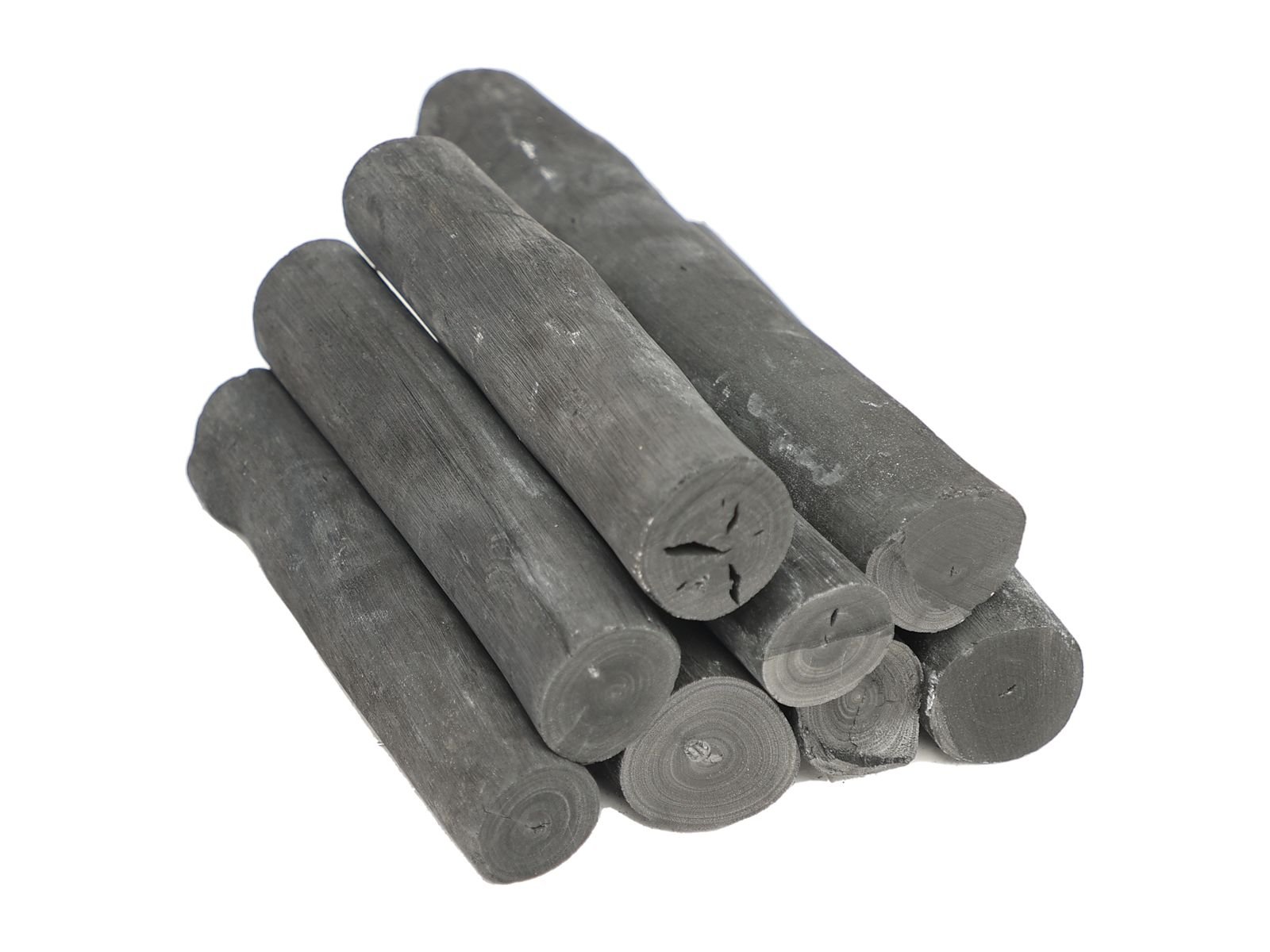
Choosing charcoal for teppanyaki and izakaya kitchens is about control: clean, radiant heat that chars without smothering delicate ingredients in smoke. While the classic teppan is a gas-fired griddle, the charcoal grill is the beating heart of most izakaya, driving the yakitori, kushiyaki and robata that define the menu. This guide explains where charcoal belongs in a Japanese kitchen, why binchotan sets the standard, and how to match grade, size and supply to your counter.
Key takeaways
- The benchmark charcoal for teppanyaki and izakaya kitchens is binchotan: dense white charcoal with intense radiant heat and almost no smoke.
- Classic teppanyaki uses a gas griddle, but the charcoal grill drives the yakitori, kushiyaki and robata that define most izakaya menus.
- Match grade and size to the station: graded binchotan sticks for the konro, split pieces for searing, ogatan for steady high-volume heat.
- Control heat with airflow and a two-zone bed, add pre-lit coals during service, and never burn charcoal indoors without commercial extraction.
- Protect quality and cost with sample-before-order, a per-lot COA, and reusable binchotan measured on cost per cover, not price per kilo.
Where charcoal belongs in a teppanyaki and izakaya kitchen
It helps to be precise about terms, because charcoal for teppanyaki and izakaya covers several different cooking stations, not one. Classic teppanyaki is cooked on a flat steel griddle, the teppan, which is almost always heated from below by gas or electricity. Charcoal is not what heats a true teppan plate. Where charcoal earns its place is on everything that surrounds the griddle in a Japanese kitchen.
In a working izakaya, the charcoal grill, or sumibi, is often the centre of the menu. It powers the stations diners come for:
- Yakitori - chicken skewers cooked close over a narrow konro grill.
- Kushiyaki - skewered meat, seafood and vegetables beyond chicken.
- Robatayaki - slower, hearth-style grilling of larger cuts and whole fish.
Many teppanyaki venues run a charcoal grill alongside the plate for exactly this reason: the griddle gives control and theatre, while charcoal gives the smoky char, aroma and radiant sear that a steel plate cannot. Some kitchens go further and finish griddle items over coals, or use a charcoal firebox to add sumibi character to the pass. Whichever setup you run, the quality of the coal decides how clean that heat is.
Why binchotan is the best charcoal for teppanyaki and izakaya kitchens
Ask a yakitori or robata chef what they burn and the answer is almost always binchotan, the Japanese-style white charcoal. Its appeal comes down to physics. Binchotan is carbonized from dense hardwood at high temperature, which gives it very high fixed carbon, typically around 95% on an independent-lab analysis, with low volatile matter and moisture around 3%. In the kitchen that translates into the four qualities Japanese cooking demands:
- Intense radiant heat. Binchotan throws steady infrared heat that cooks skewers evenly from close range, setting a crisp exterior without drying the centre.
- Almost no smoke or odor. Low volatiles mean the coal will not mask the delicate flavor of chicken, seafood or vegetables, which is the whole point of good yakitori.
- A long, stable burn. Dense pieces hold temperature for hours, so a counter can run a full service without rebuilding the fire.
- Clean handling. Ash content around 3% keeps the grill and the pass tidy through peak covers.
There is even a traditional quality test: tap two dry pieces of premium binchotan together and they ring with a clear, metallic note rather than a dull thud. VUTRUX fires binchotan from dense Vietnamese hardwoods and fruitwoods, including eucalyptus, lychee, longan and orange-pomelo, each with a slightly different density and aroma but the same clean-burning character.
Need this grade by the container?
Tell us your market, volume and target spec — we reply within one business day with a quote and a sample offer.
Matching charcoal grades to your stations
The word binchotan alone is not a specification. To equip a Japanese kitchen properly you match shape and size to each station, and choose a second fuel for high-volume work. VUTRUX supplies binchotan in Grade A and Grade B, round or split, in sizes from roughly 80 to 200 mm, packed in 10 kg cartons, alongside ogatan, a machine-made sawdust charcoal offered as a hollow hexagon or a solid square.
| Station | Suggested fuel | Why it fits |
|---|---|---|
| Yakitori konro | Graded binchotan sticks sized to the grill width | Even coverage under skewers; bank hotter at one end |
| Kushiyaki | Binchotan, round or split | Clean radiant heat for mixed ingredients |
| Robata and searing | Split binchotan or hardwood lump | High early heat and aroma for larger cuts |
| High-volume line | Ogatan hexagon or square | Uniform size and a long, predictable heat plateau |
Size discipline matters most on a narrow konro: sticks that match the grill width give even coverage under the skewers and let cooks build a hotter zone at one end and a cooler resting zone at the other. For an aromatic profile on premium skewers, fruitwood options such as lychee binchotan burn slightly gentler. Where a line must push many covers at one doneness, ogatan's uniform pieces hold a steadier plateau and lower the cost per cover than picking through graded sticks.
Heat, smoke and safety on the counter
Binchotan rewards patient technique. It lights slowly because it is so dense, so professional kitchens start it on a chimney over a gas flame or on a dedicated gas charcoal burner, never with lighter fluid, which taints flavor and rarely ignites white charcoal anyway. Give it 15 to 30 minutes until the edges glow and a light grey ash forms, then arrange the bed. Our step-by-step guide to lighting and using binchotan covers the method in full.
Once lit, you control the fire with airflow and coal placement rather than constant fanning:
- Cluster coals tightly under the area that needs the most heat, and thin them out to create a cooler resting zone.
- Add pre-lit coals during a long service; a cold piece dropped on a fading bed steals heat and may never catch.
- Leave small air gaps between pieces so the bed can breathe.
Burning charcoal releases carbon monoxide, which is invisible, odorless and potentially fatal. Only run a charcoal grill outdoors or under proper commercial extraction with adequate make-up air, and back it up with a carbon-monoxide alarm.
This is not optional for an indoor izakaya counter. A purpose-built extraction hood over the sumibi grill is the price of cooking with charcoal indoors, and it protects both staff and guests.
Cost, consistency and securing supply
Premium charcoal looks expensive by the kilo and reasonable by the cover. Binchotan burns long with very low ash, and it can be extinguished by starving it of oxygen in a sealed metal container, then relit for later services, which lowers its real cost. Judge any fuel on cost per cover, measured on your own grills during a sample trial, not on the headline price per kilogram. Our guide to the best charcoal for restaurants works through that math.
Consistency is the other half of the job. A yakitori counter cannot have cook times drift because one lot burns differently from the last, so build supply on evidence:
- Sample before you order and keep a retained sample to check future lots against.
- Require an independent-lab COA per lot covering fixed carbon, ash and moisture.
- Confirm compliance - EUDR due-diligence and phytosanitary documentation for clean customs clearance.
- Agree terms - FOB, CIF or DDP, and T/T or L/C payment - so landed cost is predictable.
VUTRUX exports binchotan, ogatan and hardwood lump charcoal FOB Hai Phong to more than 40 markets, with samples before order and a per-lot COA. Tell us your stations, volume and target size range and request a quote for cartons or a full container.
Frequently asked questions
Is teppanyaki cooked over charcoal?
Classic teppanyaki is cooked on a flat steel griddle heated by gas or electricity, not directly over charcoal. Charcoal comes into a Japanese kitchen on the grill stations around the teppan - yakitori, kushiyaki and robata - and some venues use a charcoal firebox or finishing grill to add smoky sumibi character that a griddle cannot produce.
What charcoal do izakaya and yakitori restaurants use?
Binchotan white charcoal is the standard. Its dense structure gives intense, radiant, almost smokeless heat that cooks skewers evenly without masking delicate flavors, and it holds a steady temperature for hours. Many kitchens keep ogatan or hardwood lump as well for high-volume or high-sear work.
What size binchotan is best for a yakitori konro?
Choose graded sticks sized to the width of your konro so the coals sit evenly under the skewers. VUTRUX supplies binchotan from roughly 80 to 200 mm in round or split form; specify your grill width and preferred size range against a sample so every lot fits the same way.
Can I use charcoal indoors for an izakaya counter?
Only with proper commercial extraction and adequate make-up air, backed by a carbon-monoxide alarm. Burning charcoal produces carbon monoxide, which is odorless and can be fatal in an enclosed space, so a dedicated hood over the grill is essential. Never run a charcoal grill in an unventilated room.
How can I keep charcoal cost under control in a Japanese kitchen?
Buy by the container to lower unit cost, standardize on a lab-verified spec so lots behave the same, and measure cost per cover rather than price per kilo. Binchotan's long burn, low ash and ability to be extinguished and reused often make it competitive once real consumption is measured on your own grills.