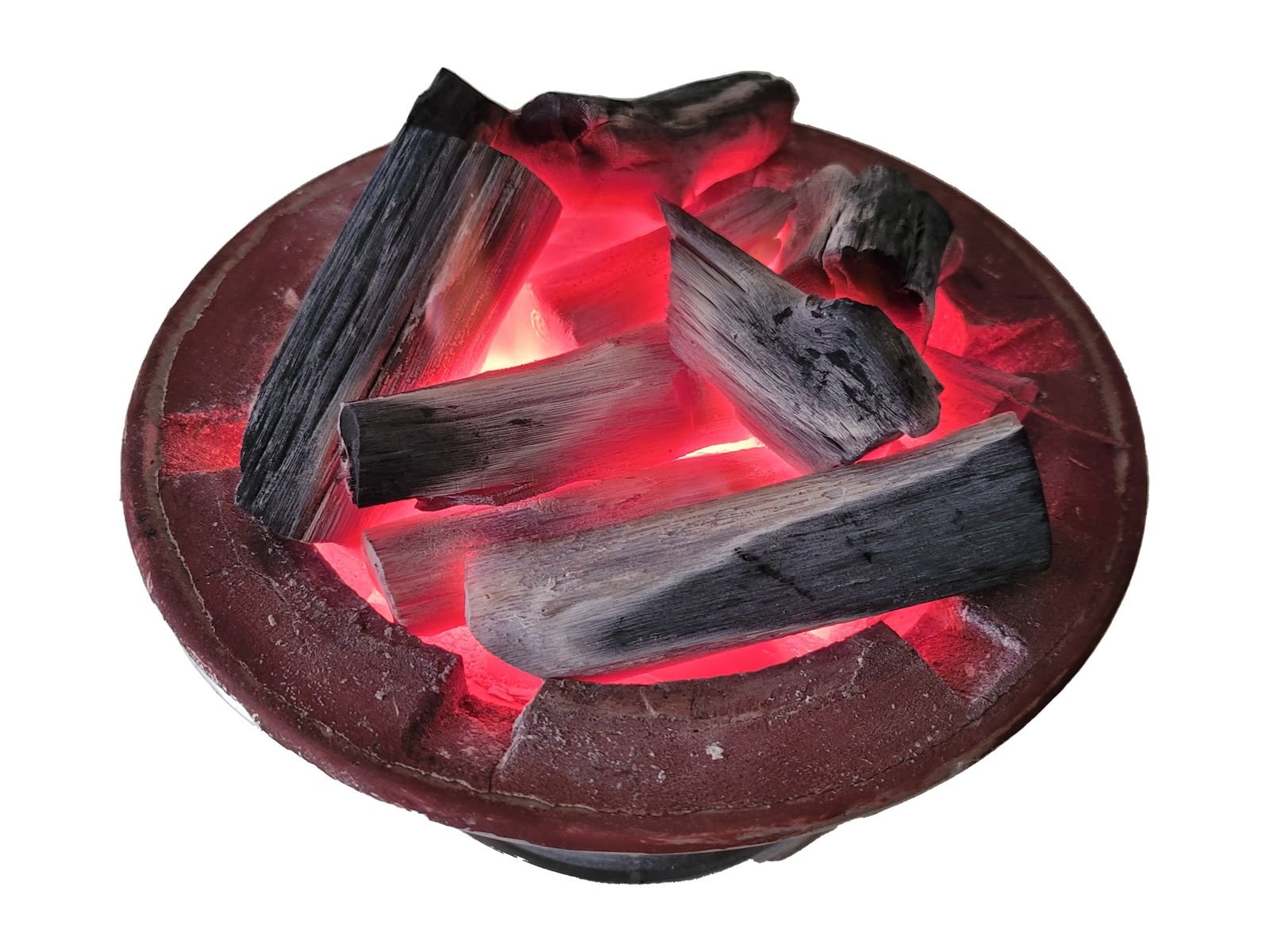
Japan invented binchotan, yet it is now one of the largest importers of it. Domestic Kishu, Tosa and Hyuga white charcoal is superb but scarce and expensive, so the yakitori, unagi and robata restaurants that define Japanese grilling increasingly rely on imported binchotan. For a charcoal supplier in Japan, that means meeting the most exacting quality standards in the world, and Vietnam's short sea route makes it one of the most practical sources.
Key takeaways
- Japanese demand is led by yakitori-grade binchotan and ogatan, because domestic Kishu-style white charcoal is scarce and costly.
- Japanese buyers are the most demanding on consistency: uniform sizing, very low ash, minimal sparking and no off-flavours.
- Hai Phong to Japanese ports is a short hop of roughly one to two weeks, far faster than Europe or the US, which simplifies replenishment.
- Plan for Japan's Clean Wood Act legality and traceability expectations, plus per-lot COA and MSDS.
- Cut sticks and grade-matched fruitwood binchotan let importers meet specific restaurant briefs; always sample first.
Why Japan imports binchotan, and buys it from Vietnam
Binchotan is a Japanese invention, named after a merchant, Bitchu-ya Chozaemon, credited with refining the method in the Edo period, and the finest domestic grades, Kishu white charcoal from Wakayama among them, remain the global benchmark. But domestic production is small, ageing and expensive, and it cannot meet the daily appetite of Japan's yakitori counters, unagi (grilled eel) specialists and robatayaki kitchens. That gap is filled by imports, and Vietnam has become a key source for a charcoal supplier in Japan to rely on.
Honesty about the wood matters here. Traditional Kishu binchotan is made from ubame oak; VUTRUX binchotan is made from dense Vietnamese hardwoods and fruitwoods, eucalyptus, lychee, longan and orange-pomelo. It is not sold as Kishu charcoal. Instead it is selected and graded to deliver the burn characteristics Japanese chefs actually cook by: long, stable, high radiant heat, very low ash and clean, near-odourless combustion.
VUTRUX ships FOB Hai Phong to more than 40 markets with per-lot independent-lab testing. For buyers new to fruitwood white charcoal, our overview of what binchotan white charcoal is explains how it is made and why it performs.
The shift is structural, not temporary. Japan's charcoal-making workforce has aged and shrunk for decades, and ubame oak forests are managed for slow, sustainable harvest, so domestic output cannot simply scale up to meet restaurant demand. Imported binchotan from Southeast Asia has quietly become the everyday fuel of countless yakitori and unagi kitchens, with domestic Kishu reserved for the most premium settings.
Yakitori-grade quality: what Japanese buyers demand
No market scrutinises charcoal as closely as Japan. A yakitori chef working a counter for hours needs fuel that behaves identically stick after stick, so the traits that matter most are specific and testable.
- Uniform sizing: cut sticks of consistent length and diameter light predictably and pack tightly around the skewers. Irregular pieces waste heat and space.
- Very low ash: around 3 percent or lower keeps the grill clean and airflow steady through a long service.
- Minimal sparking and popping: well-carbonised, properly dried binchotan does not throw sparks that mark food or burn staff.
- Clean combustion: long, high radiant (far-infrared) heat with no smoke or off-odour, so the flavour of the yakitori or unagi comes through untainted.
Two VUTRUX product families fit Japanese kitchens. Binchotan cut sticks and round or split pieces suit yakitori, robata and unagi grilling. Ogatan, itself a Japanese term for sawdust briquette charcoal and offered here in hexagon (hollow-core) and solid square forms, is widely used in Japan for its uniformity and long burn; our guide to ogatan briquettes covers grades and loading. To match a specific fruitwood to a restaurant brief, see our profile of dense lychee binchotan.
Because the bar is so high, trial orders and clear grade agreements are the norm rather than the exception. A supplier that welcomes detailed sampling, documents each lot, and can hold cut length and diameter within tight tolerances earns the long-term contracts that define this market.
A yakitori counter is unforgiving: the same fuel has to perform for the first skewer and the four-hundredth. Consistency, not novelty, wins repeat orders in Japan.
Need this grade by the container?
Tell us your market, volume and target spec — we reply within one business day with a quote and a sample offer.

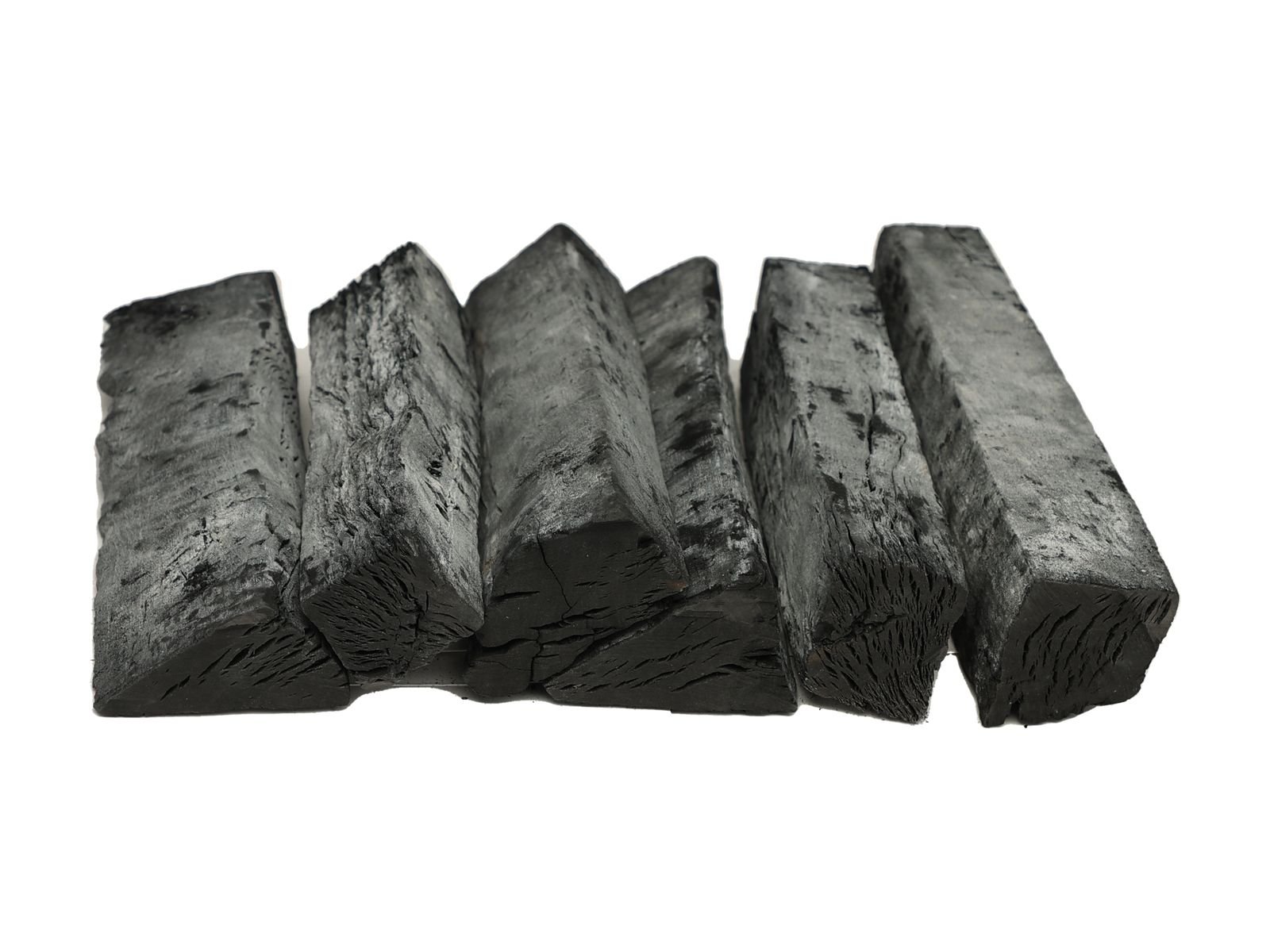
A short sea route: Hai Phong to Japan
Geography is one of Vietnam's biggest advantages in Japan. Where charcoal bound for Europe or the US spends 30 to 45 days at sea, shipments from Hai Phong to Japan are a short hop.
| Port | Serves |
|---|---|
| Tokyo / Yokohama | The Kanto region and greater Tokyo |
| Kobe / Osaka | The Kansai region and western Japan |
| Nagoya | Central Japan and the Chubu industrial belt |
Transit is typically on the order of one to two weeks depending on the service and any transshipment. For importers, that short lead time is a practical edge: it shortens the cash-to-cash cycle, makes replenishment easier, and lets you hold less safety stock without risking a stock-out at your restaurant accounts. It also means a sample can reach you quickly, so approval does not stall the first order.
On loading, a 1x20ft of binchotan runs to about 9.6 MT net (960 x 10 kg cartons), while ogatan loads around 15 MT (hexagon) to 16 MT (square) per 20ft. Confirm the carton count and net weight per grade at booking so the container is loaded to the best economics.
The short route pays off commercially as well as logistically. Faster transit means fresher inventory turns, lower financing cost on goods in transit, and the ability to react to a busy season without months of lead time. For an importer supplying restaurant chains that cannot run dry, that responsiveness is often worth as much as the unit price.
Compliance and documentation for Japan
Japanese clearance is straightforward when the documentation is complete, and Japanese buyers expect it to be complete. Plan for the following.
- Clean Wood Act: Japan's legislation promoting the use and distribution of legally harvested wood means legality and traceability of the source are expected along the supply chain. Choose a supplier that can evidence legal sourcing.
- Per-lot COA and MSDS: independent-lab results (Vinacontrol) verifying fixed carbon, ash, moisture and calorific value, plus safety data. Japanese buyers routinely check these against the delivered lot.
- Self-heating and transport: VUTRUX self-heating tests conclude the charcoal is not IMDG Class 4.2, though carriers may still book it as UN 1361; your forwarder manages this on the ocean leg.
- Quality and labelling expectations: Japan applies quality-labelling norms to charcoal, and buyers expect accurate grade, size and origin information rather than vague descriptions.
Above all, Japanese sourcing rewards sampling discipline. Approve a representative sample against the COA, agree the grade and size tolerances in writing, and hold the supplier to them lot after lot. That rigour is exactly what separates a durable supply relationship from a one-off shipment.
Choosing a charcoal supplier in Japan
Choosing a charcoal supplier in Japan comes down to consistency, honesty about the wood, and a route that keeps your accounts stocked. The best relationships are built on samples that match deliveries and specifications that do not drift.
- Confirm per-lot independent-lab COA and legality and traceability data.
- Agree the exact grade, cut length and size tolerances in writing.
- Approve a sample before committing a container.
- Use the short Hai Phong to Japan transit to keep replenishment tight.
- Agree the Incoterm (FOB Hai Phong, CIF or DDP) and payment (T/T or L/C).
VUTRUX replies within one business day with pricing and a sample offer. Tell us your target wood, grade, cut length and monthly volume, and request a quote or a sample to test the fuel against your current source.
Frequently asked questions
Is Vietnamese binchotan as good as Japanese Kishu binchotan?
They are different products. Kishu binchotan is made from ubame oak in Japan and remains the benchmark, while Vietnamese binchotan is made from dense hardwoods and fruitwoods such as eucalyptus and lychee. Well-graded Vietnamese binchotan delivers the long, low-ash, low-smoke radiant heat yakitori and unagi chefs need at a workable price and supply. Sample it against your current fuel to judge the fit.
How long does shipping charcoal from Vietnam to Japan take?
It is a short route. Transit from Hai Phong to ports such as Tokyo, Yokohama, Kobe, Osaka or Nagoya is typically on the order of one to two weeks, depending on the service and any transshipment. That is far quicker than the 30 to 45 days to Europe or the US, which makes replenishment and sample approval much easier.
What makes binchotan suitable for yakitori?
Yakitori demands long, stable, high radiant heat with very low ash, minimal smoke and little sparking, so the food is not tainted and the counter stays clean through a long service. Uniform cut sticks light predictably and pack neatly around the skewers, which is why grade consistency matters as much as raw heat.
What is ogatan and is it used in Japan?
Ogatan is machine-made charcoal formed from compressed sawdust, and the name is itself Japanese. VUTRUX offers it in hexagon (hollow-core) and solid square forms. It is widely used in Japan for yakitori and unagi grilling because it burns long and evenly and its uniform shape makes output easy to control.
What documents do I need to import charcoal into Japan?
Expect the usual commercial invoice, packing list and bill of lading, plus a per-lot COA and MSDS. Japan's Clean Wood Act means legality and traceability of the wood are expected along the supply chain, so choose a supplier that can evidence legal sourcing. Confirm the exact import requirements for your shipment with your customs broker.