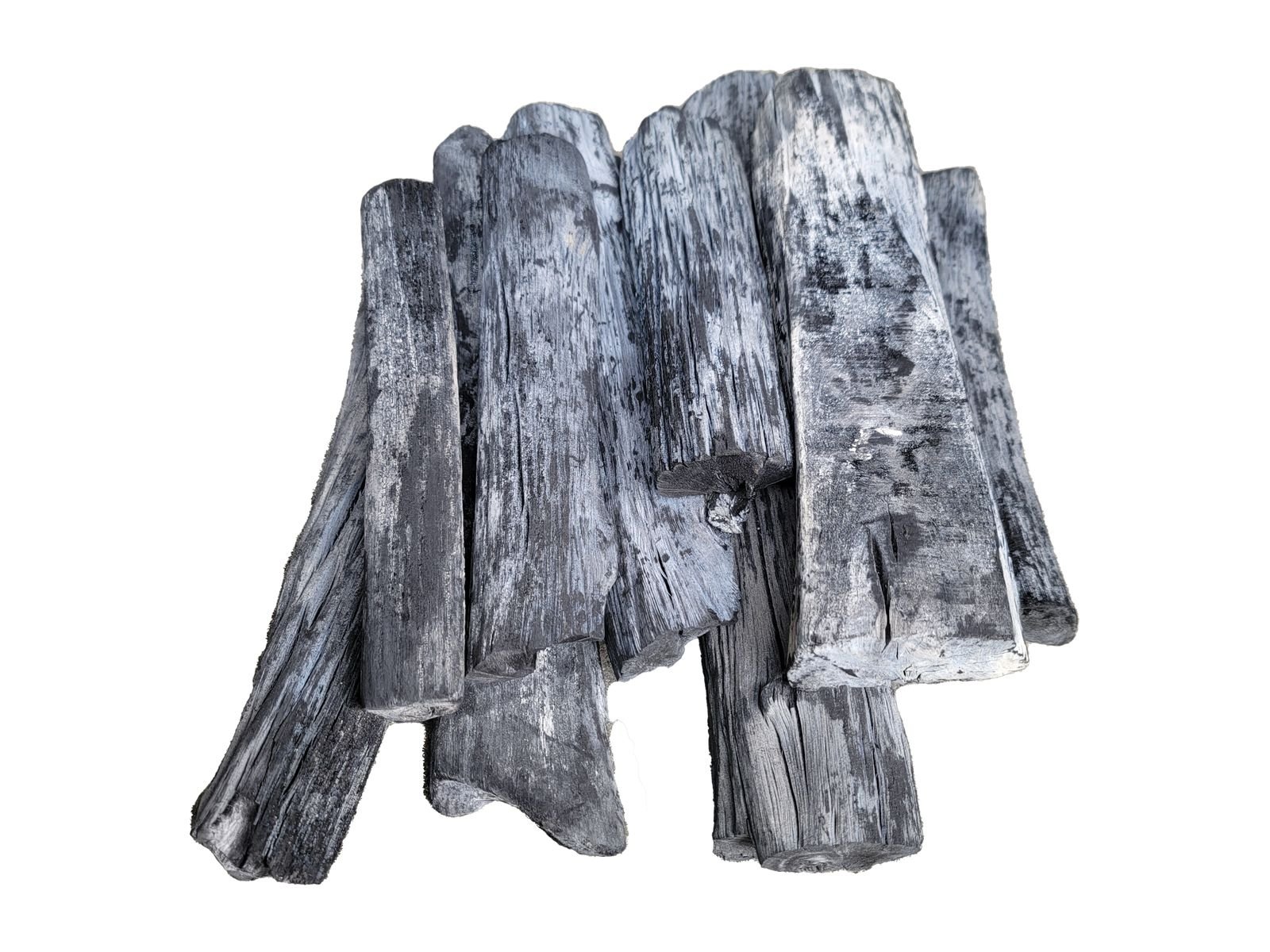
Lychee binchotan charcoal is a dense, high-heat white charcoal made from lychee wood, favored by yakitori and robata chefs for its long, steady, low-smoke burn. Prized for the same clean radiant heat as classic oak binchotan, it offers restaurants and importers a consistent, characterful fuel and a compelling value at wholesale volumes.
Key takeaways
- Lychee binchotan charcoal is white charcoal made from dense lychee wood, delivering intense, long-lasting radiant heat with very little smoke.
- It suits skewers, robata and konro grilling where clean, controllable heat matters more than raw flame.
- Typical formats include splits and short or tiny pieces; size affects lighting speed, heat intensity and burn time.
- For buyers, the value lies in long burn time per load, often fewer refuels than lump charcoal.
- Confirm the grade with a per-lot COA and test a sample before setting MOQ and packaging.
What Is Lychee Binchotan Charcoal?
Lychee binchotan charcoal is white charcoal (shiro-zumi) produced from lychee wood, the hardwood of the lychee fruit tree. Like all binchotan, it is carbonized at high temperature and then smothered during cooling, which burns off volatiles and leaves a hard, dense charcoal with a faint pale coating.
Lychee wood is naturally tight-grained and heavy, so it carbonizes into a fuel that behaves much like traditional ubame-oak binchotan: it glows rather than flames, radiates strong even heat and lasts a long time. Many chefs also note a subtle, pleasant character to the fire that complements grilled poultry and seafood.
Lychee wood typically comes from orchard renewal, the trunks and heavy prunings of trees taken out of fruit production. That makes it a by-product of agriculture rather than timber cut for fuel, an increasingly important point for buyers who must document the origin of what they import. For the EU, that ties directly into EUDR compliance for charcoal imports.
If you are new to this category, our explainer on what binchotan white charcoal is and how it is made covers the fundamentals that apply to every wood species, lychee included.
Lychee Binchotan Charcoal: Specs and Burn Profile
The appeal of lychee binchotan charcoal comes down to four measurable traits: high fixed carbon, low ash, low moisture and a slow, hot burn. Exact figures vary by lot and kiln, so reputable suppliers report them on an independent per-lot COA rather than quoting a single fixed number. The ranges below reflect what quality lychee binchotan typically delivers.
| Property | Typical range | What it means for the grill |
|---|---|---|
| Fixed carbon | ~80 to 90%+ | Higher carbon means hotter, cleaner, longer burn |
| Ash content | Low (~2 to 4%) | Less residue, easier grill management |
| Moisture | Low (typically under ~8%) | Faster lighting, more stable heat |
| Volatile matter | Low | Minimal smoke, little flare-up |
| Burn time | Several hours per load | Fewer refuels during service |
| Heat character | High, radiant, steady | Ideal for close-proximity skewer cooking |
Because these values move within a band, always match the reported specification to your application and verify it against a sample. Reading a charcoal COA line by line explains what each figure means.
Need this grade by the container?
Tell us your market, volume and target spec — we reply within one business day with a quote and a sample offer.
Sizes and Formats
Lychee binchotan is sold in a few standard formats. Piece geometry affects how quickly it lights, how intensely it burns and how neatly it packs into a konro:
- Splits: lengths of split lychee wood charcoal. They light more readily than thick rounds and give a strong, even bed of heat, a versatile all-rounder for robata.
- Shorts and tiny: smaller cut pieces suited to compact konro grills and fast yakitori service; they reach temperature quickly and are easy to arrange evenly.
- Cut-to-spec: many buyers request a length range tailored to their grills.
Longer, thicker pieces trade slower lighting for longer burn; smaller pieces do the opposite. Most restaurants keep more than one size on hand, a base layer of larger pieces for longevity and smaller pieces to fill gaps and manage hot zones. As a rough guide, split pieces often run from a few centimeters up to a hand-span in length, while shorts are cut down for small konro; if your grill has a specific bar spacing or fuel-bed depth, share it so the supplier can cut to suit. Sound technique when lighting and using binchotan then gets the most from whichever size you choose.
Why Chefs Choose Lychee Binchotan for Skewers and Robata
Skewer cooking is unforgiving: the food sits close to the coals, so any flame, smoke or uneven heat shows up immediately on the plate. Lychee binchotan is popular precisely because it removes those variables.
- No flare-ups: low volatile matter means dripping fat rarely ignites, protecting delicate skin and glaze.
- Even radiant heat: a steady bed cooks proteins through without scorching.
- Clean flavor: minimal smoke lets seasoning and sauce lead.
- Endurance: long burn keeps the grill stable through peak service.
Experienced grillers also exploit that steady output to build heat zones: a denser bank of coals at one end for searing and a thinner spread at the other for holding and finishing. Because lychee binchotan does not surge or die back the way lighter charcoal can, those zones stay put, letting one cook manage many skewers at different stages at once.
These are the same reasons chefs reach for premium binchotan generally; lychee simply offers that performance at an attractive price point. If you are comparing fuels for a grill program, weighing the best charcoal for restaurants puts lychee binchotan in context with other options.
How Lychee Binchotan Compares, and How to Store It
Buyers often ask how lychee binchotan stacks up against other fuels. In short, it sits between premium oak binchotan and standard lump charcoal:
- Versus oak (ubame) binchotan: comparable hardness, heat and burn time for most restaurant work, usually at a lower price. Oak may edge it for the very hardest, longest-burning grades.
- Versus hardwood lump: lychee binchotan burns hotter for longer with far less smoke and flare, but lights more slowly and costs more per kilogram. Measured per hour of cooking heat, the gap narrows.
Getting consistent results also depends on storage. Charcoal is porous and readily absorbs moisture, which slows lighting and can cause popping. To keep lychee binchotan at its best:
- Store cartons off the floor in a dry, ventilated space, away from direct rain and humidity.
- Keep inner liners sealed until use and rotate stock first-in, first-out.
- Handle gently to limit breakage and fines, which reduce usable yield.
These simple habits protect the burn quality you tested in your sample.
Packaging, MOQ and Buying Considerations
For importers and distributors, buying lychee binchotan well comes down to specification, packaging and terms.
Packaging
- Standard cartons (commonly around 10 kg) with inner liners to control moisture and fines.
- Bulk options for high-volume buyers.
- Private-label and retail-ready packs on request.
MOQ and terms
- Minimum order quantity is usually set at the full-container level; mixed loads across grades and sizes are often possible.
- Incoterms of FOB Hai Phong, CIF or DDP, with payment by T/T or L/C.
- Export documentation prepared in advance, including phytosanitary and EUDR paperwork where required.
Before committing, request a sample so your chefs can test lighting time, heat and burn duration against your current fuel. Then lock the grade to a per-lot COA. New to sourcing from Vietnam? Read how to import charcoal from Vietnam, then ask for a sample and a quote. For a wider view of the category, see our binchotan wholesale guide.
Frequently asked questions
Is lychee binchotan real binchotan?
Yes, in the practical sense. Binchotan today refers to the white-charcoal production method, high-temperature carbonization followed by smothering, rather than a single wood. Authentic Kishu binchotan uses ubame oak, but lychee wood is dense enough to yield charcoal with very similar hardness, heat and burn characteristics.
How long does lychee binchotan charcoal burn?
A full load typically holds cooking heat for several hours, depending on piece size, grill airflow and how the coals are managed. Larger splits burn longer; smaller pieces light faster but are consumed sooner. Many kitchens extinguish and reuse partly burned coals to stretch value further.
How is lychee binchotan different from oak binchotan?
Both are dense white charcoals that burn hot, long and clean. Oak (ubame) binchotan is the Japanese classic and is often the hardest grade available. Lychee binchotan performs comparably for most restaurant uses and usually costs less, which is why it is a popular choice for high-volume yakitori and robata.
What sizes should I order for a yakitori grill?
Most yakitori kitchens use a mix: shorter or smaller pieces for quick lighting and even coverage on a narrow konro, plus some larger splits for longevity. Share your grill dimensions and service style when you request a quote, and a supplier can recommend a size blend.
What is the minimum order quantity?
Wholesale lychee binchotan is normally ordered by the container, though mixed loads across grades and sizes are commonly accommodated. Ask for a sample first to confirm the grade suits your kitchen, then discuss MOQ, packaging and Incoterms for your market.