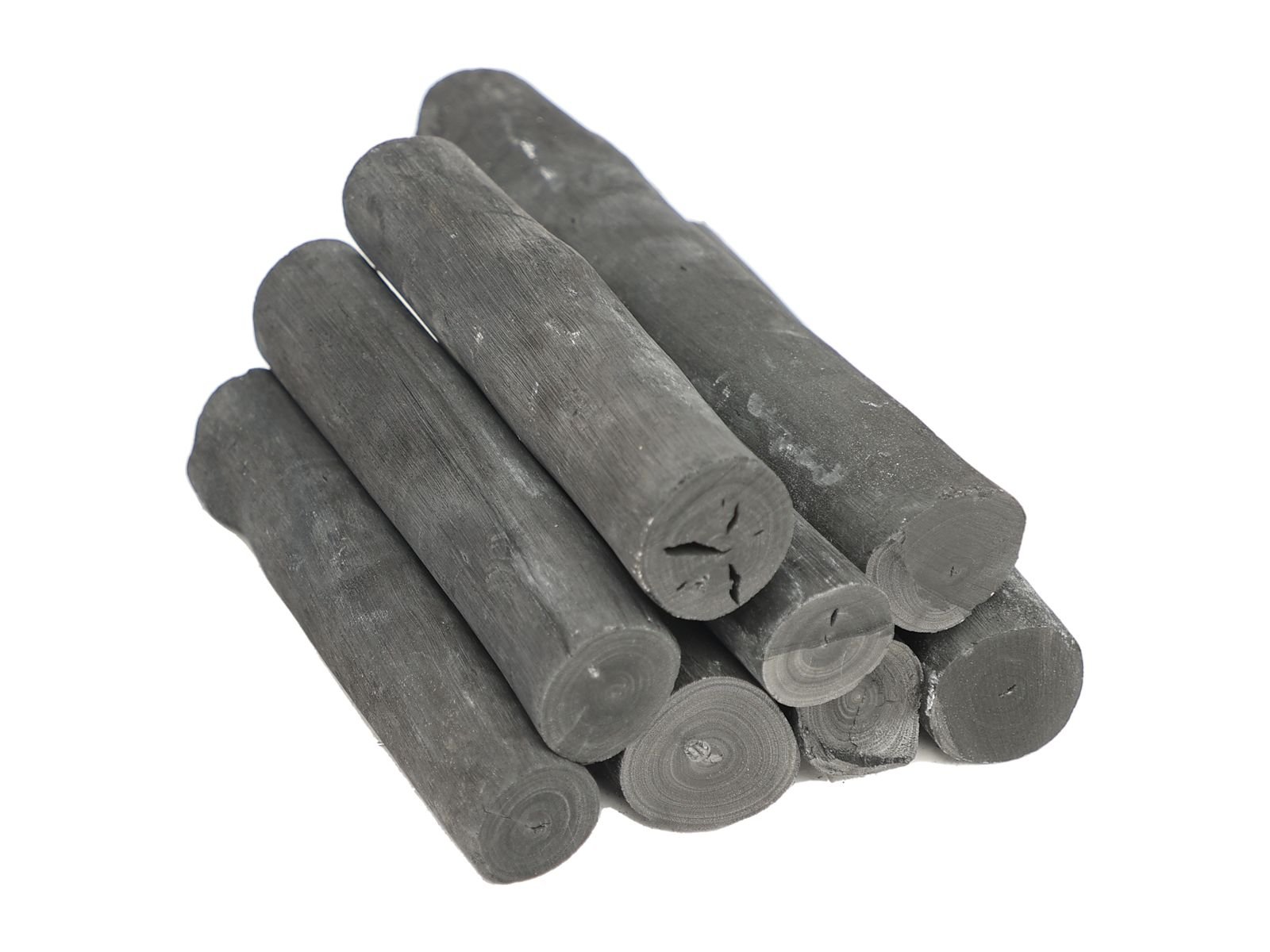
When buyers compare eucalyptus vs lychee binchotan, they are choosing between two of the most respected woods VUTRUX carbonises into white charcoal. Both make dense, long-burning, clean binchotan, yet they differ in heat, burn time, aroma and price in ways that matter at the grill. This comparison looks at the woods behind the charcoal and helps you decide which suits your kitchen, whether you run a yakitori counter, a steak grill or a high-volume BBQ line.
Key takeaways
- Both eucalyptus and lychee make true binchotan with fixed carbon around 95%, low ash and low smoke.
- Eucalyptus (bach dan) is the economical, widely available workhorse with clean, neutral heat.
- Lychee (vai) is a premium fruitwood with very even heat, extra-long burn and a subtle, sweet aroma.
- Both come in grades A and B and 80-200 mm sizes, so you can standardise stations from one shipment.
Eucalyptus vs lychee binchotan: two woods, two characters
Binchotan is defined by its process, high-temperature carbonising and quenching, but the wood you start with shapes the result. Eucalyptus (bach dan) is a fast-grown, very dense hardwood, while lychee (vai) is a slow-grown fruitwood long prized in traditional grilling. Both are excellent binchotan feedstocks and both meet the same clean-burning benchmarks, but they are not interchangeable.
Understanding eucalyptus vs lychee binchotan starts with a simple idea: eucalyptus is the dependable workhorse, and lychee is the premium specialist. The good news for buyers is that this is a refinement rather than a gamble, because neither wood produces a poor binchotan; the decision is about matching character and budget, not about avoiding a weak option. If you are new to the category, our primer on what binchotan white charcoal is explains the fundamentals both woods share.
Both are true shiro-zumi, or white charcoal: fired hot, then raked out and smothered in a damp mix of earth and ash, which gives the bars their pale, mineral-dusted surface and their dense, ringing hardness. Because the two woods emerge from the same kiln discipline, the choice between them is one of the few decisions in charcoal buying where you cannot really go wrong, only more or less precisely right for your grill.
The woods behind the charcoal
Eucalyptus grows quickly and abundantly across Vietnam, which makes eucalyptus binchotan more available and more consistently priced. Its high density gives strong, reliable heat and a long burn, and its neutral character suits kitchens that want pure heat without any woodiness competing with the food.
Lychee is a fruitwood, harvested from orchard trees at the end of their productive life. It is harder to source in volume, which lifts its price, but it carbonises into an exceptionally dense charcoal with a subtle, sweet aroma that many grill chefs prize. Our page on lychee binchotan charcoal goes deeper into its character and grades.
Sustainability and traceability differ too. Because eucalyptus is grown on managed plantations, its supply chain is straightforward to document, which helps with EUDR due diligence for buyers in regulated markets. Lychee, taken from spent orchard trees, is a byproduct of fruit farming, giving it a genuine circular story that premium venues like to tell their guests.
Supply rhythm is a practical difference buyers feel in their inventory. Because eucalyptus plantations are replanted on a short cycle, its charcoal is produced steadily through the year, so repeat orders rarely stall on raw material. Lychee arrives with the orchard calendar, in the volumes spent trees allow, which is exactly why it commands a premium and why planning a lychee position ahead of the season pays off. In both cases VUTRUX keeps the documentation lot by lot, so the wood behind your charcoal is recorded rather than assumed.
Need this grade by the container?
Tell us your market, volume and target spec — we reply within one business day with a quote and a sample offer.
Burn behaviour: heat, duration and aroma
Both woods deliver the binchotan hallmarks, fixed carbon around 95%, ash and moisture near 3%, sulphur near zero and roughly 8,300 kcal/kg, so the differences are matters of degree, not category. The table summarises how eucalyptus vs lychee binchotan compare in practice.
| Attribute | Eucalyptus binchotan | Lychee binchotan |
|---|---|---|
| Wood type | Dense hardwood (bach dan) | Fruitwood (vai) |
| Heat output | Strong, steady | Strong, very even |
| Burn time | Long | Very long |
| Aroma | Neutral, clean | Subtle, sweet |
| Density | High | Very high |
| Availability | High | Limited |
| Relative price | More economical | Premium |
| Best for | Everyday high-volume grilling | Signature, flavour-led grilling |
Read the table as a spectrum rather than a scoreboard. On heat, both bars will comfortably sear a steak or crisp chicken skin; lychee simply holds its temperature a shade more evenly deep into a long service, which is why it shines on a grill that runs for hours without a full reload. On aroma, a neutral character is a feature for eucalyptus, not a shortcoming: when a marinade or tare is doing the flavour work, a clean, odourless heat keeps the seasoning honest. Lychee's faint sweetness is best appreciated on simply salted cuts where there is room for the wood to be noticed.
Which wood suits which kitchen
For most operators, eucalyptus binchotan is the sensible default. It delivers the clean heat, long burn and low smoke of true white charcoal at a more accessible price and in dependable volumes, which makes it ideal for busy steak grills, BBQ lines and any kitchen that needs consistent supply.
Lychee binchotan earns its premium where the grill is the centrepiece. Yakitori and robata counters, tasting menus and open kitchens benefit from its very even heat, extra-long burn and gentle aroma. If provenance and subtle flavour are part of your story, lychee is worth the difference; if raw performance per dollar is the priority, eucalyptus wins.
Many kitchens hedge by running eucalyptus as the everyday fuel and keeping a smaller stock of lychee for signature dishes or special menus. Because both are true binchotan, you can switch between them on the same grill without changing your technique, only the character of the heat and the faint aroma the wood leaves behind.
A practical way to split an order is to pour the workhorse eucalyptus into your prep and high-turnover stations and reserve lychee for the pass where guests can see and smell the fire. That keeps your fuel cost anchored to the cheaper wood while still buying the flavour and provenance story exactly where it earns its keep, at the plate the guest is watching being cooked.
Grades, sizes and formats from VUTRUX
Both woods are available in the same range, so you can standardise your station regardless of which you choose. VUTRUX supplies binchotan in grades A and B, round or split, in sizes from roughly 80 to 200 mm, packed in 10 kg cartons. A 20ft container holds about 9.6 MT net, which helps distributors and importers plan volumes.
Grade A offers the most uniform, highest-density bars for premium service, while grade B is a cost-effective choice for high-volume grilling. Many buyers order both woods and grades together to cover different stations from a single shipment, and splitting an order across both woods also spreads supply risk: if lychee is scarce in a given season, your eucalyptus volume keeps the grill running while you wait.
When you compare the two on price, weigh cost per service rather than cost per kilogram. Because binchotan of either wood burns long and can be smothered airtight and relit the next day, the headline price per carton overstates the true running cost. Lychee's slightly longer, steadier burn can narrow the gap with cheaper eucalyptus once you count refuels and relights over a week of service, so the premium wood is not always as far ahead on cost as the invoice first suggests.
Sourcing and ordering binchotan
Whichever you choose in the eucalyptus vs lychee binchotan decision, buy on documentation and a real trial. Ask for a per-lot Certificate of Analysis, an MSDS and clear grade and size specifications, and confirm EUDR due-diligence and phytosanitary readiness for your market. VUTRUX ships FOB Hai Phong, with a sample available before every order.
The best way to choose is to grill on both. Request samples and a quote, run eucalyptus and lychee side by side over a real service, and let heat, burn time and aroma decide. For planning larger volumes, our binchotan wholesale guide covers terms and logistics.
When you run the trial, keep it honest: light both woods the same way, build beds of the same depth, and judge them on the dishes you actually sell rather than on a single showpiece skewer. Note how long each bed holds cooking heat, how much ash you rake between rounds, and whether the aroma survives your seasoning. Those three observations, taken on your own grill, settle the eucalyptus vs lychee binchotan question more reliably than any spec sheet.
Frequently asked questions
What is the difference between eucalyptus and lychee binchotan?
Both are true binchotan white charcoal with fixed carbon around 95%, but eucalyptus (bach dan) is a dense hardwood that is widely available and more economical with clean, neutral heat, while lychee (vai) is a premium fruitwood with a very even, extra-long burn and a subtle, sweet aroma. Eucalyptus suits high-volume grilling; lychee suits signature, flavour-led service.
Is lychee binchotan better than eucalyptus binchotan?
Not better, just different. Lychee is denser, burns even longer and carries a gentle sweet aroma, which premium and open-kitchen concepts value, but it costs more and is harder to source. Eucalyptus delivers excellent, clean heat at a lower price and in steadier supply, making it the better value for most everyday grilling.
Which binchotan wood is best for yakitori?
Both work well, but many yakitori and robata chefs prefer lychee binchotan for its very even, long-lasting heat and subtle aroma when the grill is on show and flavour is the focus. Eucalyptus binchotan is a strong, more economical alternative that still delivers clean, long, radiant heat for high-volume counters.
Can I order both eucalyptus and lychee binchotan together?
Yes. Both come in grades A and B and sizes from about 80 to 200 mm in 10 kg cartons, so many buyers combine woods and grades in one shipment to cover different stations. Request a sample and quote to compare them on your own grill before committing to a container.
Which binchotan wood is more sustainable, eucalyptus or lychee?
Both have a solid story. Eucalyptus comes from fast-cycle managed plantations, so its supply chain is straightforward to document for EUDR due diligence. Lychee is reclaimed from orchard trees at the end of their fruiting life, making it a by-product of fruit farming rather than a reason to fell trees. VUTRUX supplies per-lot documentation for either wood, so you can substantiate whichever sustainability claim fits your market.