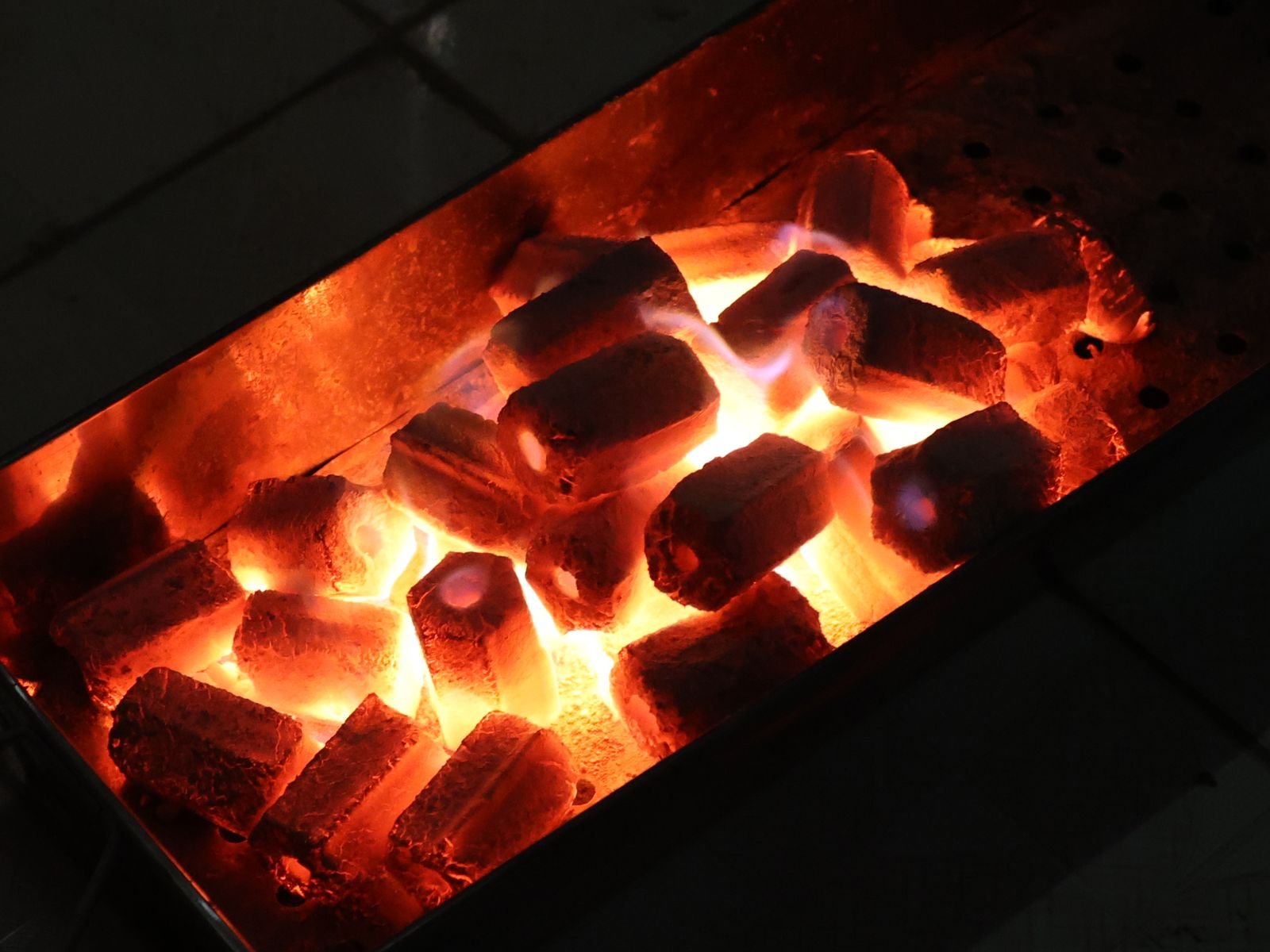
Hardwood lump charcoal wholesale buyers want three things: reliable heat, low ash, and a supply chain they can document. VUTRUX produces natural hardwood lump charcoal and exports it FOB Hai Phong to distributors, retailers and restaurants across more than 40 markets. This guide explains what lump charcoal is, how it compares with briquettes and binchotan, the specifications to check before you buy, and how to purchase it by the container with confidence.
Key takeaways
- Hardwood lump charcoal is pure carbonized wood, with no binders or fillers, so it lights fast, burns hot and leaves little ash.
- It suits high-heat searing, general grilling and smoking, and is a versatile line for both retail and foodservice.
- VUTRUX supplies lump in export packing with per-lot COA, MSDS and EUDR due-diligence support.
- Full-container quantities ship on FOB, CIF or DDP terms, with a sample available before you order.
What Is Hardwood Lump Charcoal?
Hardwood lump charcoal is simply wood that has been carbonized, heated in a low-oxygen kiln until the moisture and volatile compounds are driven off, leaving almost pure carbon in the original shape of the wood. Unlike briquettes, genuine lump contains no binders, fillers or additives. That purity is why it lights quickly, reaches a very high searing temperature and leaves comparatively little ash.
Because it is a natural product, lump varies with the wood and the kiln, which is exactly why sourcing from a consistent producer matters. For a fuller picture of how natural charcoal differs from binder-based, industrially processed fuels, see our comparison of natural versus industrial charcoal. VUTRUX lump is made from dense hardwoods and carbonized for a clean, high-carbon result.
That natural origin is also a selling point at retail: shoppers increasingly read labels and prefer a single-ingredient fuel over one bulked out with coal dust, starch binders or accelerants. For foodservice, the appeal is performance, a fast, clean and very hot fire, plus the reassurance of documented sourcing behind it.
Lump vs Briquettes vs Binchotan
Lump is one of three broad charcoal families, and each behaves differently on the grill. The table below summarizes the trade-offs so you can decide what to stock:
| Attribute | Hardwood lump | Briquettes | Binchotan (white charcoal) |
|---|---|---|---|
| Composition | Pure carbonized hardwood, no binders | Compressed char, often with binders | Very dense carbonized hardwood |
| Lighting | Fast | Moderate | Slow |
| Peak heat | Very high | Moderate | High and steady |
| Burn time | Moderate | Long | Very long |
| Ash | Low | Higher | Very low |
| Best for | Searing and general grilling | Long, low-and-slow cooks | Yakitori and radiant-heat work |
In short, lump is the sprinter: fast to light and very hot, ideal for searing steaks and general grilling. Briquettes trade peak heat for a long, even burn that suits low-and-slow barbecue. Binchotan is the endurance specialist, a dense white charcoal for radiant-heat cooking such as yakitori. Many distributors carry all three. For a deeper breakdown, read our guide on binchotan vs lump vs briquettes.
For many buyers the smart move is not choosing a single family but stocking a considered range across price points, letting customers pick the right fuel for each cook while you consolidate purchasing and shipping behind one reliable supplier.
Need this grade by the container?
Tell us your market, volume and target spec — we reply within one business day with a quote and a sample offer.
Specifications to Check Before You Buy
Lump quality varies widely between suppliers, so always buy against a specification and a per-lot certificate of analysis (COA). The metrics that matter most are:
- Fixed carbon: higher means more heat and a longer burn; premium lump sits high on the scale.
- Ash content: lower is better, because excess ash chokes airflow and clogs the grate.
- Moisture: dry charcoal lights faster and burns hotter.
- Fines and breakage: a good pack is mostly usable-sized pieces, not a bag of dust.
VUTRUX charcoal is tested by the independent laboratory Vinacontrol, and every shipment travels with its own COA, MSDS and, where required, phytosanitary certification. Reputable hardwood lump charcoal wholesale suppliers publish these figures on request, so ask for them up front and match them to your application before you order.
It is also worth agreeing a size profile. Lump is naturally irregular, but a good specification sets a target size range and an acceptable proportion of small pieces, so you know what arrives in each bag or carton. Pin these details down in writing before the first order and they become the yardstick for every shipment that follows.
Buying Hardwood Lump Charcoal Wholesale
A dependable hardwood lump charcoal wholesale program starts with the right terms and documentation. VUTRUX supplies lump in bulk export packing sized to your market, and ships full-container quantities to more than 40 destinations.
- Incoterms: FOB Hai Phong, CIF or DDP.
- Payment: T/T or L/C.
- Compliance: per-lot COA, MSDS, phytosanitary certificate and EUDR due-diligence support for EU buyers.
On transport classification, Vinacontrol self-heating tests conclude the charcoal is not IMDG Class 4.2, though some carriers still book charcoal under UN 1361; we prepare the paperwork either way. If you are sourcing from Vietnam for the first time, our step-by-step guide on how to import charcoal from Vietnam walks through the process. When you are ready, request a quote and a sample so your team can test the lump before you commit.
Who Should Stock Hardwood Lump Charcoal
Lump is one of the most versatile lines a charcoal buyer can carry, which is why it appears in so many channels:
- Retailers and supermarkets: a natural, additive-free bagged product that consumers increasingly prefer for grilling.
- BBQ and outdoor specialists: high-heat lump for enthusiasts who want fast lighting and a strong sear.
- Restaurants and steakhouses: a workhorse fuel for open-flame and high-temperature cooking.
- Distributors: a broad-appeal staple that pairs well with briquettes and binchotan across a full range.
VUTRUX also supplies briquette-style Ogatan and premium binchotan, so a single supplier can cover a full charcoal range under one set of export terms and one compliance package. That makes it easier to consolidate shipments, simplify documentation and keep quality consistent across every line you carry.
Storage, Shelf Life and Handling
Lump charcoal does not spoil, but it does absorb moisture, and damp lump is hard to light and burns poorly. For distributors and retailers holding stock, storage is simply part of protecting the product:
- Keep bags and cartons off the floor in a dry, ventilated space, away from rain and condensation.
- Rotate stock first-in, first-out, and keep packaging intact until sale or use.
- Minimize rough handling, which turns good pieces into unsellable fines and dust.
Because lump is irregular by nature, some fines are unavoidable, but sound packaging and careful handling keep them to a minimum and protect your usable yield. Stored well, lump holds its quality for long periods, which suits the container-scale buying that makes wholesale economics work. Test each shipment against your specification on arrival, and you will quickly build confidence in a supplier who delivers the same grade every time.
Frequently asked questions
What is the difference between lump charcoal and briquettes?
Lump charcoal is pure carbonized hardwood with no binders, so it lights fast and burns hot with low ash, but its burn time is shorter and less uniform. Briquettes are compressed char, often with binders, that light more slowly and burn long and evenly, which suits low-and-slow barbecue. Many buyers stock both.
Is hardwood lump charcoal better for restaurants?
For high-heat searing and general grilling, lump is an excellent restaurant fuel because it reaches temperature quickly and leaves little ash. For radiant, close-proximity cooking such as yakitori, many kitchens prefer binchotan. The best choice depends on your menu and equipment, so testing a sample is worthwhile.
What documentation comes with a wholesale order?
Every VUTRUX shipment includes a per-lot COA from an independent laboratory, an MSDS and, where required, a phytosanitary certificate. EUDR due-diligence support is available for buyers importing into the EU, and we help prepare transport paperwork, including UN 1361 booking where a carrier requires it.
What is the minimum order quantity for lump charcoal?
Wholesale lump is normally ordered by the container, with packing sized to your market. VUTRUX can discuss smaller sample or trial quantities for new buyers, then move to full-container FOB, CIF or DDP shipments once the grade is confirmed.