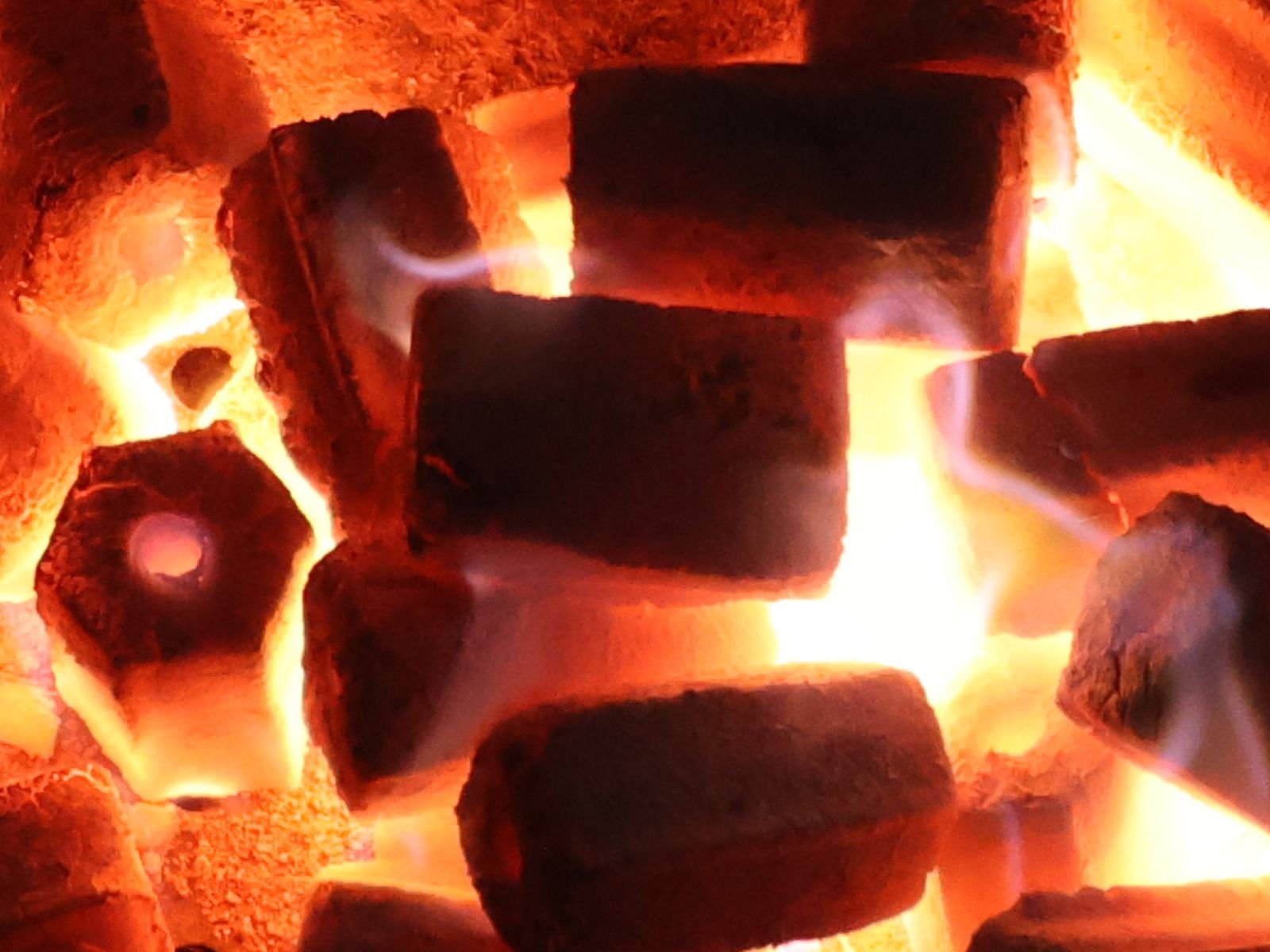
If you have seen glossy, hexagonal charcoal logs with a neat hole down the middle and wondered what is ogatan, this guide is for you. Ogatan is a machine-extruded charcoal made from compressed hardwood sawdust, prized across Japanese yakitori counters and Korean barbecue houses for its long, even burn and low smoke. At VUTRUX we produce ogatan alongside our binchotan and lump lines, and buyers ask about it constantly. Below is a clear, practical explanation of how ogatan is made, why it performs the way it does, and what to check before you order a container.
Key takeaways
- Ogatan is machine-made charcoal formed from compressed hardwood sawdust, then carbonised - not a shaped piece of natural wood.
- The signature hollow core in hexagon ogatan draws air through each log, giving a steady, controllable burn with very little smoke or sparking.
- VUTRUX ogatan typically tests around 94% fixed carbon with roughly 3% ash and 3% moisture on independent Vinacontrol COA.
- Two shapes dominate: hexagon (hollow core) and square (solid); MOQ is roughly 15 MT for hexagon or 16 MT for square per 20ft container.
- Consistent size and density make ogatan easy to portion, store and burn - a major advantage for restaurants and retail packing.
So, What Is Ogatan, Exactly?
The name gives away the recipe. In Japanese, oga means sawdust and tan means charcoal, so ogatan is quite literally sawdust charcoal. It is made by compressing dried hardwood sawdust under high heat and pressure into a dense log, then carbonising that log in a kiln. The result looks engineered because it is: uniform logs, a smooth outer skin, and - in the most popular version - a clean hollow core running end to end.
This is where the honest answer to what is ogatan gets interesting. Because it is machine-formed, it technically belongs to the briquette family. But quality ogatan shares almost nothing with the cheap supermarket briquette. A good ogatan log is pure carbonised sawdust with no coal dust, no petroleum binders and no starch fillers - just wood that has been reshaped and cooked. That places it in an unusual middle ground, and it helps to understand where ogatan sits on the natural versus industrial charcoal spectrum before you compare prices.
For context, VUTRUX produces ogatan alongside natural binchotan white charcoal and hardwood lump. Customers who love binchotan for its purity often add ogatan to their range because it delivers a similar clean burn at a friendlier price and in a far more predictable, uniform shape.
How Ogatan Is Made, Step by Step
Understanding the process explains almost everything about how ogatan behaves on the grill.
- Sourcing and drying. Clean hardwood sawdust - a by-product of timber and furniture milling - is collected and dried to a low, stable moisture level. Contamination control matters here; stray softwood, glue or paint would ruin the burn.
- Extrusion. The dry sawdust is forced through a heated screw press. Intense friction and pressure soften the wood's natural lignin, which acts as the binder. As the log emerges it already carries its hexagonal or square profile and, for hexagon logs, the central hole formed by the press.
- Carbonisation. The pressed logs are then baked in a kiln for an extended cycle that drives off volatiles and converts the wood to charcoal. This is the stage that lifts fixed carbon and strips out the smoke-producing compounds.
- Grading and packing. Finished logs are cut to length, sorted for straightness and colour, and packed - typically in 10 kg cartons for export.
Because the binder is the wood's own lignin rather than an additive, well-made ogatan lights and tastes clean. That is the key difference between ogatan and the coal-and-starch briquettes it is sometimes lumped in with; see our breakdown of binchotan vs lump vs briquettes for the wider comparison.
There is a commercial bonus, too. Ogatan turns a milling by-product that might otherwise be burned or dumped into a high-value fuel, so it carries a genuine sustainability story - increasingly useful for retailers and importers who need to explain their sourcing.
Need this grade by the container?
Tell us your market, volume and target spec — we reply within one business day with a quote and a sample offer.
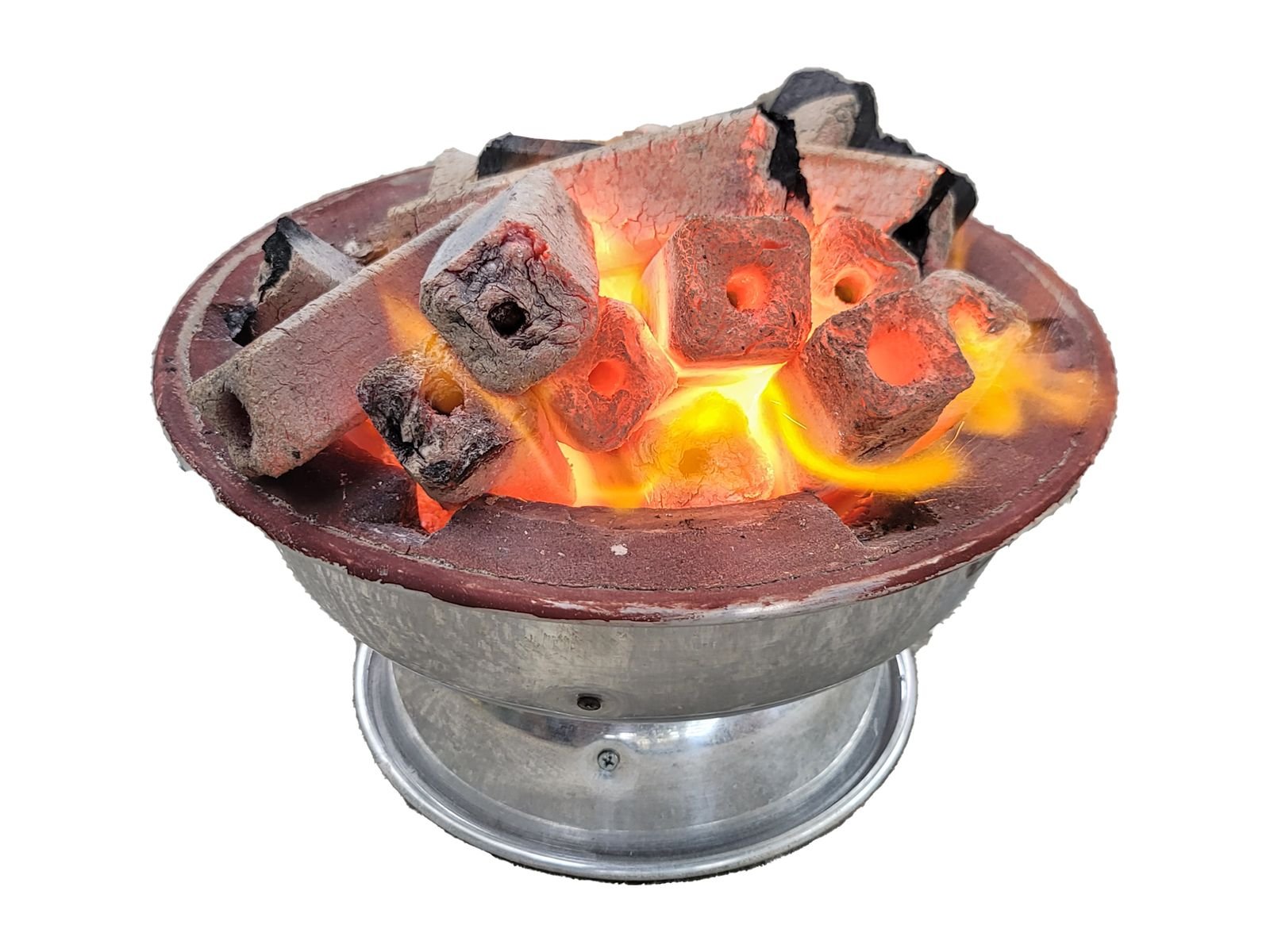
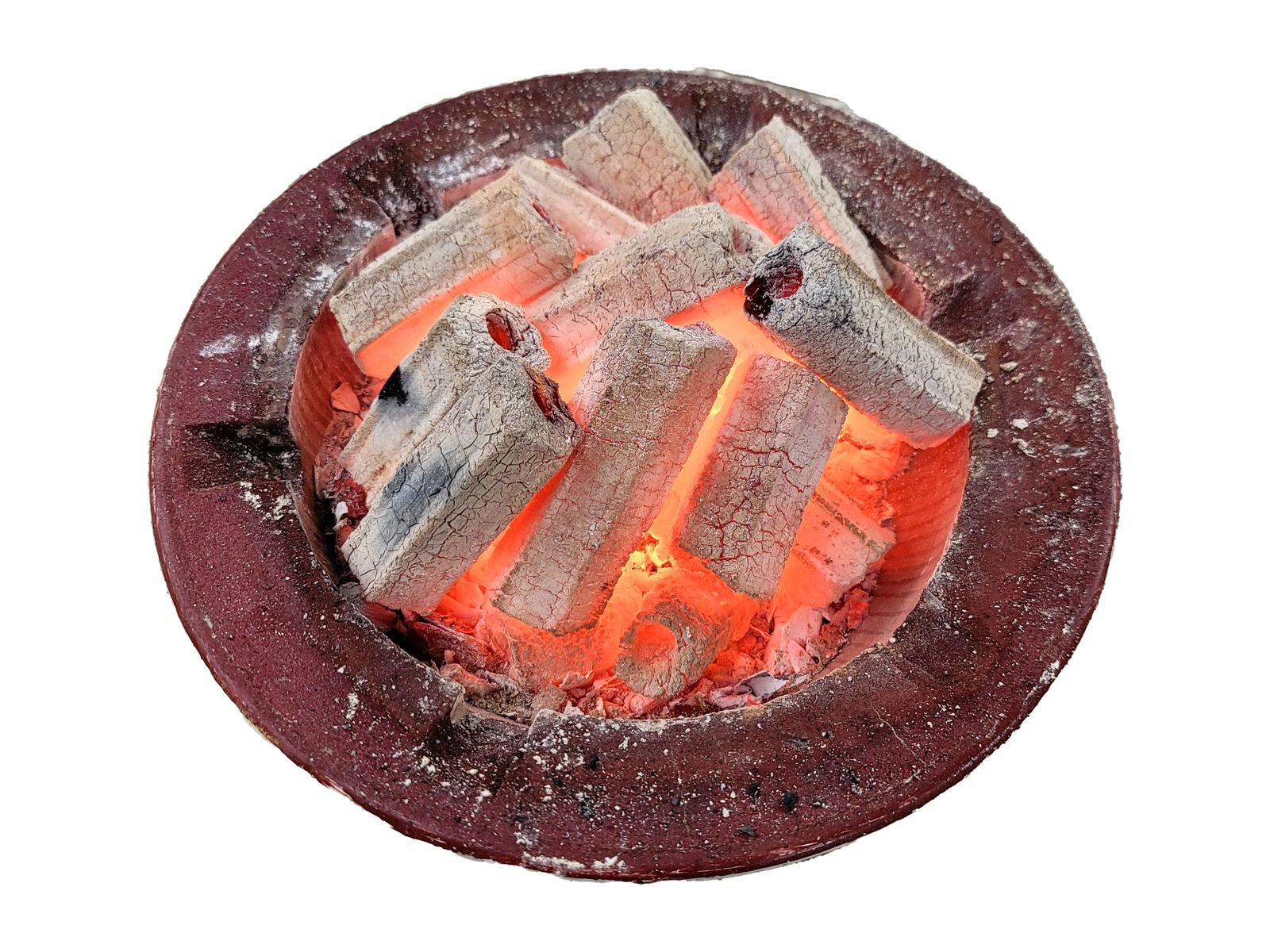
Hexagon vs Square: The Two Ogatan Shapes
VUTRUX supplies two ogatan formats, and the right one depends on how the charcoal will be used.
| Format | Core | Best for | MOQ per 20ft |
|---|---|---|---|
| Hexagon ogatan | Hollow | Long yakitori and robata service, fast chimney lighting | ~15 MT |
| Square ogatan | Solid | Maximum burn time, high-heat searing, value packs | ~16 MT |
The hexagon is the classic. Its hollow centre works like a built-in chimney: air is drawn through the core, so the logs light faster and burn with a steady glow that is easy to control across a long service. The flat facets also stack tightly in a grill.
The square log is solid all the way through, so it packs more mass per piece and tends to burn even longer at a given size - useful where sheer endurance and heat output matter more than fast lighting.
Why Ogatan Burns So Consistently
Consistency is the whole point of ogatan, and it comes from three things working together.
- Uniform density. Every log is pressed to the same specification, so there are no soft spots or hidden knots. Natural lump charcoal varies piece to piece; ogatan does not. That predictability is why a cook can judge timing by eye after only a few services.
- High fixed carbon, low moisture. On independent Vinacontrol testing, VUTRUX ogatan typically returns around 94% fixed carbon, roughly 3% ash and about 3% moisture, with sulphur close to zero and calorific value near 8,300 kcal/kg. High carbon and low moisture mean more heat and far less smoke. Always ask for the actual figures on the per-lot COA rather than trusting a generic spec sheet.
- The hollow core. In hexagon logs, controlled airflow through the centre keeps combustion even from the outside in, which is why they hold a stable temperature instead of flaring and fading.
The practical payoff is minimal smoke, very few sparks, no chemical odour, and a long burn - often several hours per load - that lets a kitchen run continuous service without constant refuelling.
That endurance also changes the economics. Because one load lasts through much of a service, the real cost per hour of grilling is often lower than the carton price alone suggests - a point worth modelling before you judge ogatan on headline price.
Buying Ogatan Wholesale: Specs and Logistics
Once you know what is ogatan and how it performs, buying it is straightforward. If you are sourcing for a restaurant group, a distributor shelf or a private label, a few numbers frame the decision.
- Format and size: hexagon (hollow) or square (solid), cut to your required lengths.
- Packing: standard 10 kg cartons, palletised or floor-loaded to suit your market.
- MOQ: roughly 15 MT for hexagon or 16 MT for square per 20ft container.
- Terms: FOB Hai Phong, CIF or DDP; payment by T/T or L/C; a sample is available before you commit to an order.
- Compliance: per-lot COA, MSDS and phytosanitary documentation, with EUDR due-diligence support for EU buyers.
For full carton specifications, container loading and wholesale tiers, see our ogatan briquettes wholesale guide, or request a quote and a sample so you can test the burn against whatever you use today. VUTRUX ships ogatan to more than 40 markets, and matching the right format to your service is usually a five-minute conversation.
Frequently asked questions
What does ogatan mean?
Ogatan is a Japanese term combining oga (sawdust) and tan (charcoal). It describes charcoal made by compressing hardwood sawdust into logs and carbonising them, rather than charring whole pieces of wood.
Is ogatan the same as a normal charcoal briquette?
Not quite. Both are machine-formed, but quality ogatan is made only from carbonised hardwood sawdust bound by the wood's own lignin - no coal, petroleum or starch fillers. That gives it a cleaner burn and neutral aroma compared with cheap supermarket briquettes.
Does ogatan produce smoke or smell?
Very little. Because carbonisation removes most volatile compounds and the moisture content is low (around 3%), ogatan burns with minimal smoke, few sparks and no chemical odour - one reason it is popular for yakitori and robata grilling. Like all charcoal, it must only be burned with proper ventilation.
How long does ogatan burn?
A load of ogatan commonly holds usable cooking heat for several hours, longer than most natural lump charcoal of similar volume. Solid square logs generally outlast hollow hexagon logs, while hexagon logs light faster.
What is the minimum order for ogatan?
A single 20ft container holds roughly 15 MT of hexagon or 16 MT of square ogatan in 10 kg cartons. VUTRUX can arrange a sample before your first full order - request a sample here.