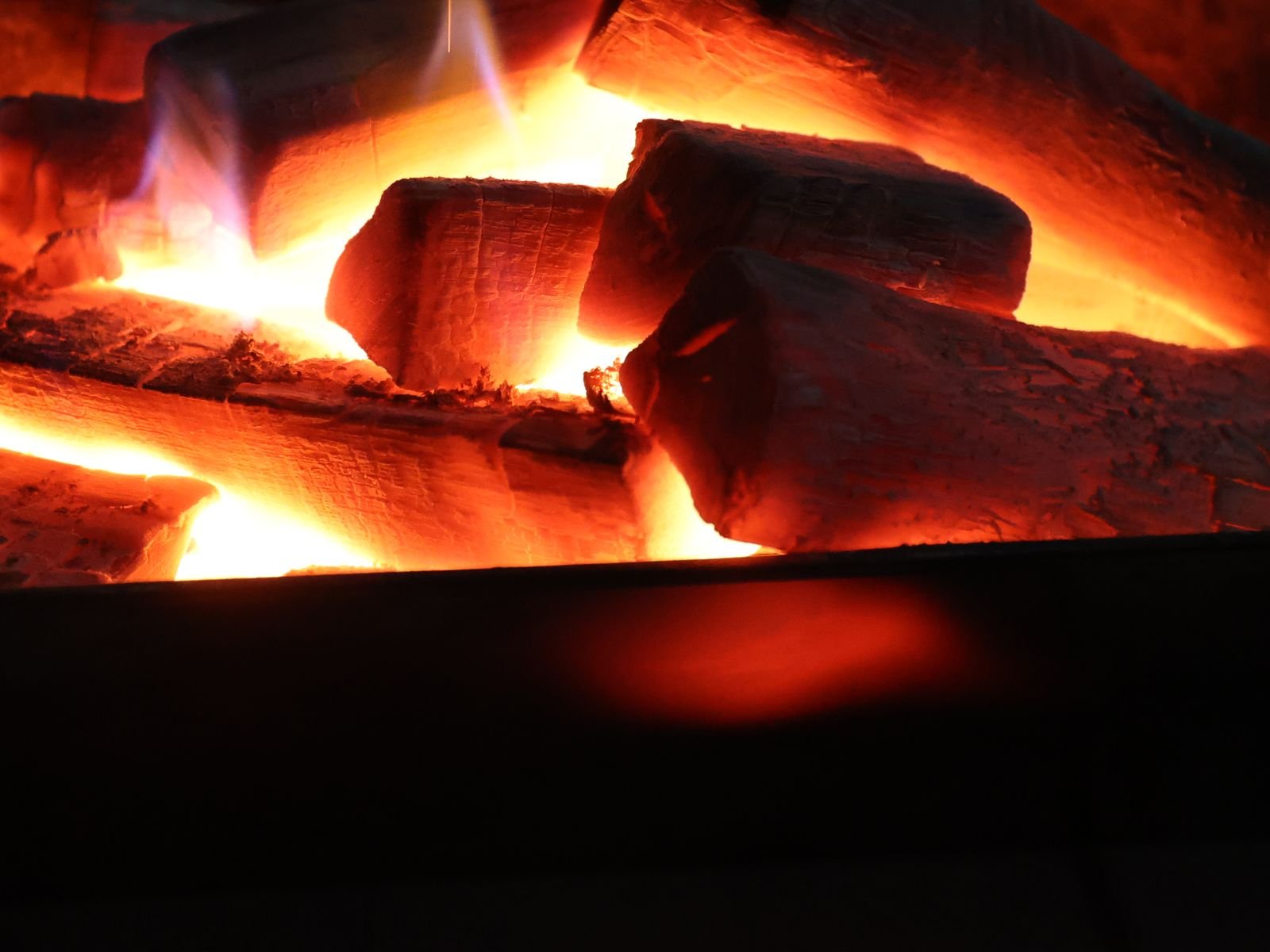
Charcoal is not one product, and the clearest divide is white charcoal vs black charcoal, or in Japanese, shiro-zumi versus kuro-zumi. They start from the same idea of carbonising wood, but one difference in how each is finished changes everything: hardness, how easily it lights, how long and how cleanly it burns, and what it is best cooked over. This guide explains the real differences so you can buy the right fuel.
Key takeaways
- White charcoal (shiro-zumi, including binchotan) is cooled by smothering red-hot pieces in a damp earth-and-ash mix, leaving a hard, dense fuel with a pale coating.
- Black charcoal (kuro-zumi), including lump and ogatan, cools inside the kiln; it is softer, lights faster and burns hotter early but for less time.
- White charcoal gives long, steady, low-smoke radiant heat; black charcoal is quicker to light and more forgiving for general grilling.
- VUTRUX supplies both families: binchotan white charcoal, plus hardwood lump and ogatan on the black-charcoal side. We do not sell coconut-shell or bamboo charcoal.
- Choose by cuisine, service style and budget, and always test a sample first.
White charcoal vs black charcoal: the core difference
The names describe the finish, not the wood. White charcoal vs black charcoal comes down to one production step: how the red-hot charcoal is cooled at the end of firing.
White charcoal — shiro-zumi, of which binchotan is the best-known type — is raked out of the kiln while glowing and quickly smothered in a damp mixture of earth, ash and sand. The rapid cooling and mineral dust leave a whitish coating on very hard, dense pieces that ring like metal when tapped. Black charcoal — kuro-zumi — is left to cool inside a sealed kiln, so it stays matte black, softer and more porous. VUTRUX makes its binchotan white charcoal from dense fruitwoods and hardwoods: eucalyptus, lychee and longan, and orange–pomelo "mai tieu".
How each is made (the carbonisation process)
Both start by heating wood with very little oxygen, so it carbonises instead of burning away to ash. The finishing stage is where they split:
- White charcoal is fired hard, then raked out near peak temperature and buried in a damp earth-and-ash blend. The shock cooling sets an extremely dense, high-carbon structure and the pale surface coating.
- Black charcoal is carbonised and then allowed to cool slowly inside the closed kiln. The result is a lighter, more porous, easier-to-ignite piece.
The same logic applies to machine-made charcoal. VUTRUX ogatan, extruded from compressed hardwood sawdust and then carbonised, behaves like a refined black charcoal — consistent and clean-burning. Our natural versus industrial charcoal guide explains how these production routes compare.
Density is the practical outcome of that finishing step. White charcoal packs more carbon into the same volume, which is why a small binchotan stick can out-last a much larger piece of black charcoal, and why it feels surprisingly heavy in the hand. Black charcoal's more open, porous structure is exactly what lets it catch a flame quickly and give up its heat sooner.
Need this grade by the container?
Tell us your market, volume and target spec — we reply within one business day with a quote and a sample offer.
Burn behaviour, heat and flavour
Because white charcoal is denser and higher in fixed carbon, it is harder to light but rewards you with a long, steady, low-smoke burn and intense radiant (infrared) heat. That makes it the standard for yakitori, robata and grilled eel, where food sits close to the coals and any smoke would be tasted. Independent testing of VUTRUX binchotan shows fixed carbon typically around 95%, with near-zero sulphur — clean heat, not flavour.
Black charcoal lights faster and delivers a strong early heat, ideal for quick searing and general grilling, but it burns through sooner and can produce more smoke and sparks at the start. Neither is "better" in the abstract; they suit different jobs. If you are weighing formats, our comparison of binchotan vs lump vs briquettes puts the options side by side.
There is a cost angle as well. White charcoal can often be extinguished airtight after service and relit, so its higher price per kilogram is offset over repeated use, and its long burn means fewer refuels during a shift. Black charcoal is usually burned once, but its lower price and easy lighting keep it attractive for high-turnover grilling where speed matters more than the last hour of heat.
Side-by-side comparison
| Factor | White charcoal (shiro-zumi / binchotan) | Black charcoal (kuro-zumi / lump / ogatan) |
|---|---|---|
| Cooling method | Smothered in damp earth and ash | Cooled inside the kiln |
| Hardness & density | Very hard, dense, metallic ring | Softer, more porous |
| Lighting | Slower to light | Lights easily and fast |
| Burn time | Long and steady | Shorter, hotter early |
| Smoke & sparks | Very low once lit | More at the start |
| Best for | Yakitori, robata, eel, long service | Searing, general BBQ, quick service |
| Typical fixed carbon | ~95% | ~94% (ogatan) |
The table generalises: a well-made black charcoal can outperform a poor white one. Consistency and raw material matter as much as the category.
Which one should you buy?
Match the fuel to the work:
- Precision grilling (yakitori, omakase, eel) — white charcoal or binchotan for steady, clean, long heat.
- High-volume and general BBQ — black charcoal such as hardwood lump or ogatan for fast lighting and cost control.
- Retail and mixed use — many buyers stock both to cover premium and everyday lines.
Volume and staff experience matter too. A high-turnover kitchen doing broad, general grilling often gets more value from easy-lighting black charcoal, while a specialist yakitori or omakase counter justifies the extra care that white charcoal demands. If you are unsure, order both and compare them back to back on the equipment and menu you actually run.
VUTRUX supplies both families — binchotan on the white side, and hardwood lump and ogatan on the black side. We do not sell coconut-shell or bamboo charcoal. The best way to decide is to test on your own equipment: request samples or a quote for the types you are considering, and we will help you compare like for like.
Frequently asked questions
Is binchotan a white or black charcoal?
Binchotan is white charcoal (shiro-zumi). It is fired hard and then cooled by smothering the red-hot pieces in a damp earth-and-ash mix, which leaves the characteristic pale coating and an extremely dense, high-carbon stick that rings like metal.
Why is white charcoal called white if it looks grey?
The name comes from the pale, ash-grey mineral coating left by the earth-and-ash cooling process, not from a bright white colour. Black charcoal, cooled inside the kiln, keeps a matte black surface. That contrast in finish is what the "white" and "black" labels describe.
Which is better, white or black charcoal?
Neither is universally better. White charcoal wins for long, precise, low-smoke grilling where food sits close to the coals; black charcoal wins for fast lighting, strong early heat and general or high-volume BBQ. The right choice depends on your cuisine, service speed and budget.
Is white charcoal harder to light than black charcoal?
Yes. Its density and high fixed carbon make white charcoal slower to ignite, so use a chimney or electric starter rather than a match, and never lighter fluid. Black charcoal, being softer and more porous, lights faster with less effort.
Does VUTRUX sell both white and black charcoal?
Yes. VUTRUX exports binchotan white charcoal along with hardwood lump and ogatan, which sit on the black-charcoal side. We do not supply coconut-shell or bamboo charcoal. Ask us for samples of each type you want to compare.