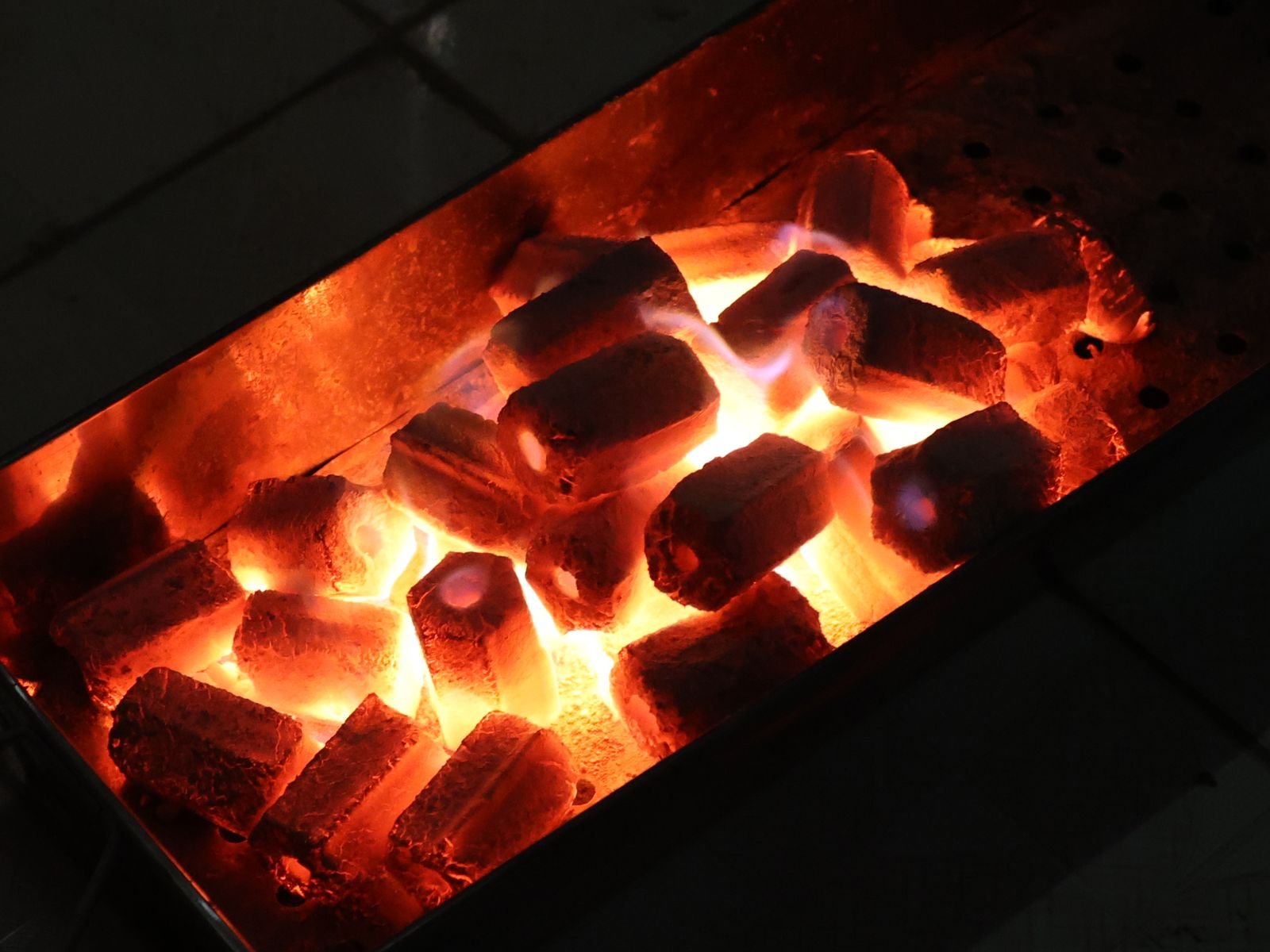
The word premium gets stamped on a lot of charcoal that has not earned it. For a serious buyer - a distributor, importer or restaurant group - the label is meaningless until you can tie it to measurable quality. Genuinely premium charcoal is defined by a short list of physical and documentary markers: how much carbon it contains, how little ash and moisture it leaves, how dense and consistent the pieces are, and whether the numbers are backed by independent testing. This is the checklist to run before you believe the claim.
Key takeaways
- Premium charcoal is measurable, not marketing: fixed carbon, ash, moisture, density and consistency are the markers that count.
- Look for high fixed carbon (~94-95%+), low ash (~3%), low moisture (~3%) and near-zero sulphur on independent testing.
- Density and single-species sourcing drive longer, hotter, cleaner burns - a key reason binchotan sits at the top.
- Consistency lot to lot, plus per-lot COA and MSDS, separates a premium supplier from a lucky bag.
- Always verify with a per-lot certificate and a real burn test before you accept a 'premium' claim.
What 'Premium Charcoal' Really Means
Strip away the branding and premium charcoal comes down to physics and honesty. Physics, because a better fuel simply contains more carbon and less of everything else, so it burns hotter, longer and cleaner. Honesty, because those properties are testable - a genuine premium supplier can show you the numbers on an independent certificate, while a commodity seller relies on the word alone.
It also helps to know where a product sits on the natural versus industrial charcoal divide. Natural charcoals - binchotan and hardwood lump - and clean binder-free briquettes like ogatan can all be premium. Industrial briquettes bulked out with coal dust, starch or other fillers rarely are, no matter what the bag says. The checklist below works across every type.
Keep one principle in mind as you read: every marker below should be something a supplier will put in writing and stand behind on each shipment. A 'premium' label that lives only on the front of the bag, with nothing on the certificate to support it, is a marketing decision rather than a quality one.
The Buyer's Checklist: Six Quality Markers
Run any charcoal against these six markers. Premium products clear all of them; pretenders fail two or three.
| # | Marker | What premium looks like |
|---|---|---|
| 1 | Fixed carbon | ~94-95% or higher |
| 2 | Ash content | ~3% or lower |
| 3 | Moisture | ~3% or lower |
| 4 | Sulphur | Near 0% (no taint or odour) |
| 5 | Density and size | Dense, heavy, consistent pieces |
| 6 | Documentation | Per-lot COA and MSDS from an independent lab |
On independent Vinacontrol testing, VUTRUX binchotan typically shows around 95% fixed carbon and ogatan around 94%, with ash and moisture near 3%, sulphur close to zero and calorific value around 8,300 kcal/kg. Note the word 'typically' - premium suppliers quote ranges and prove each lot, rather than fabricating one perfect number for every shipment.
Need this grade by the container?
Tell us your market, volume and target spec — we reply within one business day with a quote and a sample offer.
Why Density and Wood Species Matter
Two markers on the checklist deserve extra attention because they are easy to feel and hard to fake: density and species.
Density. Denser charcoal packs more carbon into the same volume, so it burns longer and radiates steadier heat. Pick up a piece of true binchotan and it feels surprisingly heavy for its size and can even ring when tapped. Light, crumbly, dusty pieces signal a lower grade or filler content.
Wood species. Premium fuel starts with the right raw material. VUTRUX binchotan is made from dense hardwoods and fruitwoods - eucalyptus, lychee and longan, and orange-pomelo 'mai tieu' - chosen for their tight grain and clean burn. Single-species, named-wood charcoal is a strong premium signal; a vague 'hardwood' blend often is not. Lychee binchotan, for example, is sought after for its particularly steady heat.
There is a simple field test buyers use. Compare two pieces of similar size from different suppliers on a kitchen scale; the heavier one almost always burns longer and hotter. Then snap a piece: a premium sample breaks with a clean, glassy fracture and a metallic sheen, while a filler-heavy briquette crumbles into powder. Neither test needs a lab, and both are hard to fake.
Consistency and Compliance: The Paper Trail
A single great bag proves nothing; a great supplier proves it every lot. This is where a premium supplier separates from a lucky batch.
- Lot-to-lot consistency. The markers above should hold across shipments, not just the sample. That requires disciplined sourcing and grading.
- Per-lot COA. Independent lab results (VUTRUX uses Vinacontrol) for each lot, not one certificate reused forever.
- MSDS for safe handling, storage and transport.
- Import compliance. EUDR due-diligence and phytosanitary documentation, plus self-heating test results indicating the charcoal is not IMDG Class 4.2 (carriers may still book it as UN 1361).
One caveat on certificates: a COA is only as good as its traceability. Check that the certificate actually corresponds to the lot you are buying - matching dates, product and testing body - rather than a flattering result from a batch you will never receive. A supplier who tests every lot, and lets you see it, is signalling exactly the consistency premium buyers pay for.
If you are buying at container scale, this paperwork is not bureaucracy - it is what keeps your shipments clearing customs and your own customers confident. Our Binchotan wholesale guide covers how these documents fit into a typical order.
How to Verify a 'Premium' Claim
Turn the checklist into a simple verification routine before any large order:
- Ask for a per-lot COA and read it properly - our guide on how to read a charcoal COA shows which figures to trust.
- Handle the product. Weigh it in your hand; premium charcoal feels dense. Check piece-size consistency and dust levels.
- Run a burn test. Time how long it holds cooking heat, watch the smoke and sparks, and measure the ash left behind.
- Check the documents. Confirm MSDS and import compliance paperwork are current and lot-specific.
- Test consistency. Where possible, compare two different lots, not just one showcase sample.
Premium is a claim you should be able to verify in an afternoon. To put VUTRUX charcoal through your own checklist, request a sample and a quote - with per-lot COA and MSDS included, so the numbers are there in black and white.
Premium or Just Pricey? Red Flags to Watch
Not everything that costs more is premium. A few warning signs should make any buyer slow down:
- No lot-specific test data. A generic, undated spec sheet reused for every shipment tells you nothing about the charcoal actually in the container.
- Vague raw material. A vague 'hardwood' label with no named species, or a briquette that will not disclose whether it contains coal or binders.
- Suspiciously light product. If it feels airy and leaves your hands black with dust, density and fixed carbon are probably low regardless of the price.
- No sample offered. A confident supplier wants you to test the product; reluctance to send a sample is a signal in itself.
Premium charcoal earns the name on the certificate and at the grill, not on the price tag. When those two agree, you have found a supplier worth keeping.
Frequently asked questions
What makes charcoal premium?
Measurable quality: high fixed carbon (around 94-95% or more), low ash and moisture (near 3%), near-zero sulphur, dense and consistent pieces from named hardwood species, and independent per-lot testing to prove it. Marketing language without these markers is just a label.
What is a good fixed carbon percentage for charcoal?
For premium charcoal, look for roughly 94-95% or higher. VUTRUX binchotan typically tests around 95% and ogatan around 94% on independent Vinacontrol COA. Higher fixed carbon generally means more heat and a longer burn.
Is denser charcoal better?
Usually, yes. Denser charcoal holds more carbon per piece, so it burns longer and radiates steadier heat. True binchotan feels heavy for its size and can ring when tapped, while light, crumbly pieces suggest a lower grade or filler.
How do I know if a 'premium' charcoal claim is real?
Ask for a per-lot COA from an independent lab, handle the product for density and consistency, run a burn test for heat, smoke and ash, and confirm MSDS and compliance documents. If a seller cannot show lot-specific test data, treat the word 'premium' with caution.
Does premium charcoal produce less ash?
Yes. It typically leaves around 3% ash or less, versus more from filler-heavy commodity briquettes. Less ash means cleaner grills, better airflow and less mess for the end user.