
Japan is the birthplace of binchotan and one of the most demanding charcoal markets on earth. Domestic Kishu binchotan is scarce and expensive, so restaurants rely on imports for yakitori, unagi and robata grilling. To import charcoal into Japan you clear a duty-free tariff line, meet plant-quarantine and packaging rules, and, above all, satisfy exacting buyers on size, purity and burn. This guide covers the process, the standards and the grades that sell.
Key takeaways
- Japan imports large volumes of binchotan because domestic Kishu production is limited and costly.
- Wood charcoal enters duty-free under Japan's 4402.90 tariff line; import consumption tax of 10% still applies.
- Fully carbonised charcoal is generally outside plant quarantine, but pallets must meet ISPM 15.
- Japanese buyers judge charcoal on consistent sizing, low ash, low sparking and low moisture, backed by a per-lot COA.
- A Certificate of Origin under CPTPP, VJEPA or RCEP keeps your file complete even though duty is already zero.
Why Japan Imports So Much Charcoal
No country associates charcoal with cuisine as closely as Japan. Binchotan (white charcoal) is the fuel behind yakitori, kabayaki eel and robatayaki, prized for a steady, radiant, near-smokeless heat. The most famous grade, Kishu binchotan from Wakayama, is made in tiny quantities and commands premium prices, so a large share of Japanese demand is met by imports from Vietnam and other Southeast Asian producers.
That creates a durable opening for quality Vietnamese binchotan. Japanese chefs are not chasing the cheapest fuel; they want a consistent, high-carbon charcoal that behaves predictably service after service. If you are new to the category, our explainer on what binchotan white charcoal is covers why it burns the way it does.
Understanding this demand shapes how you import: you are supplying a discerning professional market, so quality consistency and documentation matter as much as landing the container cheaply. Buyers reorder from suppliers who are boringly reliable, not from whoever quoted lowest once.
What It Takes to Import Charcoal into Japan
To import charcoal into Japan, your goods are declared to Japan Customs, normally through the NACCS electronic system via a licensed customs broker. Wood charcoal is classified under heading 4402.90, and Japan's tariff on this line is free, for both the general and WTO rates, so no import duty is due.
What you will pay is consumption tax: 10% (national and local combined) charged on the import value and recoverable by a registered business. Your standard entry documents are the commercial invoice, packing list and Bill of Lading.
On the plant-health side, Japan's Plant Protection Station regulates wood imports, but charcoal that has been fully carbonised is generally treated as processed and is typically outside plant-quarantine inspection. The wooden pallets under the cargo are not: they must be heat-treated and marked to ISPM 15, or specified as exempt plywood or presswood. Confirm the current treatment of your exact product with your broker before booking, since interpretations can vary by product form. Japan Customs may also review the declared value, so keep your invoice, contract and payment evidence consistent to avoid queries at entry.
Need this grade by the container?
Tell us your market, volume and target spec — we reply within one business day with a quote and a sample offer.
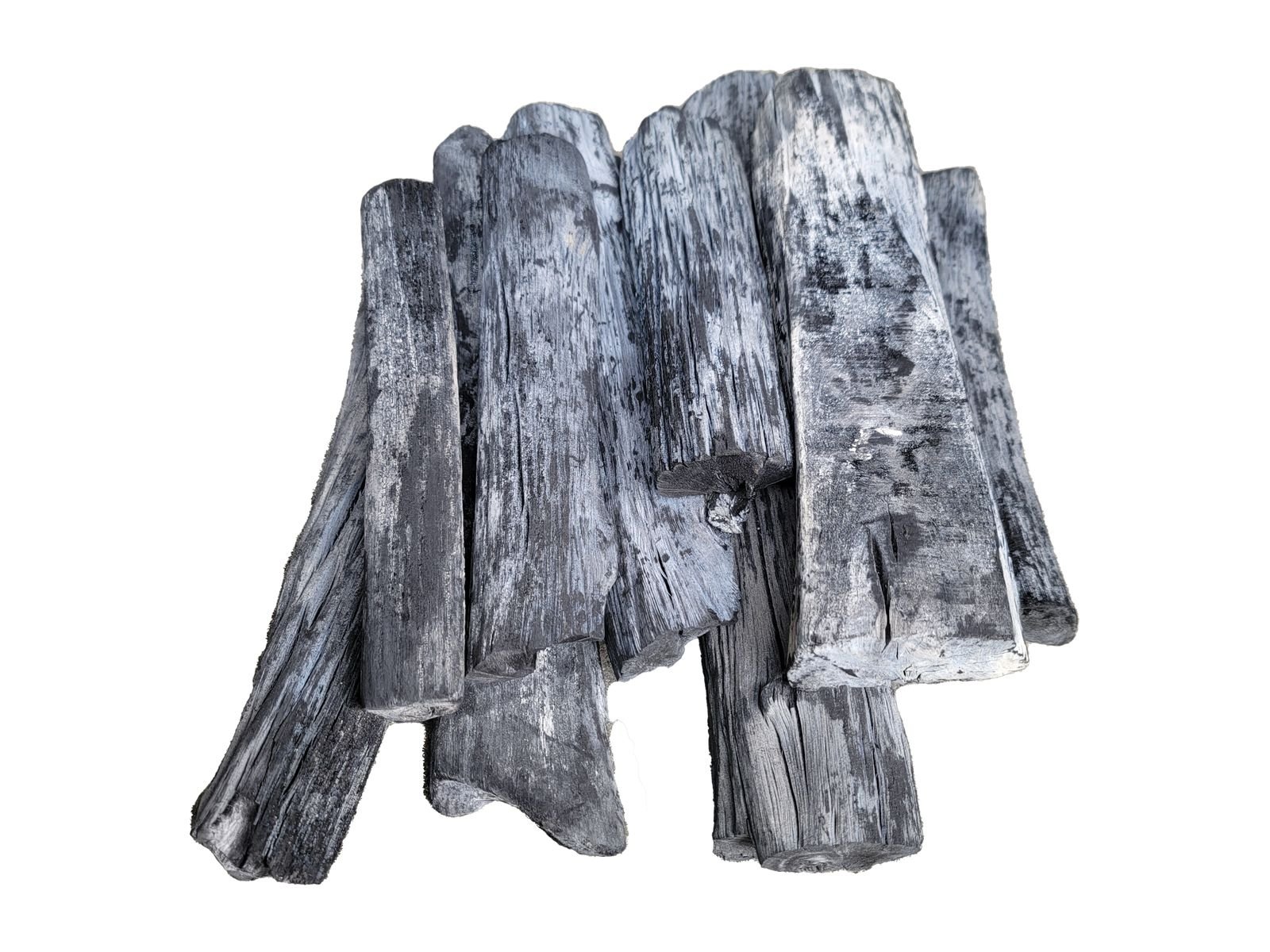

Quality Expectations of Japanese Buyers
This is where Japan differs most from other markets. Clearing customs is straightforward; clearing a Japanese buyer's quality bar is the real task. Expect close scrutiny of:
- Consistent sizing: uniform diameter and length so pieces fit the grill and light evenly.
- Low ash: less residue in the firebox and around the food.
- Low sparking and popping: critical at open yakitori counters where staff work close to the fire.
- Low moisture: for fast, clean ignition and stable heat.
- High fixed carbon: for the long, radiant burn binchotan is known for.
VUTRUX binchotan typically tests at around 95% fixed carbon with roughly 3% ash and 3% moisture on independent Vinacontrol analysis, and every lot ships with a COA so buyers can verify each shipment. Chefs receiving the charcoal will also value clear guidance on ignition; our guide on how to light and use binchotan works well as a handout for their teams.
Grades, Sizes and Species That Sell in Japan
Japanese buyers often specify not just "binchotan" but a wood, a size and a grade. VUTRUX produces binchotan from several dense hardwoods and fruitwoods, including eucalyptus (bach dan), lychee and longan (vai/nhan), and orange-pomelo mai tieu (cam buoi), in Grade A and B, round or split, in sizes from roughly 80 to 200 mm, packed in 10 kg cartons.
For yakitori, many counters prefer cut sticks of uniform length that pack the grill neatly and light quickly. Fruitwood binchotan such as lychee binchotan is popular for its dense, long, clean burn. Where a buyer wants maximum consistency at a lower price than natural binchotan, ogatan, machine-made sawdust charcoal in hexagon (hollow-core) or square form, delivers very even heat and is widely used in high-volume kitchens.
Agreeing wood, size, grade and packaging in writing, then approving a physical sample against that spec, is the surest way to meet Japanese expectations on the first container rather than the third. It also gives you an objective reference if a later lot ever drifts from what was approved. In a market this exacting, a written spec paired with a retained reference sample is the cheapest quality insurance you can buy, and it keeps both sides honest across every reorder.
Documents, FTAs and Clearing the Container
Although duty is already zero, it is still worth shipping with a Certificate of Origin. Vietnam and Japan share several agreements, including the CPTPP, the Japan-Vietnam EPA (VJEPA), the ASEAN-Japan agreement (AJCEP) and RCEP, and a valid C/O proves origin and keeps your file complete against any future tariff change.
Your practical checklist is short but strict: agree the spec and approve a sample; confirm HS 4402.90 and the free duty rate; prepare the commercial invoice, packing list, Bill of Lading and Certificate of Origin; ensure ISPM 15 pallets; and secure a per-lot COA. Most charcoal arrives through Tokyo, Yokohama, Osaka, Kobe or Nagoya, cleared via NACCS.
Because freight and currency move constantly, we quote to your named Japanese port rather than publish fixed prices. Send your grade, size and volume to request a quote and a sample offer, and we will confirm the exact documents for your buyer and port.
Building a Reliable Supply Relationship in Japan
Japanese buyers reward continuity. Once a spec is approved, they expect every subsequent lot to match it, so the relationship matters as much as the first quotation. A few habits keep supply smooth and protect your standing with a demanding customer:
- Retain a reference sample from the approved lot, so any later shipment can be judged against an agreed benchmark rather than memory.
- Plan around demand: yakitori and unagi kitchens burn charcoal year round, while summer lifts wider grilling, so order ahead of peaks rather than into them.
- Respect lead time: natural binchotan is kiln-made in batches, so production and documentation need planning, not a last-minute call.
- Order in container units: as a guide, a 20ft load of binchotan is roughly 9.6 metric tons net (about 960 cartons of 10 kg), which helps you size an order against turnover.
Consistency, not the lowest one-off price, is what earns repeat orders in Japan. A supplier who ships the same grade, size and COA quality lot after lot, and who communicates clearly when timing shifts, quickly becomes the default choice. That reliability is exactly the position VUTRUX aims to hold with its Japanese customers, which is why every lot is tested and documented rather than shipped on trust.
Frequently asked questions
Is charcoal subject to import duty in Japan?
No. Wood charcoal under 4402.90 is duty-free under Japan's general and WTO rates. Import consumption tax of 10% applies on the import value and is generally recoverable by a registered business, so factor it into cashflow rather than margin.
Why does Japan import binchotan instead of making its own?
Domestic Kishu binchotan is produced in small quantities and is expensive, while demand from yakitori, unagi and robata restaurants is large. Japan therefore imports substantial volumes of quality binchotan from Vietnam and other producers to fill the gap.
Does charcoal need plant-quarantine clearance in Japan?
Fully carbonised charcoal is generally treated as processed and is typically outside plant-quarantine inspection, but the wooden pallets must meet ISPM 15. Confirm the treatment of your exact product with your customs broker before booking.
What quality should I specify for the Japanese market?
Specify wood, size and grade, and require consistent sizing, low ash, low sparking, low moisture and high fixed carbon, backed by a per-lot COA. Approve a physical sample first; request a quote and a sample offer to begin.