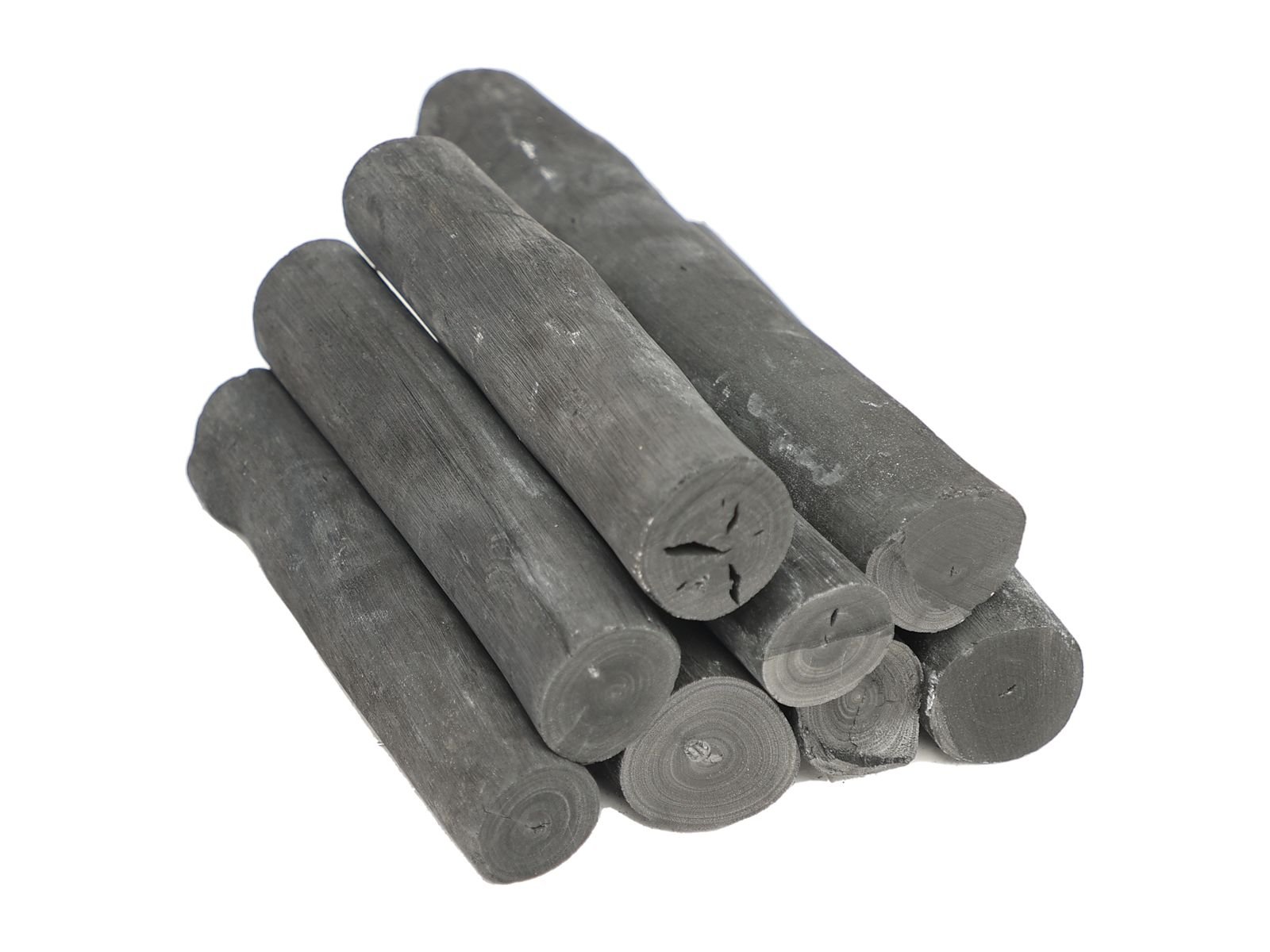
Kishu binchotan is the benchmark that gave white charcoal its reputation, a hand-crafted Japanese fuel prized by yakitori masters and priced accordingly. Vietnamese binchotan delivers much of the same performance at a fraction of the cost, which is why more restaurants and importers are switching. This kishu vs vietnamese binchotan comparison weighs origin, wood, grilling performance and price, so you can decide where tradition matters and where value wins.
Key takeaways
- The kishu vs vietnamese binchotan gap is wide on price but narrow on grill performance.
- Both are white charcoal with fixed carbon in the mid-90s and long, radiant burns.
- Kishu offers ubame-oak heritage and limited artisan supply at premium prices.
- Vietnamese binchotan offers graded sizing, plantation-scale volume and strong value.
What Makes Binchotan Binchotan
Binchotan, or white charcoal, is not defined by a country but by a method. Hardwood is carbonized slowly, finished at very high temperature, then pulled from the kiln and smothered in a damp mixture of earth and ash. That rapid cooling leaves a whitish coating and, more importantly, an exceptionally hard, dense, high-carbon stick. The payoff on the grill is a long, steady burn, high radiant (infrared) heat, very little smoke and almost no flame, the qualities that make white charcoal ideal for cooking directly over the coals. Understanding that shared method is the key to the whole comparison: because the process is the same, the meaningful differences narrow to the wood, the maker's consistency and, above all, the price you pay for each kilogram of usable heat.
Both Kishu and Vietnamese binchotan follow this method and reach fixed carbon in the mid-90s. The differences that remain, wood species, tradition, consistency and price, are what this comparison is about. If you are new to the category, our primer on what binchotan white charcoal is explains the fundamentals in more depth.
Kishu vs Vietnamese Binchotan: Origin and Wood
Kishu binchotan comes from the Kishu region of Wakayama, Japan, and is traditionally made from ubame oak, a slow-growing, extremely dense hardwood. It is produced by a small number of artisan makers using long-established kiln techniques, and its name carries the weight of that heritage. The trade-off is supply: output is limited, and prices are among the highest in the world for any charcoal.
Vietnamese binchotan takes the same white-charcoal method and applies it to dense local hardwoods and fruitwoods, eucalyptus, lychee and longan, plus orange-pomelo mai tieu wood. These species are hard, resinous and well suited to high-temperature carbonization, and they are available from managed plantations at far greater volume than ubame oak. So the kishu vs vietnamese binchotan question is partly heritage versus supply: Kishu offers a centuries-old name and a specific oak, while Vietnamese binchotan offers comparable density and carbon from renewable hardwoods you can actually buy by the container. Species matters on the plate as much as in the kiln: eucalyptus gives a clean, neutral heat, while fruitwoods such as lychee and longan are prized for the dense, long-lasting embers they leave. Our deep-dive on lychee binchotan charcoal shows what one of these premium fruitwoods brings to the grill.
Need this grade by the container?
Tell us your market, volume and target spec — we reply within one business day with a quote and a sample offer.
Performance on the Grill
For most cooking, the performance gap is far narrower than the price gap. Both Kishu and Vietnamese binchotan light to a stable, long-lasting burn, throw strong radiant heat and produce minimal smoke, so they sear cleanly and let the flavor of the food come through. A skilled cook running a yakitori or robata station will get excellent results from either.
Kishu's reputation rests on remarkable consistency, an exceptionally long burn and a refinement that serious enthusiasts and traditional restaurants are willing to pay for. Vietnamese binchotan, sorted into grades A and B and offered round or split in sizes from roughly 80 to 200 mm, gives kitchens the practical control they need: you can specify size and grade to match your grill and menu. For high-volume service where charcoal is a running cost rather than a showpiece, that combination of strong performance and dependable supply is often the deciding factor.
There are real, if subtle, distinctions. Top-tier Kishu is renowned for burning with almost no sparking or spitting and for an unusually even heat that traditional cooks prize during long service. Quality Vietnamese binchotan performs very close to this, and because you can order specific sizes and grades, you can tune the burn to your equipment rather than adapting to whatever a single artisan kiln produced that week. For most restaurants, controllable, repeatable supply beats the last few percent of refinement.
Price and Value
Price is where the two diverge sharply. Kishu binchotan is a premium, limited-supply product; Vietnamese binchotan delivers comparable carbon, hardness and burn characteristics at a small fraction of the cost. For a single artisan restaurant selling the story of Kishu oak, that premium can be worth it. For a group scaling across sites, the math usually favors Vietnamese binchotan.
The table summarizes the trade-offs. We do not publish fixed prices because they move with grade, size, freight and market conditions; for current numbers, request a quote.
| Attribute | Kishu binchotan | Vietnamese binchotan |
|---|---|---|
| Origin | Wakayama, Japan | Vietnam |
| Typical wood | Ubame oak | Eucalyptus, lychee, longan |
| Fixed carbon | Mid-90s% | ~95% |
| Supply and volume | Limited, artisan | Plantation-scale |
| Grades and sizing | Limited options | Grades A/B, round or split, ~80-200 mm |
| Relative price | Highest | Strong value |
| Best for | Heritage-led, single sites | Scaling restaurants and importers |
In short, you are paying Kishu prices largely for provenance and tradition, and Vietnamese prices for the same fundamental fuel produced at scale. Neither is wrong; the right answer depends on whether your customers are buying the story or the sear.
Sourcing Vietnamese Binchotan at Scale
If value and reliable volume matter, Vietnamese binchotan is built for it. VUTRUX carbonizes eucalyptus, lychee and longan into graded white charcoal, packs it in 10 kg cartons, and ships from Hai Phong to more than 40 markets. A single 20ft container holds roughly 9.6 MT net, about 960 cartons, which lets you plan cost per service with confidence.
Every lot comes with an independent Vinacontrol Certificate of Analysis showing fixed carbon typically around 95%, ash near 3%, moisture near 3% and sulphur effectively zero, plus an MSDS and, where needed, EUDR and phytosanitary documentation. Terms are FOB, CIF or DDP with T/T or L/C payment, and we send samples before a first order so you can test against your current charcoal, including Kishu, if that is your benchmark. For the full range and specification detail, see our binchotan wholesale guide, then request a quote or a sample to compare on your own grill.
That is what makes the kishu vs vietnamese binchotan comparison so practical for buyers: you can test both, side by side, before a single euro or dollar is committed to a container. Many operators who make the switch keep a small stock of Kishu for signature dishes while running Vietnamese binchotan as their everyday fuel, capturing most of the prestige at a fraction of the cost.
Frequently asked questions
Is Vietnamese binchotan as good as Kishu?
For most cooking, the difference is small relative to the price. Both are white charcoal with fixed carbon in the mid-90s, long burn times and high radiant heat. Kishu offers heritage and exceptional consistency from ubame oak, while Vietnamese binchotan delivers comparable performance and dependable volume at far lower cost.
What wood is Vietnamese binchotan made from?
VUTRUX makes binchotan from dense hardwoods and fruitwoods, mainly eucalyptus, lychee and longan, along with orange-pomelo mai tieu wood. These species are hard and resinous, which suits high-temperature carbonization and gives a long, clean, radiant burn.
Why is Kishu binchotan so expensive?
Kishu binchotan is made in limited quantities by a small number of artisan producers in Wakayama, Japan, from slow-growing ubame oak. Restricted supply, labor-intensive traditional kilns and its premium reputation all push prices to among the highest of any charcoal.
Can I order a sample before buying a container?
Yes. VUTRUX recommends testing a sample before any first order so you can compare Vietnamese binchotan against your current fuel, including Kishu. Samples ship with an independent Vinacontrol COA, and full orders move FOB, CIF or DDP from Hai Phong. Contact us to arrange one.