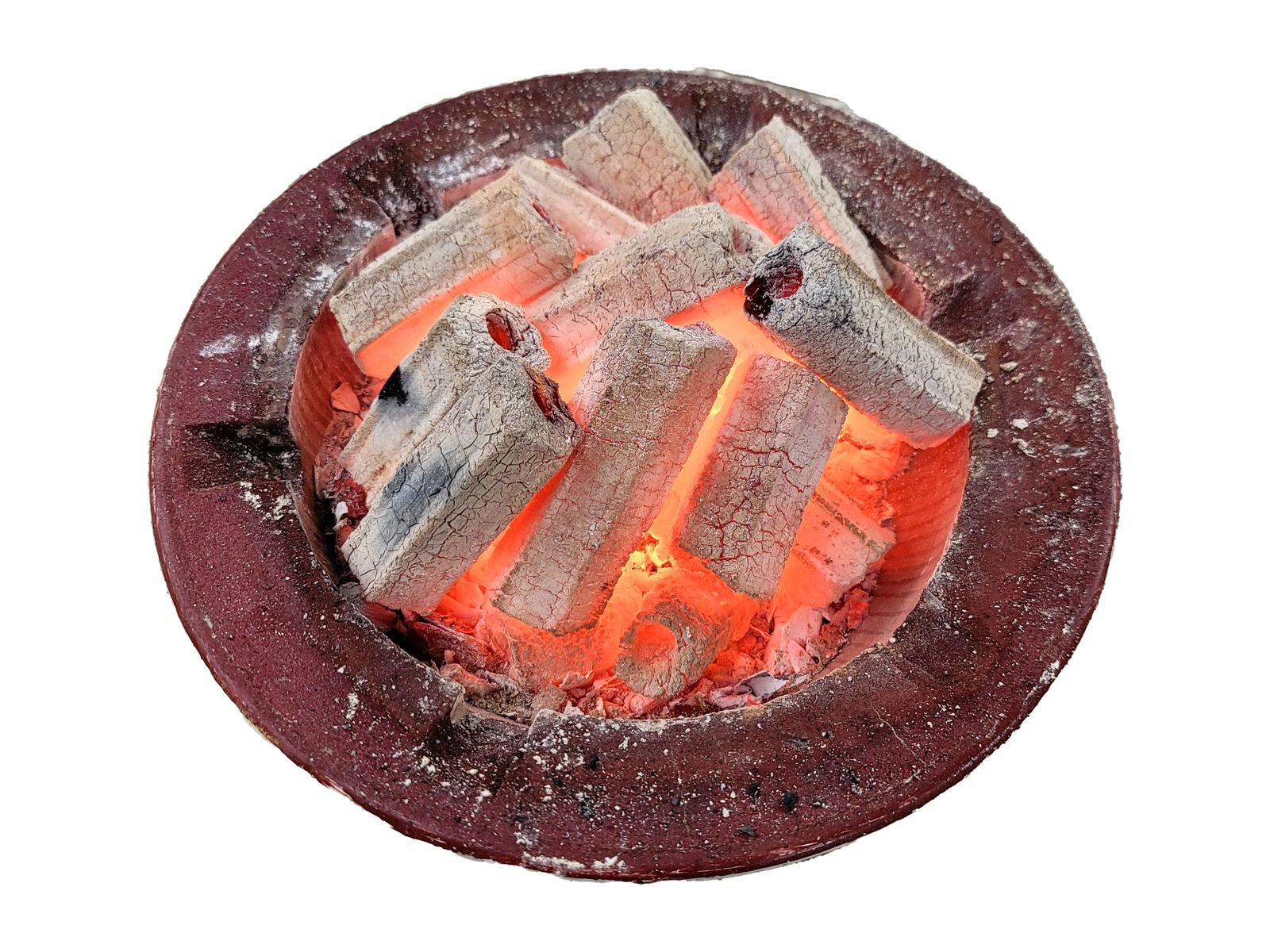
Choosing the best charcoal for steakhouse service means balancing two demands at once: a fierce searing heat that builds a crust in seconds, and enough burn time and recovery to keep a full grill moving through a long night. For most grill houses that means binchotan on the searing station, supported by hardwood lump or ogatan where speed and cost matter. This guide covers the searing fuels that actually work and how to keep a steakhouse reliably supplied.
Key takeaways
- The best charcoal for steakhouse searing is binchotan: very high, clean radiant heat and a long burn for fast crusts and quick recovery.
- Hardwood lump lights fast and adds smoky character; ogatan gives steady, economical heat for high-volume lines.
- Low moisture (around 3%) and high fixed carbon (around 95%) mean instant searing heat with little ash.
- Near-zero sulphur keeps the fuel from tainting the flavour of premium beef.
- Plan supply by the container: binchotan lands around 9.6 MT net per 20ft; ask for a per-lot COA.
What the best charcoal for steakhouse grilling must do
A steakhouse grill lives at the extremes. It needs a very high surface temperature to sear a thick cut and build a Maillard crust in seconds, then it needs to recover that heat almost immediately for the next order during a rush. Over a full service it must hold a deep, consistent bed without constant rebuilding, and it must do all of this without throwing acrid smoke or off-flavours onto expensive beef.
Those demands rule out weak, fast-fading fuels. What you want is a dense charcoal with high fixed carbon and low moisture that reaches searing heat quickly, radiates strongly and lasts. You also want predictable behaviour, because a grill chef judges timing by feel; a fuel that burns differently from one bag to the next makes consistency impossible. This is why serious grill houses are particular about the best charcoal for steakhouse service rather than buying on price alone.
It helps to separate the two jobs a steakhouse fire actually does. The sear is a short, violent burst of heat that sets crust and colour; the hold is the gentler, sustained heat that brings a thick cut up to temperature and rests the grill between orders. The best beds do both, because the fuel underneath carries enough mass and density to recover fast after each sear without collapsing. Thin, fast-fading fuels can sear but cannot hold, which is why they struggle on a busy pass.
The best searing fuels compared
Three VUTRUX fuels suit a steakhouse, each with a role. Binchotan is the premium searing fuel; hardwood lump is the fast, smoky option; ogatan is the steady, economical workhorse for volume. Many grill houses use more than one.
| Fuel | Sear heat | Burn time | Best role in a steakhouse |
|---|---|---|---|
| Binchotan (white charcoal) | Very high, clean, radiant | Long | Primary searing station |
| Hardwood lump | High, fast to reach | Short to medium | Fast lighting, smoky specials |
| Ogatan (hexagon or square) | High, very steady | Long | Economical high-volume line |
Binchotan gives the cleanest, most controllable searing heat and the longest burn, which is why it anchors most premium grills. Lump lights faster and lends a woodsmoke note some menus want, while ogatan delivers dependable heat at a lower cost per hour. To weigh these against briquettes in general, see our comparison of binchotan vs lump vs briquettes.
Need this grade by the container?
Tell us your market, volume and target spec — we reply within one business day with a quote and a sample offer.
How to get a restaurant-grade sear
Great searing is as much technique as fuel, but the fuel sets the ceiling. Build a deep bed - searing needs mass, not a thin scatter of coals - and let it come to a full, even glow before the first steak goes down. Binchotan's low moisture, around 3%, means it reaches that state cleanly and holds it, so the grill is not steaming heat away when you need it most.
Work in zones: a fiercely hot area for the initial sear and a cooler area to bring thicker cuts up to temperature without burning. A high fixed carbon of around 95% gives the intense, sustained radiant heat that forms a crust in seconds, while low ash keeps the bed breathing so the heat does not fade mid-service. Give the bed a moment to recover between sears rather than crowding it, and it will reward you with consistent results all night.
Grate height and timing finish the job. Set the searing grate close to the coals for the first contact, then move the cut to a higher or cooler zone to bring it to temperature, and let the bed reclaim its heat before the next sear rather than crowding steak after steak onto a cooling surface. With a dense fuel like binchotan the recovery is quick, so a disciplined rhythm keeps every cut getting the same fierce first contact.
Consistency, ash and a clean burn
On a premium grill, consistency and cleanliness are worth as much as raw heat. VUTRUX charcoal is independently tested (Vinacontrol), with binchotan around 95% fixed carbon and ogatan around 94%, ash near 3%, moisture near 3%, sulphur effectively 0% and a calorific value near 8,300 kcal/kg. Near-zero sulphur is particularly important for a steakhouse: it means the fuel adds heat, not an acrid taint, to dry-aged and premium cuts.
Low ash keeps the fire bed open so airflow - and therefore heat - stays constant during a long service, and it means less time raking out between covers. Insist on a per-lot certificate of analysis so every delivery performs like the sample you approved; a grill team can only be consistent if the fuel is. Consistency shipment to shipment is the quiet feature that separates a professional supply from a gamble.
Ash management is part of consistency too. A fuel that throws a lot of ash chokes airflow and forces the team to rake out mid-service, which drops the bed temperature at the worst possible moment. Low-ash binchotan and ogatan keep that interruption to a minimum, so the grill holds its heat and the kitchen holds its timings across a full, busy night.
Matching fuel to your menu and covers
The right mix depends on your menu and your volume. A fine-dining grill searing prime cuts to order will run best on binchotan throughout. A high-volume grill house might sear on binchotan while running ogatan on a secondary line to manage cost per hour, and keep lump on hand for dishes that benefit from a smokier note. There is rarely a single correct answer - there is the right combination for your covers.
Think about labour and storage as well. Consistent piece sizes and standard 10 kg cartons make it easy to portion fuel across stations and sites, rotate stock and keep a dry reserve. For a broader look at fuel choices by venue, our guide to the best charcoal for restaurants sets steakhouse needs alongside other formats.
Supplying a steakhouse at scale
When you scale up, buy by the container and standardise your paperwork. A 20ft container of binchotan lands roughly 9.6 MT net - around 960 cartons of 10 kg - while ogatan runs heavier at about 15 MT for hexagon and 16 MT for square. VUTRUX ships FOB Hai Phong, with CIF or DDP available, payment by T/T or L/C, to more than 40 export markets, with EUDR, phytosanitary, per-lot COA and MSDS documentation on request.
Distributors and multi-site groups often mix formats in one shipment to serve several venues at once; our binchotan wholesale guide covers volumes, grades and terms in detail. Before you commit to a container, request a sample and a quote and put the fuel through a real service, so your grill team confirms the sear and burn time on your own equipment.
Frequently asked questions
What charcoal do steakhouses use?
Most quality steakhouses sear over binchotan white charcoal for its very high, clean radiant heat and long burn. Many supplement it with hardwood lump for a smoky note or ogatan for economical high-volume grilling, choosing the mix that fits their menu and covers.
Is binchotan good for searing steak?
Yes. Binchotan reaches a very high searing temperature and radiates it steadily, thanks to around 95% fixed carbon and low moisture, so it builds a crust in seconds and recovers heat quickly between cuts. Its near-zero sulphur also means no off-flavours on premium beef.
How much charcoal does a steakhouse need per service?
It depends on grill size, covers and how long you fire the bed, so the reliable figure comes from testing on your own equipment. Buying by the 20ft container - roughly 9.6 MT net of binchotan - is a practical way to start once a sample confirms the grade.
Does charcoal type affect the taste of steak?
It can. High-sulphur or high-volatile fuels can leave acrid notes, while clean-burning binchotan with near-zero sulphur adds heat without tainting the meat. Hardwood lump adds a mild woodsmoke character some steakhouses want, so the choice is partly a flavour decision.