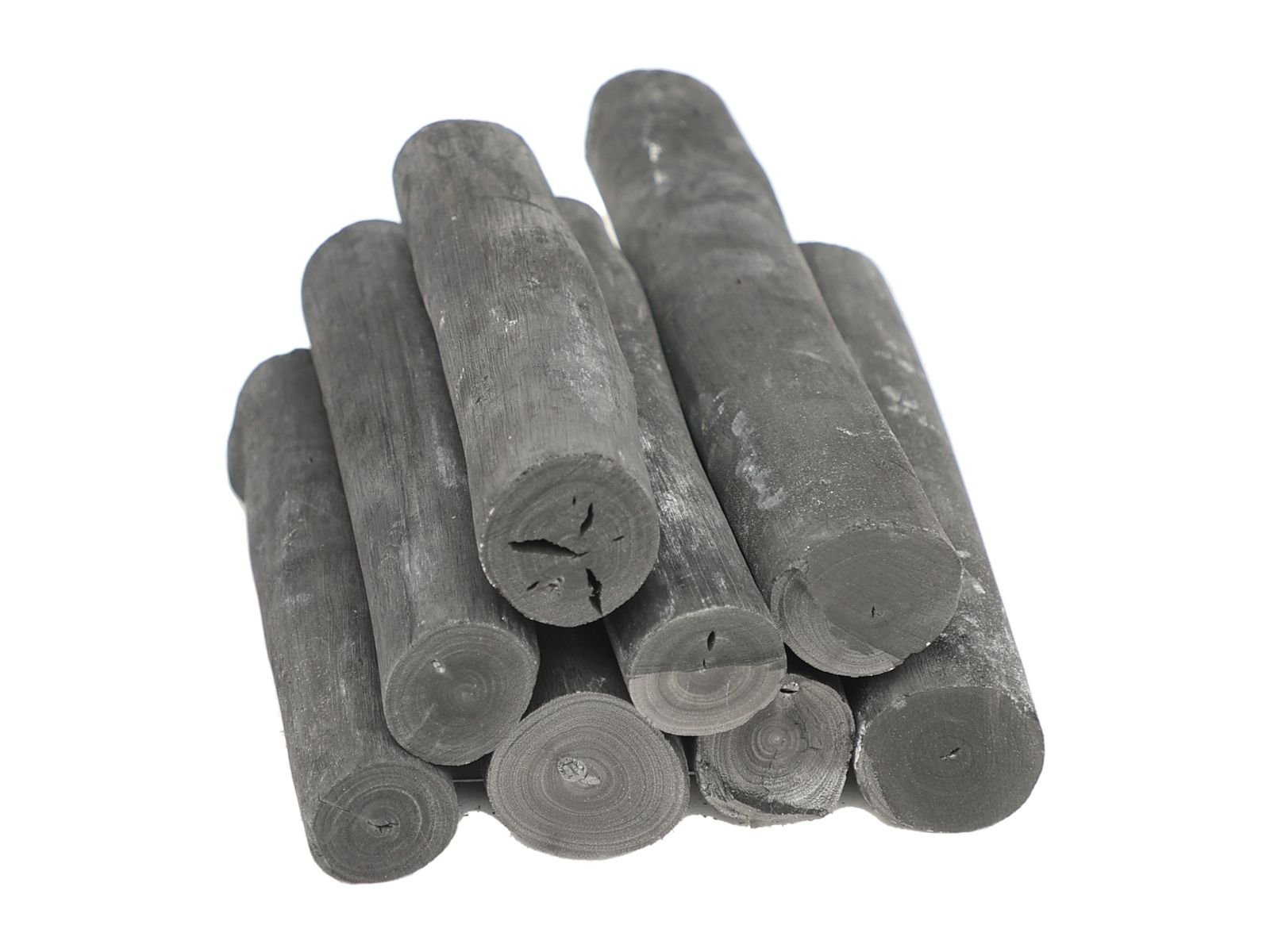
Understanding how binchotan is made explains everything buyers value in it: the glassy hardness, the metallic ring, the low smoke and the long, steady heat. Binchotan, or white charcoal, is not simply wood burned hotter. It is the product of a demanding two-stage kiln process that carbonizes dense hardwood slowly, then refines it at extreme heat before smothering it in an ash-and-earth mixture. This guide walks through how binchotan is made, from log selection to graded, export-ready cartons.
Key takeaways
- Binchotan is white charcoal made by a two-stage method: slow carbonization, then high-temperature refining.
- The wood matters: dense hardwoods and fruitwoods give binchotan its hardness and long burn.
- The final high-heat step and the ash smother create white charcoal's clean, ringing quality and pale coating.
- The process yields very high fixed carbon and very low volatile matter, which is why binchotan burns clean.
- VUTRUX grades and packs binchotan for export with a per-lot COA and full compliance documents.
How binchotan is made: what sets white charcoal apart
Most charcoal is black charcoal: wood carbonized at moderate heat and then allowed to cool slowly inside the kiln. Binchotan is white charcoal, and the difference lies in a second, far more aggressive stage that ordinary charcoal never sees. After carbonizing, the coals are heated to extreme temperature and then pulled from the kiln red-hot and smothered in a damp mixture of ash, earth and sand.
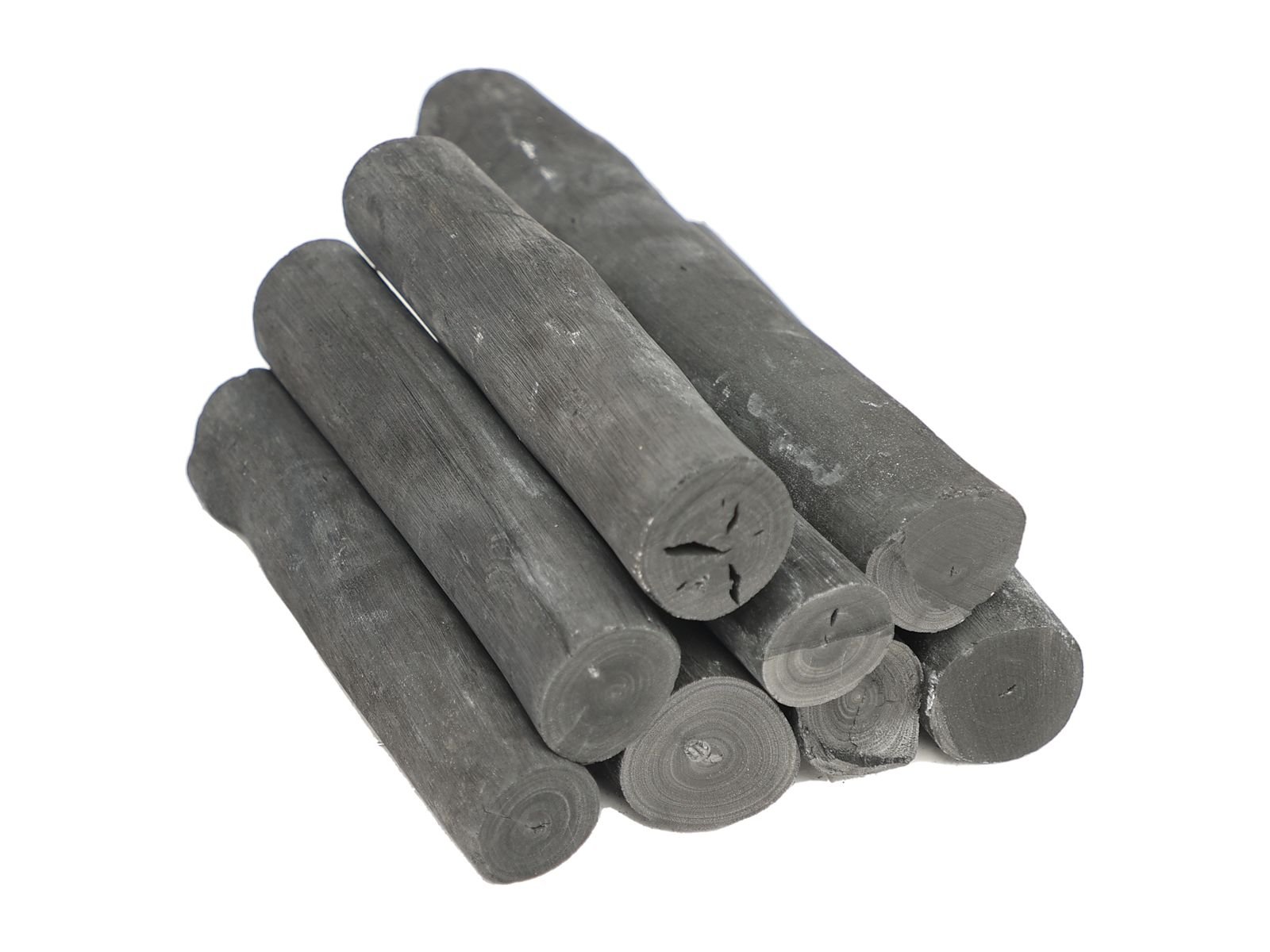
That final step does two things. It refines the carbon structure, burning off nearly all remaining volatile matter and leaving an exceptionally pure, dense fuel; and it leaves the pale, powdery coating that gives white charcoal its name. The finished coal is so hard and dense that two pieces struck together ring with an almost metallic, ceramic note, a quick field test that black charcoal cannot pass. In effect, black charcoal is finished when the fire is put out, while binchotan is finished by turning the fire up. That single extra stage is the whole story of white charcoal, and it is why binchotan lights slowly but then burns long, hot and almost smokelessly.
Choosing the wood
Binchotan begins long before the kiln, with the raw material. Because the process rewards density, the best white charcoal comes from dense hardwoods and fruitwoods rather than soft, fast-growing timber. VUTRUX produces binchotan from several such species:
- Eucalyptus (bạch đàn), a dense, widely plantation-grown hardwood that yields a hard, consistent coal.
- Lychee and longan (vải and nhãn), fruitwoods prized for a particularly hard, long-burning white charcoal.
- Orange and pomelo, the mai tieu group (cam bưởi), fruit-tree woods that carbonize into a clean, dense coal.
Denser wood carbonizes into denser charcoal, which is what allows binchotan to store so much energy in a small volume and release it slowly. Sourcing matters commercially too: fruitwood from managed orchards and plantation eucalyptus supports the traceable, low-deforestation supply chain that export markets increasingly require. Our overview of lychee binchotan looks at one of these woods in detail.
Need this grade by the container?
Tell us your market, volume and target spec — we reply within one business day with a quote and a sample offer.

Stage one: slow carbonization
In the first stage, split logs are stacked inside a kiln and heated gently, with the air supply carefully restricted so the wood carbonizes rather than burns. Over a period that can run to several days, rising heat drives off water and then the bulk of the wood's volatile compounds, leaving a lattice of nearly pure carbon behind.
Control is everything here. Too fast, and the logs crack or burn away to nothing; too cool, and carbonization is incomplete, leaving behind the volatile matter that later causes smoke and spitting. The kiln master reads temperature, smoke color and airflow to guide the wood through this stage, which sets the foundation for everything that follows. At the end of stage one the coal is already recognizable charcoal, but it is not yet binchotan.
This slow first stage is also where much of binchotan's environmental profile is set. Because the wood is carbonized rather than simply burned, a large share of its carbon is locked into the finished charcoal instead of escaping as smoke. Steady, patient firing is what makes that conversion efficient and the coal consistent from piece to piece.
Stage two: refining and the white coating
The second stage is what sets white charcoal apart. The kiln's air intake is opened, sending temperatures surging to around 1,000 degrees Celsius or higher. This intense heat acts almost like a polish on the carbon: it burns away the last traces of volatile matter and tar and tightens the internal structure, driving fixed carbon to its characteristically high level.
At the peak, the glowing coals are raked out of the kiln and immediately smothered with a damp mixture of ash, earth and sand. Starving them of oxygen halts combustion instantly, while the rapid cooling and the mineral dust leave the pale white-grey coating on the surface. The result is the defining binchotan profile: very high fixed carbon, very low volatile matter and ash, and the dense, hard body that produces long, clean, radiant heat. It is a genuinely demanding, highly skilled moment: the coals are near white-hot, and the timing of the rake-out decides whether a batch becomes prized binchotan or is lost.
Cooling, sorting and grading
Once cool, the coating is brushed off and the charcoal is sorted by hand. Pieces are checked for that tell-tale metallic ring, then graded and cut to the sizes buyers order. VUTRUX supplies binchotan in grades A and B, round or split, in sizes from roughly 80 to 200 mm, packed in 10 kg cartons.
Grading is not cosmetic. Diameter and length decide how a coal fits a yakitori grill or a robata setup and how long it lasts; grade reflects consistency, hardness and the share of usable pieces. The ring itself is a real quality check rather than folklore: a dull thud usually means cracks or incomplete carbonization inside a piece that looks fine on the outside. A single 20-foot container holds roughly 9.6 metric tonnes of binchotan, about 960 cartons. For how these grades and sizes map to orders and pricing, see our binchotan wholesale guide.
Why the process matters for buyers
The two-stage method is slow and skill-intensive, but it is exactly what produces the qualities buyers pay for: hardness, high energy density, a long steady burn and almost no smoke or odor. Understanding it also explains why binchotan costs more than black charcoal and why consistency between lots depends on genuine craft rather than luck.
For international buyers, process quality has to come with paperwork. VUTRUX pairs each lot with an independent-lab (Vinacontrol) COA and MSDS, plus EUDR- and phytosanitary-ready documentation, and offers a sample before any order so what you approve is what ships. Self-heating tests conclude the charcoal is not IMDG Class 4.2, though carriers may still book it under UN 1361.
There is a sustainability dimension too. Binchotan made from plantation eucalyptus and orchard prunings turns material that might otherwise be waste into a long-lived, high-value fuel, while carbonization stores much of the wood's carbon rather than releasing it. For buyers serving markets that ask hard questions about sourcing, being able to show where the wood came from is fast becoming as important as the burn itself. To match a grade, size and species to your market, and to see the process reflected in a real specification, request a quote and a sample.
Frequently asked questions
What is binchotan made from?
Binchotan is made from dense hardwoods and fruitwoods. VUTRUX produces it from eucalyptus (bạch đàn), lychee and longan (vải and nhãn), and the orange-pomelo mai tieu group (cam bưởi). Denser wood carbonizes into a harder, longer-burning white charcoal.
Why is binchotan called white charcoal?
Because of its finish. At the end of production the red-hot coals are smothered in a damp mixture of ash, earth and sand, which cools them rapidly and leaves a pale white-grey coating on the surface. That coating, not the carbon itself, gives white charcoal its name.
How long does it take to make binchotan?
The full two-stage process takes time and skill. Slow carbonization alone can run to several days, followed by a high-temperature refining stage and then cooling and sorting. The careful, extended firing is part of why binchotan is harder, purer and more expensive than ordinary black charcoal.
What makes binchotan burn so cleanly?
The high-temperature second stage burns off almost all volatile matter and drives fixed carbon very high, so there is little left to smoke or flare. Combined with the wood's density, this produces long, steady, radiant heat with minimal smoke or odor, the qualities that define good white charcoal.
Is Vietnamese binchotan real binchotan?
Yes. Binchotan refers to the white-charcoal method, slow carbonization followed by high-temperature refining and an ash smother, not to a single country. Vietnamese producers such as VUTRUX apply the same two-stage process to dense local hardwoods and fruitwoods, backed by an independent-lab COA per lot.