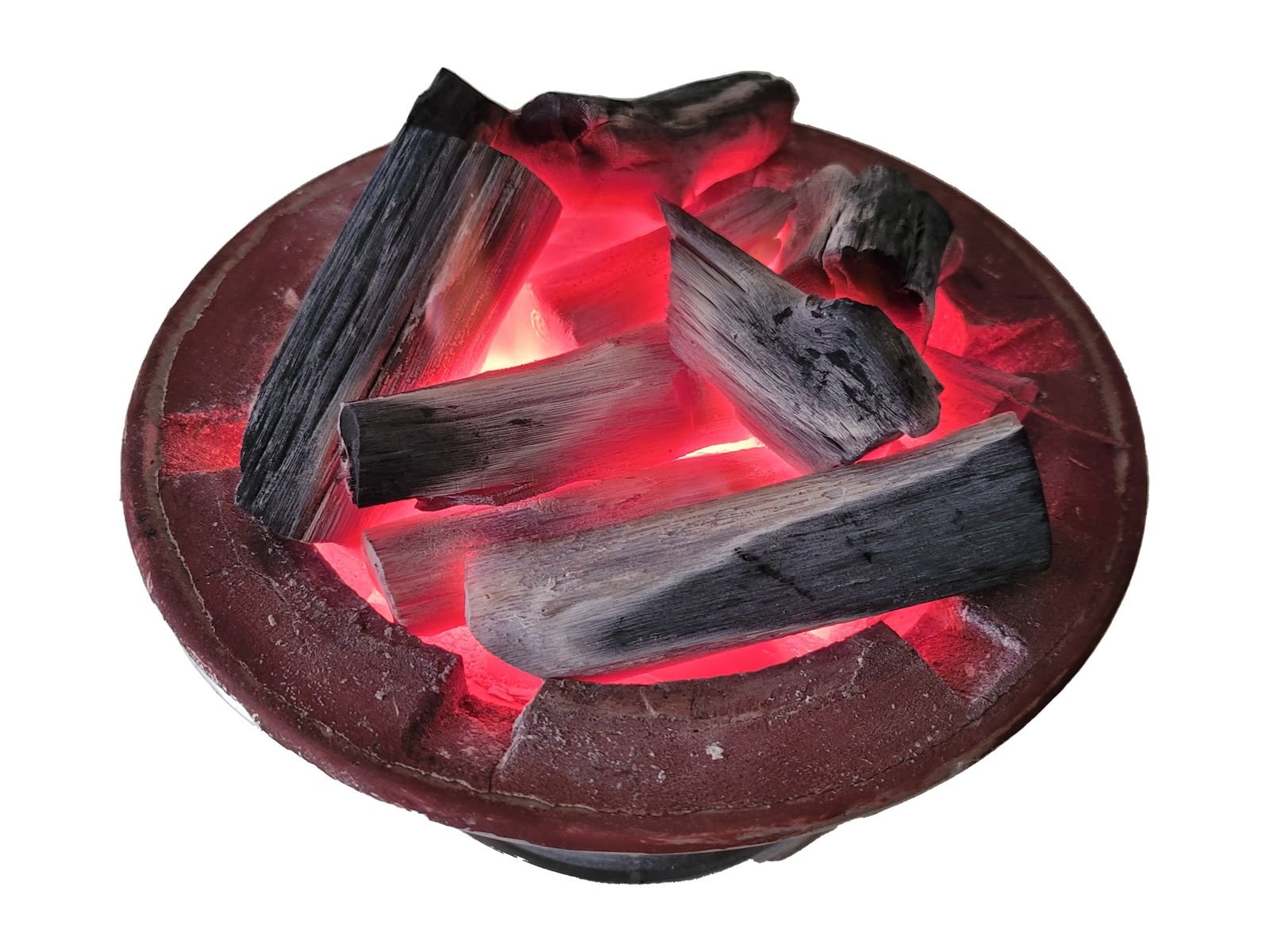
There is no legal definition of restaurant grade charcoal, which is exactly why the term gets misused. To a professional kitchen, though, it means something very specific: fuel that behaves the same way every single service, produces clean heat without tainting the food, and arrives on time in the quantity ordered. This article unpacks the traits that genuinely define professional-grade fuel - the ones worth paying for - so you can tell marketing language apart from a product your chefs can actually rely on.
Key takeaways
- Restaurant grade charcoal is defined by consistency and reliability, not a label - the same burn, service after service.
- The core technical markers are high fixed carbon (often ~95% for binchotan), low ash (~3%), low moisture and near-zero sulphur.
- A long, stable, high-heat burn with little smoke and few sparks is essential for open kitchens and continuous service.
- Reliable per-lot COA, MSDS and on-time container supply matter as much as the charcoal's on-grill performance.
- For most kitchens the choice narrows to binchotan, quality ogatan or hardwood lump, matched to the cuisine.
What 'Restaurant Grade Charcoal' Actually Means
Walk into any busy grill kitchen and ask what makes their charcoal good, and you will rarely hear about carbon percentages first. You will hear 'it does the same thing every night.' That is the heart of it. Restaurant grade charcoal is fuel a head chef can build a menu around because its behaviour is repeatable - the sear temperature, the burn time, the amount used per service, the ash to clear afterwards. Everything else follows from that.
Home-grade charcoal can be forgiven an off bag. A restaurant cannot. An inconsistent lot means undercooked or scorched plates, blown timings during a rush, and food-cost creep. So while the phrase has no official standard behind it, in practice restaurant grade charcoal means charcoal selected and tested for professional consistency - and that shows up in a handful of measurable traits.
It helps to separate two ideas that often get blurred. 'Premium' describes a charcoal's intrinsic quality; 'restaurant grade' describes fitness for professional use, which includes quality but also demands consistency, documentation and dependable supply. A charcoal can be genuinely premium and still fail a kitchen if it arrives late or varies between lots.
The Technical Markers That Matter
These are the numbers to ask for on a specification sheet, and to verify on the per-lot certificate.
| Marker | Why it matters | Typical premium range |
|---|---|---|
| Fixed carbon | Higher means more heat and a longer burn | ~94-95%+ |
| Ash content | Lower means less residue and a cleaner grill | ~3% |
| Moisture | Lower means faster lighting and less smoke | ~3% |
| Sulphur | Near zero means no off-odours or taint | ~0% |
| Calorific value | Higher means more usable energy | ~8,300 kcal/kg |
On independent Vinacontrol testing, VUTRUX binchotan typically returns around 95% fixed carbon and ogatan around 94%, with ash and moisture near 3% and sulphur close to zero. Treat any single spec sheet as a claim until you see a per-lot COA; our guide on how to read a charcoal COA explains which lines to trust and which to question.
Need this grade by the container?
Tell us your market, volume and target spec — we reply within one business day with a quote and a sample offer.

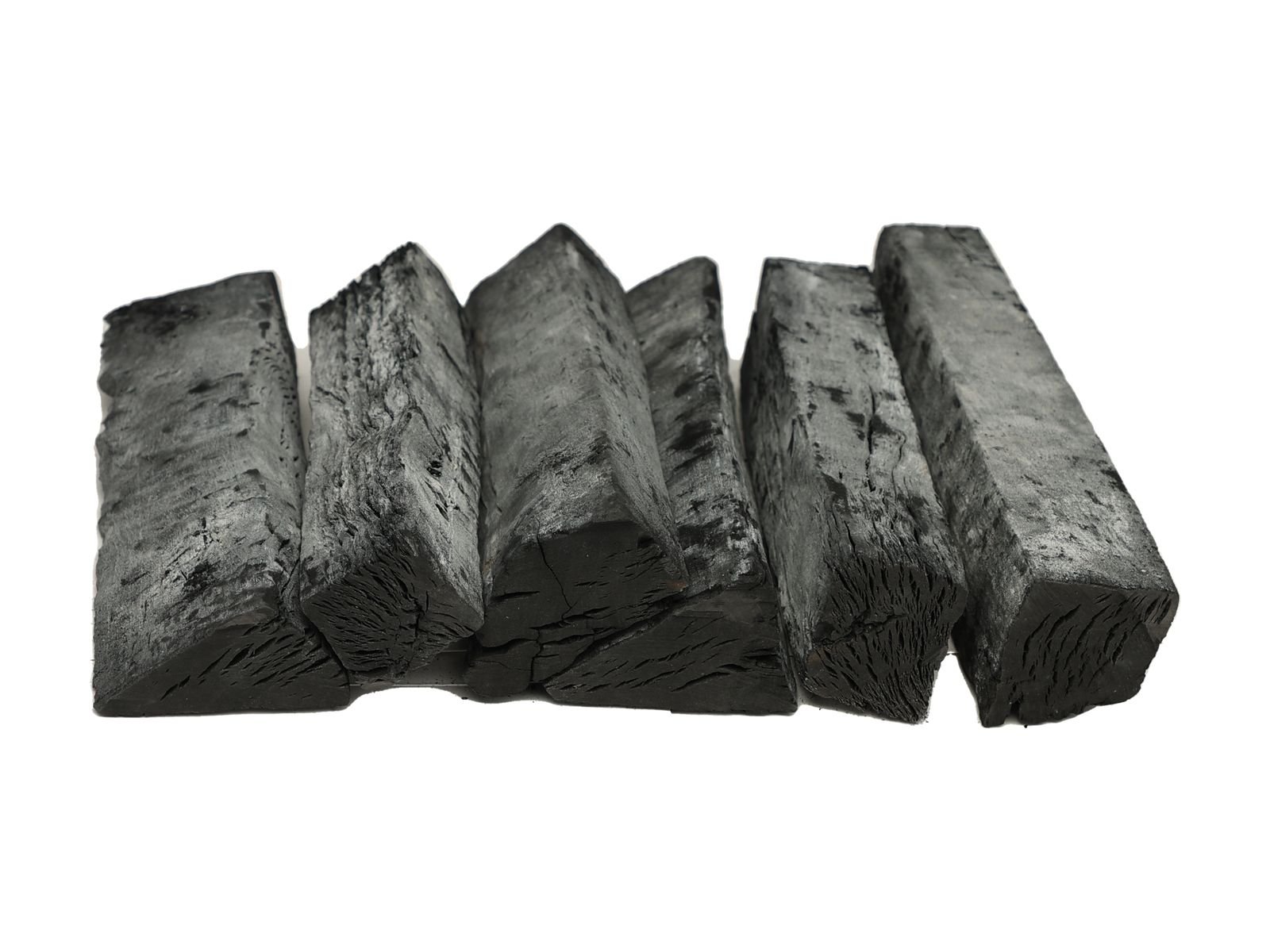
Burn Behaviour on a Live Line
Numbers only matter because of what they produce at the grill. The behavioural traits that define professional fuel are:
- Long, stable heat. The charcoal should hold a usable searing temperature through a full service without constant refuelling. Binchotan is prized here for its exceptionally long, even burn.
- Low smoke and few sparks. In an open or semi-open kitchen, smoke and spitting embers are a safety and quality problem. Low moisture and clean carbonisation keep both down.
- Neutral aroma. Good charcoal adds clean heat, not chemical or sulphurous notes. Near-zero sulphur is why premium charcoal never taints delicate proteins.
- Controllability. Chefs need to move between searing and holding heat. Dense, uniform fuel responds predictably to airflow.
- Manageable ash. Low ash means less time clearing grates mid-service and a cleaner cooking surface.
These traits compound. A fuel that burns long and even means fewer interruptions to rebuild the fire, low smoke keeps the pass and the dining room comfortable, and a neutral aroma protects the flavours the kitchen worked to build. Cheap charcoal fails quietly here - a slightly sulphurous note or an unpredictable flare-up rarely shows up until it reaches the plate.
For a format-by-format look at which fuels suit which cooking styles, see our guide to the best charcoal for restaurants.
Supply Reliability: The Trait Nobody Advertises
The most underrated component of restaurant grade charcoal has nothing to do with the grill. It is whether the fuel keeps arriving. A charcoal that performs beautifully but ships late - or varies from container to container - is not restaurant grade in any practical sense.
What professional buyers should insist on:
- Lot-to-lot consistency backed by testing, so service ten looks like service one.
- Per-lot COA and MSDS for your food-safety and health-and-safety files.
- Documented compliance - EUDR due-diligence and phytosanitary paperwork for import, plus self-heating test results confirming the product is not IMDG Class 4.2 (carriers may still book it as UN 1361).
- Dependable logistics - realistic lead times and container availability from a supplier that exports at scale.
It is also worth auditing the supplier, not just the sample. How many markets do they serve? Can they scale with you as you add sites? Do they hold stock, or make you wait a full production cycle for every order? These questions separate a trading intermediary from a producer who can genuinely underwrite your service.
VUTRUX ships to more than 40 markets from Hai Phong on FOB, CIF or DDP terms, with per-lot documentation as standard.
Matching the Grade to Your Kitchen
'Restaurant grade' is not one product; it is the right product, proven consistent. The best fit depends on your cuisine:
- Yakitori, robata and high-end grill: natural binchotan white charcoal for its long, clean, controllable burn.
- High-volume service and value: clean ogatan for a long, uniform burn at a friendlier cost per service.
- Fast, hot searing with wood character: hardwood lump.
Many multi-concept groups standardise on two fuels: a binchotan or premium line for the flagship grill and a clean ogatan for higher-volume outlets. That keeps training simple while matching the fuel to each venue's economics.
The smartest way to judge grade is to test it in your own kitchen. Request a sample and a quote, run it through a real service, and measure burn time, heat and ash for yourself before committing to a container.
The Real Economics: Cost per Service
Head chefs who switch to a genuine restaurant grade charcoal often expect it to cost more, and are surprised to find the opposite once they measure properly. Headline price per kilogram is the wrong number. The figure that matters is cost per service, and it is shaped by three things:
- Burn time. A dense, high-carbon fuel that lasts through a full service needs less frequent topping up, so you burn fewer kilograms per cover.
- Waste. Consistent sizing means fewer unusable fines at the bottom of every box, and low ash means less product ending up as residue.
- Labour and reworks. Predictable heat means fewer ruined plates, fewer refires, and less staff time babysitting the grill during a rush.
Model those together and a premium charcoal frequently wins on total cost, not just on quality - which is the argument that convinces a finance-minded operator.
Frequently asked questions
What does 'restaurant grade charcoal' mean?
It is charcoal selected and tested for professional consistency - the same heat, burn time and ash every service - rather than a legally defined standard. In practice it combines high fixed carbon, low ash and moisture, near-zero sulphur, a long clean burn and reliable supply.
What is the best charcoal for a restaurant?
It depends on the cuisine. Binchotan suits yakitori, robata and premium grilling for its long, clean, controllable heat; quality ogatan suits high-volume service; hardwood lump suits fast, hot, wood-forward searing. Many kitchens keep more than one on hand.
Why is low ash important in commercial charcoal?
Low ash - around 3% in premium charcoal - means less residue building up on grates during service, a cleaner cooking surface, more consistent airflow, and less downtime clearing the grill mid-rush.
How can I verify charcoal is truly restaurant grade?
Ask for a per-lot COA rather than a generic spec sheet, check fixed carbon, ash, moisture and sulphur, confirm MSDS and import compliance documents, and - most importantly - test a sample through a real service before ordering a full container.
Does restaurant grade charcoal cost more?
Usually yes, but the value is in consistency: predictable timings, less waste, cleaner service and no ruined plates from a bad bag. For pricing matched to your volume, request a quote.