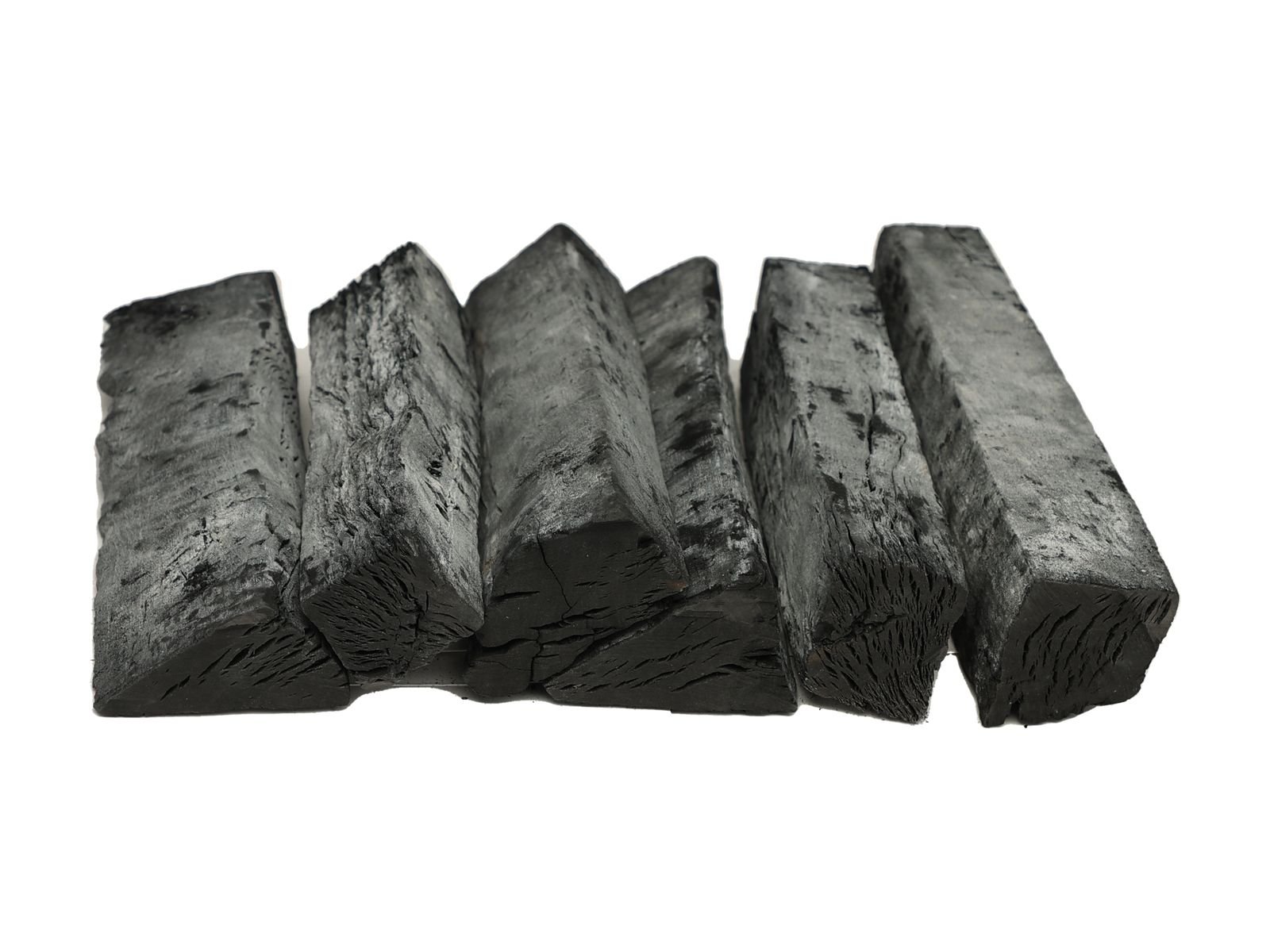
If you buy white charcoal for export or for a professional grill, understanding binchotan grade A vs B is the difference between a predictable burn and an expensive surprise. Grades are not marketing labels: they describe measurable differences in raw material, size, density and consistency that show up directly on your coals and on your invoice. This guide explains what each grade delivers, why the prices diverge, and how to specify the grade that fits your service.
Key takeaways
- Grade A and Grade B binchotan share the same core chemistry; the difference is uniformity of size, shape and density, not a different product.
- Grade A offers tighter size tolerance, straighter pieces, fewer cracks and the most consistent burn, which is why it costs more.
- Grade B is a genuine professional grade with wider tolerances, well suited to high-volume grills and retail packing.
- Price is driven mainly by yield and sorting labour: only part of each batch meets Grade A selection.
- Always request a sample and confirm size range, packing and grade before you commit to a container.
What binchotan grade A vs B actually measures
VUTRUX binchotan is a white charcoal (shiro-zumi) produced from dense hardwoods and fruitwoods: eucalyptus, lychee and longan, and orange–pomelo "mai tieu". If the product itself is new to you, our guide to binchotan white charcoal covers the fundamentals. Grading sits on top of that: it sorts a finished batch by how consistent the pieces are.
When we talk about binchotan grade A vs B, four things are being judged:
- Raw-material density — the hardness of the wood and how well each piece carbonised.
- Size and shape uniformity — diameter range, straightness, and how many short or broken pieces are present.
- Surface and structure — a clean ash-grey surface, minimal cracking, and the characteristic metallic ring of well-fired binchotan.
- Fines and breakage — how much small, unusable material sits in the carton.
Grade A is the top selection against all four criteria. Grade B keeps the same material and firing but allows a wider tolerance, so you see more variation from piece to piece.
It is worth stressing what grading is not. It is not a different recipe, a different wood or a different firing temperature, and it is certainly not a way of passing off inferior charcoal. Both grades come off the same kilns from the same dense species; grading simply sorts the finished bars by how tightly they match a specification. That is why a chef can rely on the same clean, hot, long burn from either grade and choose between them on presentation and predictability rather than on whether the charcoal will perform.
Size, shape and appearance
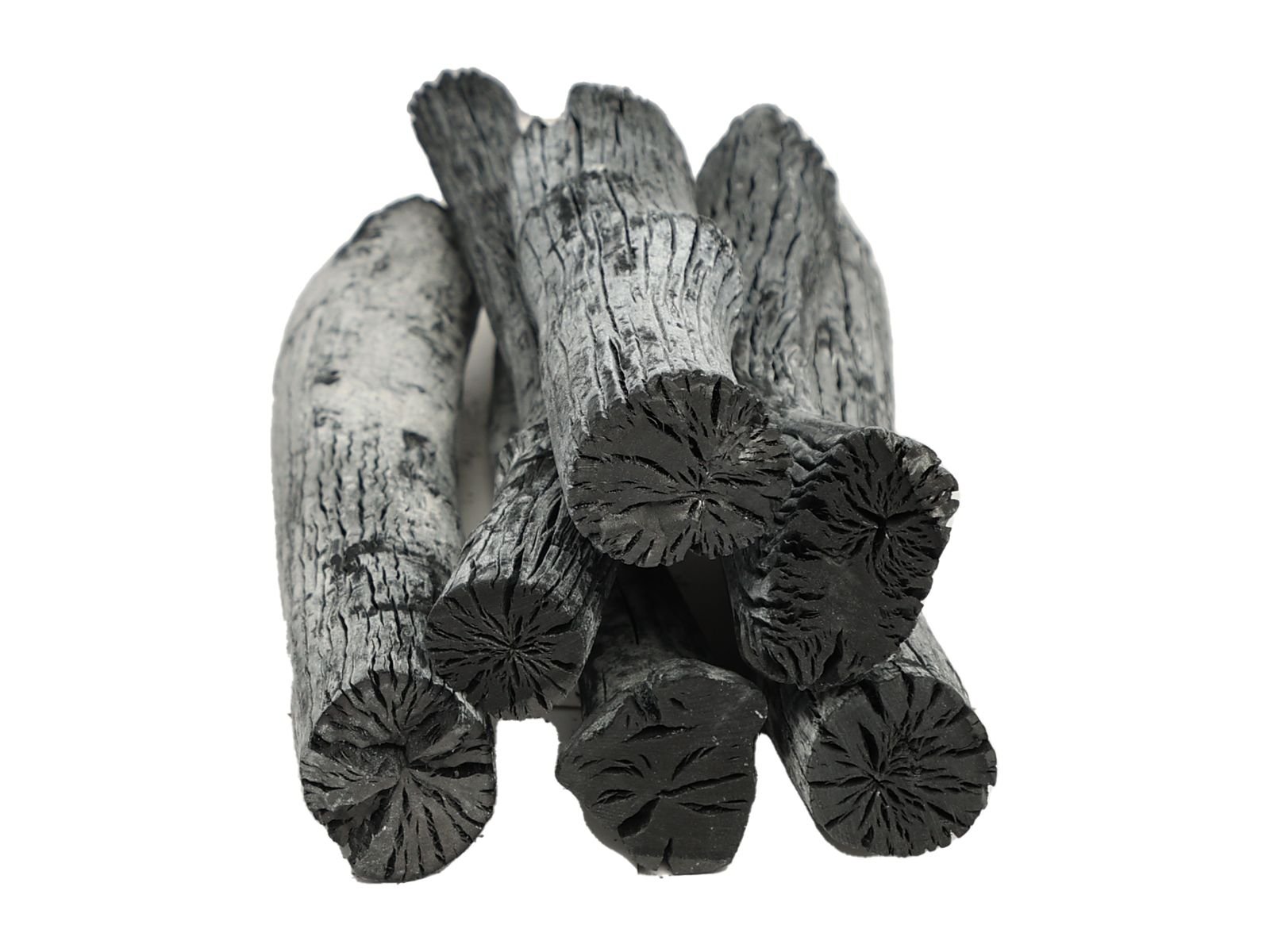
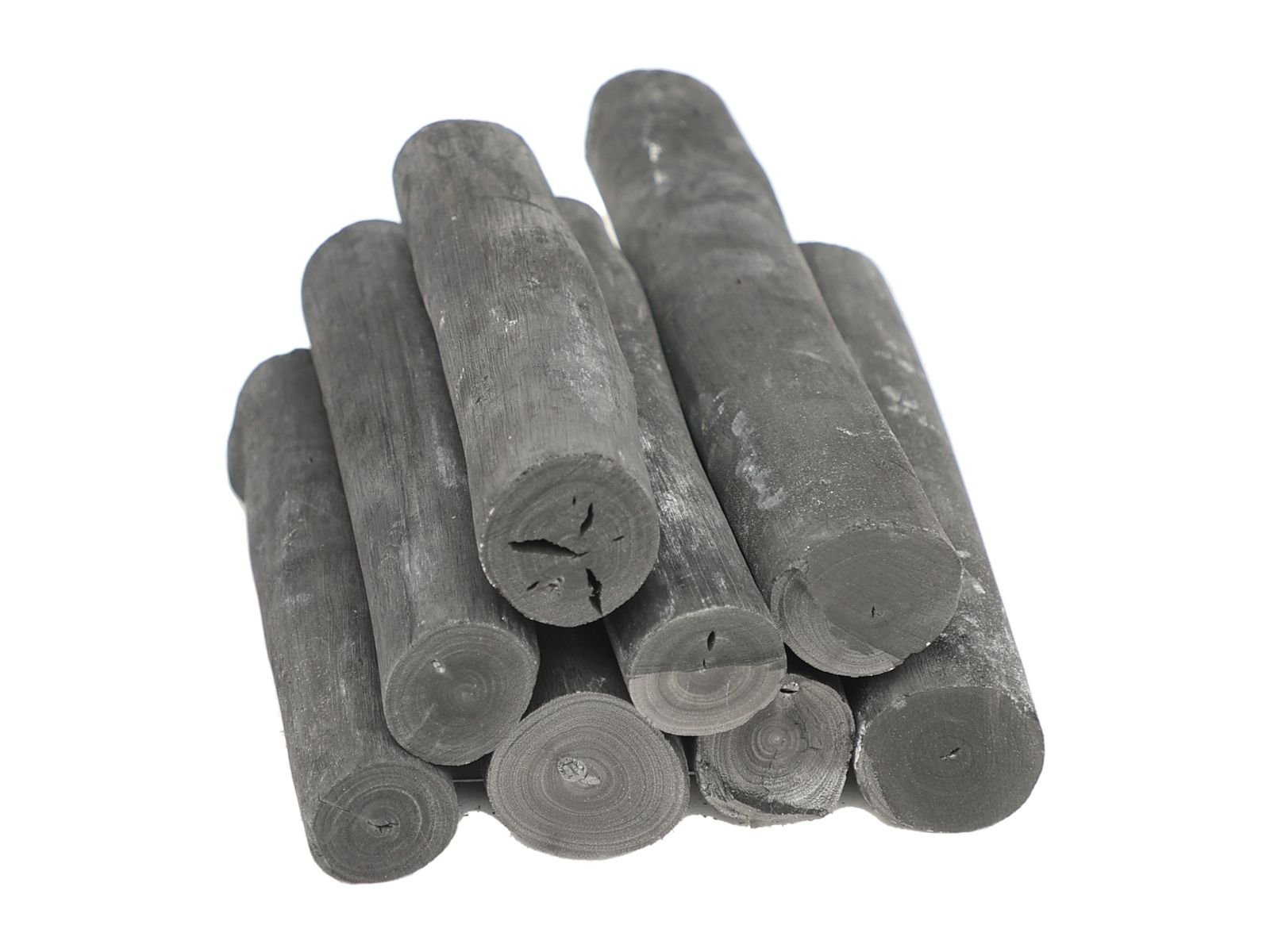
All VUTRUX binchotan is supplied round or split, in sizes from roughly 80 to 200 mm, packed in 10 kg cartons. Within that range, the grades look and handle differently.
| Attribute | Grade A | Grade B |
|---|---|---|
| Diameter consistency | Tight, sorted range | Wider range |
| Straightness | Mostly straight sticks | More curve and taper |
| Surface cracks | Minimal | Some surface cracking |
| Short or broken pieces | Very few | More shorts present |
| Appearance | Clean ash-grey, uniform | More colour variation |
For a chef plating skewers over a narrow grill, uniform diameter means an even bed height and a consistent distance from the food. For a retailer filling premium tins, appearance and low breakage protect the shelf price. Grade B still performs; you simply plan around a little more variation.
Need this grade by the container?
Tell us your market, volume and target spec — we reply within one business day with a quote and a sample offer.
Burn consistency and performance
Both grades are the same fuel at heart. Independent Vinacontrol testing of VUTRUX binchotan shows fixed carbon typically around 95%, ash near 3%, moisture around 3%, effectively no sulphur, and a calorific value of roughly 8,300 kcal/kg. Those figures describe the material, not the grade — which is why Grade B is not "weak" charcoal. If you want to interpret a report yourself, see our guide on how to read a charcoal COA.
What changes with grade is consistency. Denser, better-carbonised, uniform pieces (Grade A) light to a stable, long, low-smoke radiant heat with very little sparking — the behaviour yakitori and robata kitchens depend on. Grade B delivers the same clean, long burn overall, but with slightly more variation piece to piece, which matters less on a busy mixed grill than in a precise omakase service.
The grade you need is set by how tightly your cooking depends on every piece behaving the same way.
Put concretely: an omakase counter cooking one perfect skewer at a time cannot afford an outlier stick that spits or burns hot, so it pays for Grade A to remove that risk. A busy mixed grill firing dozens of covers averages out the odd variation across a deep bed, so Grade B delivers the same result at a lower cost. Neither kitchen is compromising on the fuel; each is buying the level of consistency its service actually demands.
What drives the price difference
The gap between the grades is mostly about yield and labour. From any firing, only a portion of pieces meet the tight size, straightness and surface standards of Grade A. Reaching that grade also takes more hand-sorting and produces more downgraded material. Those costs are real, and they are what you pay for when you buy the higher grade.
We do not publish fixed prices, because they move with species, size, grade and freight. For current figures, request a quote with your target grade and size. To see how grade fits into order sizes, packing and Incoterms, our binchotan wholesale guide walks through the commercial side. As a planning anchor, one 20ft container holds about 9.6 MT net of binchotan (960 × 10 kg cartons).
Understanding the yield story also explains why splitting an order across grades is smart procurement rather than a compromise. Every firing naturally produces a mix of top-selection bars and perfectly good but less uniform pieces; buying both grades from the same supplier uses that whole output efficiently and usually prices better than insisting on Grade A alone. It also gives you a lever to protect margins when species or freight costs move, without ever dropping below a genuine professional grade.
Checking the grade you received on arrival
Because grade is defined by consistency rather than chemistry, you verify it by inspection as well as by paperwork. When a shipment lands, pull a few cartons at random and run a short, repeatable check against what you agreed.
- Size and straightness — measure a sample of pieces against the contracted diameter and length range, and note how many are noticeably curved, tapered or short.
- Breakage and fines — look at how much small, broken material has settled at the bottom of the carton; a little is normal, a lot signals rough handling or an over-loose grade.
- Surface and ring — well-fired binchotan shows a clean, ash-grey surface and gives a light metallic ring when two pieces are tapped together, while a dull, soft sound can indicate under-carbonised or damp material.
- Moisture feel — the sticks should feel dry and hard; damp charcoal lights slowly and is heavier than it should be for its size.
Cross-check those observations against the per-lot Certificate of Analysis, which reports the fixed carbon, ash and moisture for the lot. Agreeing this simple routine with your supplier in advance, and recording it with a few photos, turns any grade question into a factual conversation rather than a matter of opinion.
How to choose the right grade for your business
There is no universally "best" grade — only the right grade for your use:
- High-end yakitori, omakase and eel specialists — choose Grade A for maximum consistency and presentation.
- Busy grill houses and mixed-menu kitchens — Grade B, or a blend, controls cost without sacrificing a clean, long burn.
- Retailers and distributors — match the grade to your price tier: Grade A for premium tins, Grade B for value packs.
Whichever way you lean, confirm the details before a container ships: request a sample, agree the size range and packing in writing, and settle terms (we offer FOB, CIF or DDP, with payment by T/T or L/C). Getting the grade specification right up front is the simplest way to avoid disputes later.
Frequently asked questions
Is Grade B binchotan lower quality than Grade A?
Not in the way people expect. Grade B binchotan uses the same raw materials and firing as Grade A and shares the same core chemistry — around 95% fixed carbon and a long, clean burn. The difference is tolerance: Grade B allows more variation in size, shape and surface. It is a genuine professional grade, not a defective one.
Can I mix Grade A and Grade B in one container?
Yes. Many buyers order a blend or split a container across grades to balance cost and consistency — for example, Grade A for the a la carte grill and Grade B for prep. Specify the split when you request a quote so packing and labelling are correct.
Does Grade A binchotan burn longer than Grade B?
Burn time is driven mostly by piece size and density, not by the grade label. Larger, denser sticks last longer in both grades. Grade A simply behaves more predictably across the whole carton, so you get fewer outliers during service.
What binchotan size should I order?
VUTRUX binchotan runs from about 80 to 200 mm, round or split. Thinner pieces light faster and suit shorter services; thicker pieces hold heat longer for extended grilling. Tell us your grill type and we will recommend a size and grade, then send a sample.
How do I verify the grade I received?
Check a random sample of pieces against the agreed size range, straightness, surface and breakage, tap two together to listen for the clean metallic ring of well-fired binchotan, and review the per-lot COA supplied with the shipment. Our guide on how to read a charcoal COA explains what each figure means, so you can confirm the material matches what you ordered. Agreeing this check with your supplier in advance, and keeping a few photos on file, makes any dispute simple to resolve.